Discover how a team of young developers created a gamified app to preserve Philippine regional languages.
Imagine growing up in an Ilocano household but never actually learning the language because digital resources simply don’t exist.
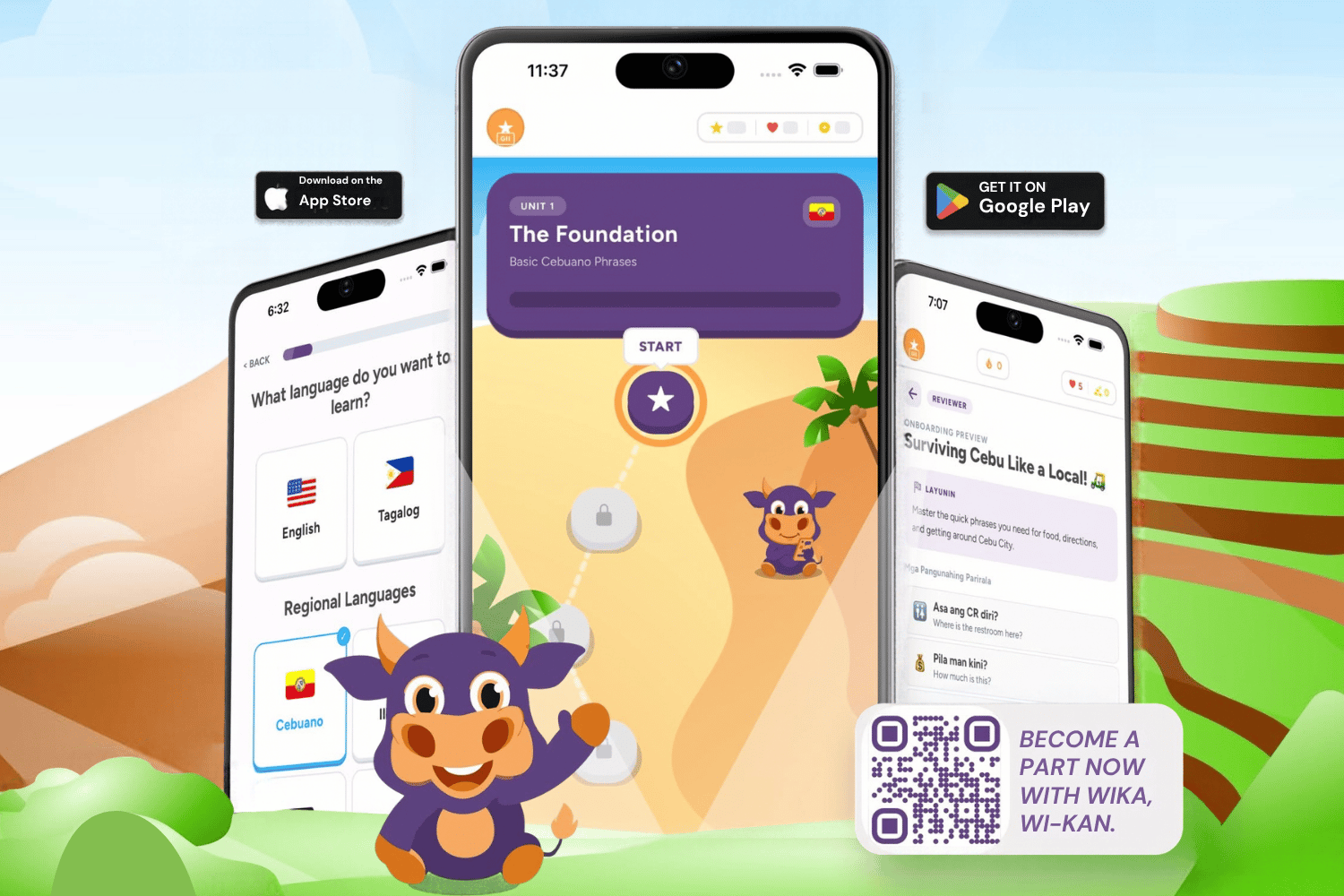
That frustration drove TUP graduate and app developer Kien Serapio to build Wika PH, a mobile platform that has been described as the “Duolingo for Philippine languages.”
Born as a school project in December 2025, the app was created to address the lack of digital learning tools for a country with more than 180 languages.
Serapio decided to take matters into his own hands after realizing that mainstream language learning apps barely scratched the surface of Tagalog, let alone the country’s many regional languages.
The project gained momentum at Developer Camp Manila in March 2026. Despite juggling demanding internship schedules, Serapio’s core team, Alex Galedo, Mico Abas, Jude Tabuzo, and Maria Leonabelle Santos, joined forces with solo participant David Memorando to tackle the scarcity of digital resources for regional languages.
In under 18 hours, the newly formed team developed a working prototype powered by a custom AI model. Instead of relying on direct translations, the system was designed to capture the conversational tone and grammar of Cebuano, Asi, and Hiligaynon.
Their 16-hour sprint earned the team first runner-up honors, along with initial funding and industry mentorship.
Since the hackathon, Wika PH has expanded into a gamified language learning platform serving different users and use cases. Beyond helping members of the Filipino diaspora and foreigners connect with local culture, the app is also being explored for professional use.
According to the team’s social media posts, businesses and hospitals are using the platform to help reduce miscommunication in daily operations and document handling.
To improve its cultural and linguistic accuracy, the team spent the following months building partnerships with institutions such as the UP Diliman Department of Linguistics and the Romblon Provincial Office.
Following several competition wins and a growing social media presence, Wika PH launched its first live beta test on July 30.
The team then marked Buwan ng Wika with the public launch of its language learning app on iOS. A Google Play beta test is also available through a link on its social media page.
With more than 180 languages spoken across the Philippine archipelago, the team plans to expand its language library further, with Chavacano set to be included in its next major release.
What started as a school project and later became an intense hackathon sprint has since grown into an attempt to bring Philippine languages further into the digital space.
READ: