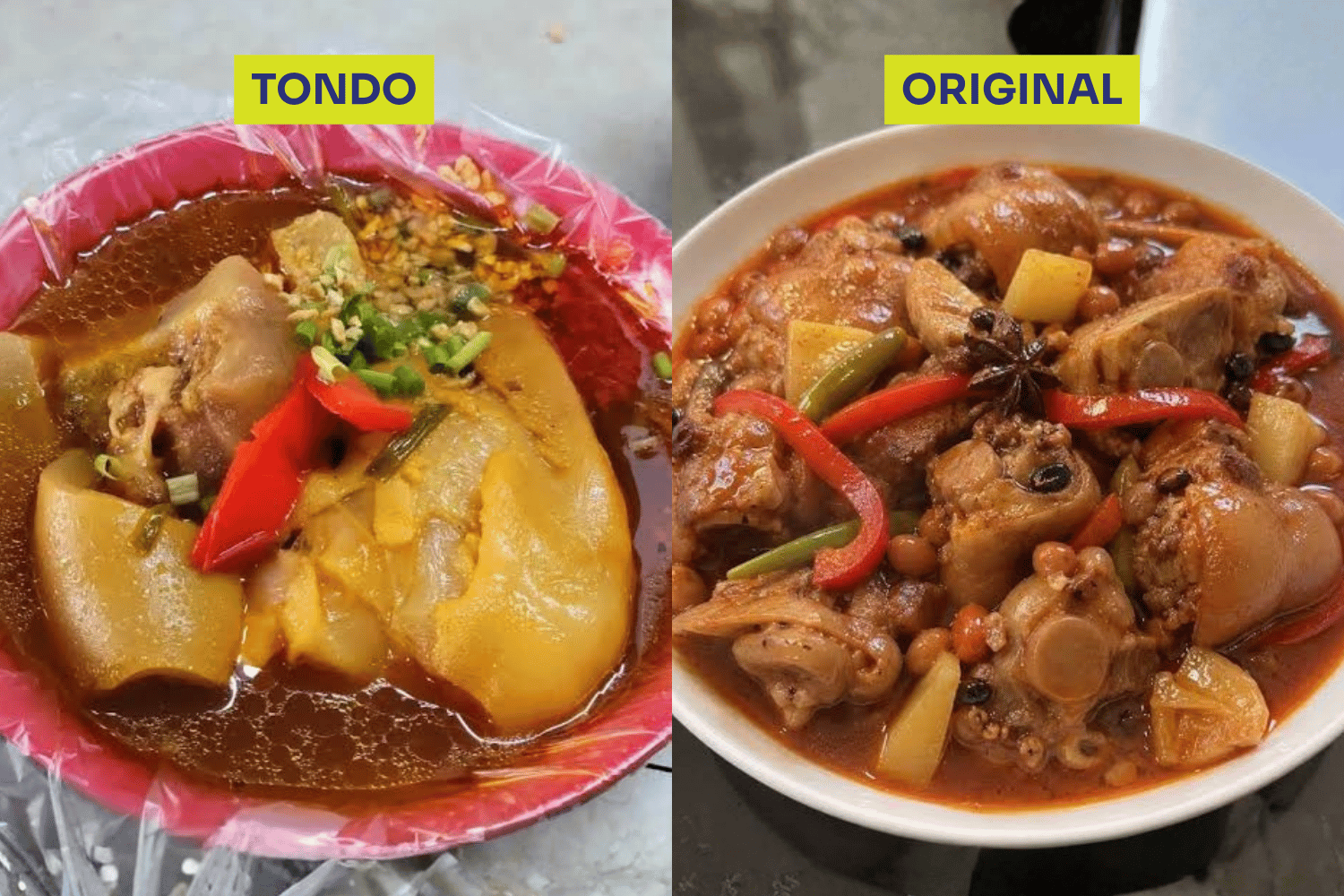
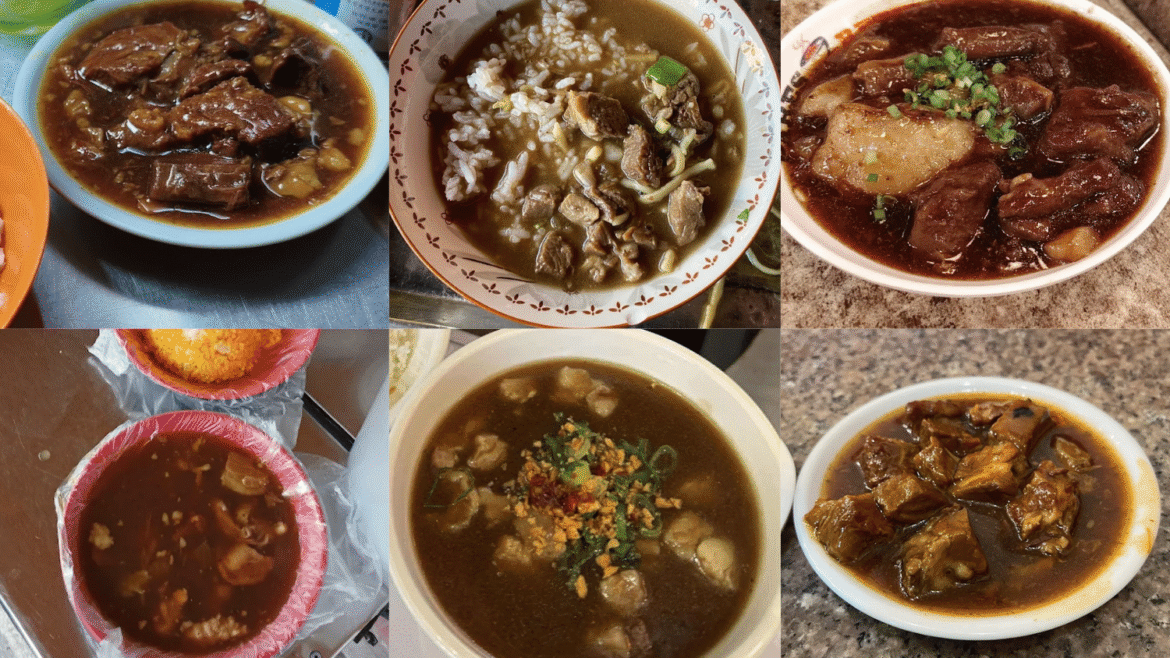
Tondo’s version leans into a savory, garlicky broth that feels more familiar to the Manila palate.
If you grew up eating balbacua in Cebu or Mindanao, the bowl being served in Tondo might make you look twice.
There’s pork pata in it.
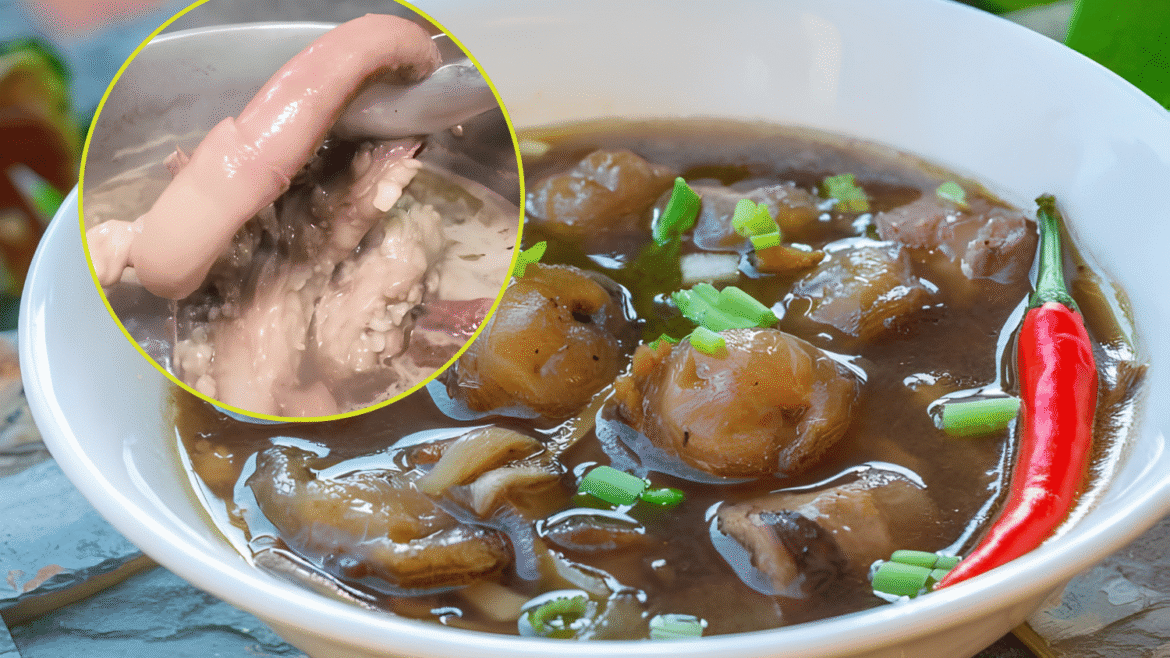
Balbacua is traditionally associated with the Visayas and Mindanao, where collagen-rich beef parts such as ox feet, oxtail and beef skin are cooked low and slow until everything becomes incredibly tender and the broth turns thick, rich and almost sticky.
But in Tondo, Manila, a local interpretation popularized by House of Balbacua has been attracting attention for giving the Southern classic a distinctly Manila street-food personality.
And perhaps its biggest departure is the meat.
Instead of relying mainly on beef cuts, the Tondo version can combine pork pata with beef taba, laman and balat. The result is essentially a pork-and-beef hybrid built around the same principle that makes traditional balbacua irresistible: collagen, fat and hours of cooking.
The broth is different, too.
Traditional balbacua varies considerably across the South. Some Cebuano preparations use peanuts or peanut butter, while other versions incorporate pineapple. In parts of Mindanao, beans and even saba may find their way into the pot.
Common aromatics can include ginger, garlic, onion, star anise, achuete and tausi, producing a stew that can resemble a distant relative of pochero and kare-kare.
Tondo takes the dish in another direction.
Its version leans into a savory, garlicky broth that feels more familiar to the Manila palate. Think of traditional balbacua meeting the comforting flavors people associate with pares and bulalo.
That distinction is important because there is no single definitive balbacua recipe. The dish itself has evolved across regions, households and generations.
Even its name carries evidence of adaptation. “Balbacua” is generally traced to the Spanish “barbacoa,” a term associated with slow-cooked meat. In the Philippines, however, the concept eventually became a long-simmered stew rather than what Filipinos today would recognize as barbecue.
Now Tondo appears to be adding another chapter.
House of Balbacua along N. Zamora Street serves the dish in an accessible street-side format, turning something traditionally requiring hours of preparation into an everyday bowl of comfort food. The shop has gained enough attention to be featured on television programs including “Unang Hirit” and “My Puhunan: Kaya Mo!”
Purists from Cebu or Mindanao may immediately notice that this isn’t exactly the balbacua they know.
And that is precisely what makes the Tondo version interesting.
The Southern original is built around slow-cooked, gelatinous beef cuts and regional ingredients. Tondo keeps that collagen-rich soul but throws pork pata into the pot and pushes the broth closer to Manila’s pares-and-bulalo comfort zone.
Same name. Same slow-cooked indulgence.
But definitely a different bowl.
READ: