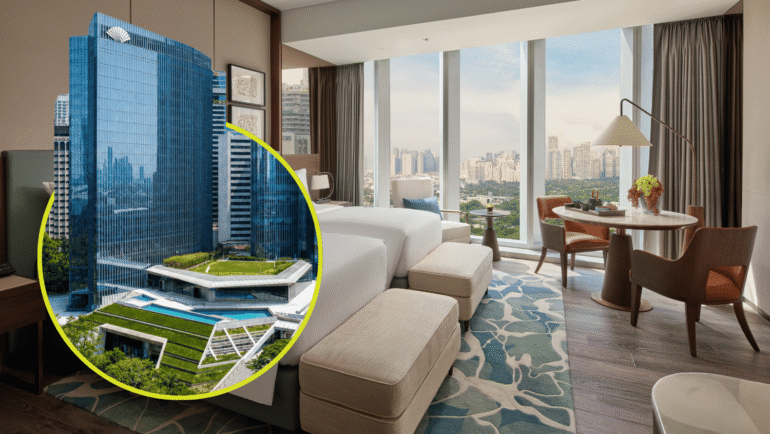
While residential and office developments are still recovering, hospitality and logistics have been standout segments. Developers are investing in hotels, cold storage facilities, data centers, and warehouses, especially in provincial areas that previously had limited business accommodations and logistics infrastructure.
Tourism revenue remains strong, prompting major developers to expand hotel projects outside Metro Manila. This growth also drives demand for retail, services, and housing in emerging areas, making hospitality-linked developments among the most resilient in 2025.
2025 sector performance: winners and stabilizers
| Sector | Status | Key Drivers |
| Hospitality | Leading | Domestic tourism, MICE (Meetings/Incentives), and infrastructure. |
| Logistics | Leading | E-commerce demand, cold storage, and regional data centers. |
| Residential | Stabilizing | Shift toward provincial house-and-lot; high interest in secondary markets. |
| Office | Recovering | Upgrade to Grade A spaces; government leasing activity. |
Housing demand moves outward
The residential market shows a more nuanced picture. Concerns about oversupply are not uniform. Buyers can still find excellent deals in the secondary market or through major developers offering flexible payment options and discounts.
House-and-lot projects outside Metro Manila have shown consistent demand. Cavite, Bulacan, Pampanga, and nearby provinces attract buyers, including many overseas Filipinos seeking homes for their families.
“The Filipino dream of owning a house and lot will never go away,” Lobien said. “That is why many big developers are targeting the OFW market. Remittances are at an all-time high, and there is still a big housing backlog in the Philippines.”
This trend is expected to continue in 2026 as developers focus on accessible provincial hubs rather than dense urban cores.
Offices begin a gradual recovery
Metro Manila office vacancies remain high due to work-from-home arrangements. As a result, developers have slowed new office construction. Leasing activity, however, continues to grow as government agencies and companies upgrade to newer spaces. With more firms gradually requiring employees to return to offices, demand is expected to strengthen in 2026.
“Government offices now are the ones with budgets, and they are looking at better office spaces across Metro Manila,” Lobien said.

Condominiums adapt to short-term rentals
Condominium owners are increasingly turning to Airbnb and other short-term rental platforms. The decline of POGO-related tenants has opened opportunities for tourist and temporary-stay markets. Growth in the outsourcing sector is expected to support this trend, creating more demand for residential, mixed-use, and commercial developments near workplaces.
Why the 2026 outlook is stronger
After several quarters of high inflation and interest rates that slowed real estate lending, conditions are easing. Interest rates are trending down, and banks are resuming lending, encouraging buyers to return to the market.
Economic indicators remain positive. GDP growth is around 5 to 6 percent, retail activity has returned to pre-pandemic levels, and the Philippines continues to attract foreign firms because of its young, English-speaking workforce. These factors support long-term real estate demand.
Timing also matters in property investment. Lobien noted that buyers who invested during the 2008 global financial crisis saw significant gains. In BGC, land prices rose from roughly ₱200,000 per square meter in 2008 to about ₱2.2 million today.
Currently, the market favors buyers, with ample supply and developers offering flexible terms and discounts. The lessons of 2025 point to a market where careful timing, strategic location, and select segments will make 2026 a year for smarter property decisions.
After a period of correction, the Philippine real estate market is settling into a more measured phase. Hospitality, logistics, and house-and-lot developments led gains in 2025, while offices and condominiums began finding new footing.