Businesses are stepping up through donations, food assistance, and relief programs as communities rebuild after the magnitude 7.8 earthquake in Mindanao.
A magnitude 7.8 earthquake that struck Mindanao earlier this month left communities across Southern Philippines dealing with damaged homes, disrupted services, and urgent recovery needs. In the days that followed, assistance from both government and private sector groups began to flow into affected areas, highlighting how disaster response in the country often extends beyond public institutions.
Corporate involvement is not new in moments like this. Companies tend to respond in ways that align with their resources, operations, and reach. Some contribute funding, others deploy services, and some turn ongoing commercial activity into a channel for relief.
One example is Runrio, which pledged ₱1 million to the Philippine Red Cross using proceeds from the Galaxy Manila Marathon, which was heavily backed by SM Supermalls. The contribution effectively redirected part of a large-scale sporting event into a fundraising mechanism for earthquake recovery in General Santos City. With around 25,000 participants, the marathon also became a platform where commercial activity and fundraising intersected, turning participation into indirect support for relief efforts.
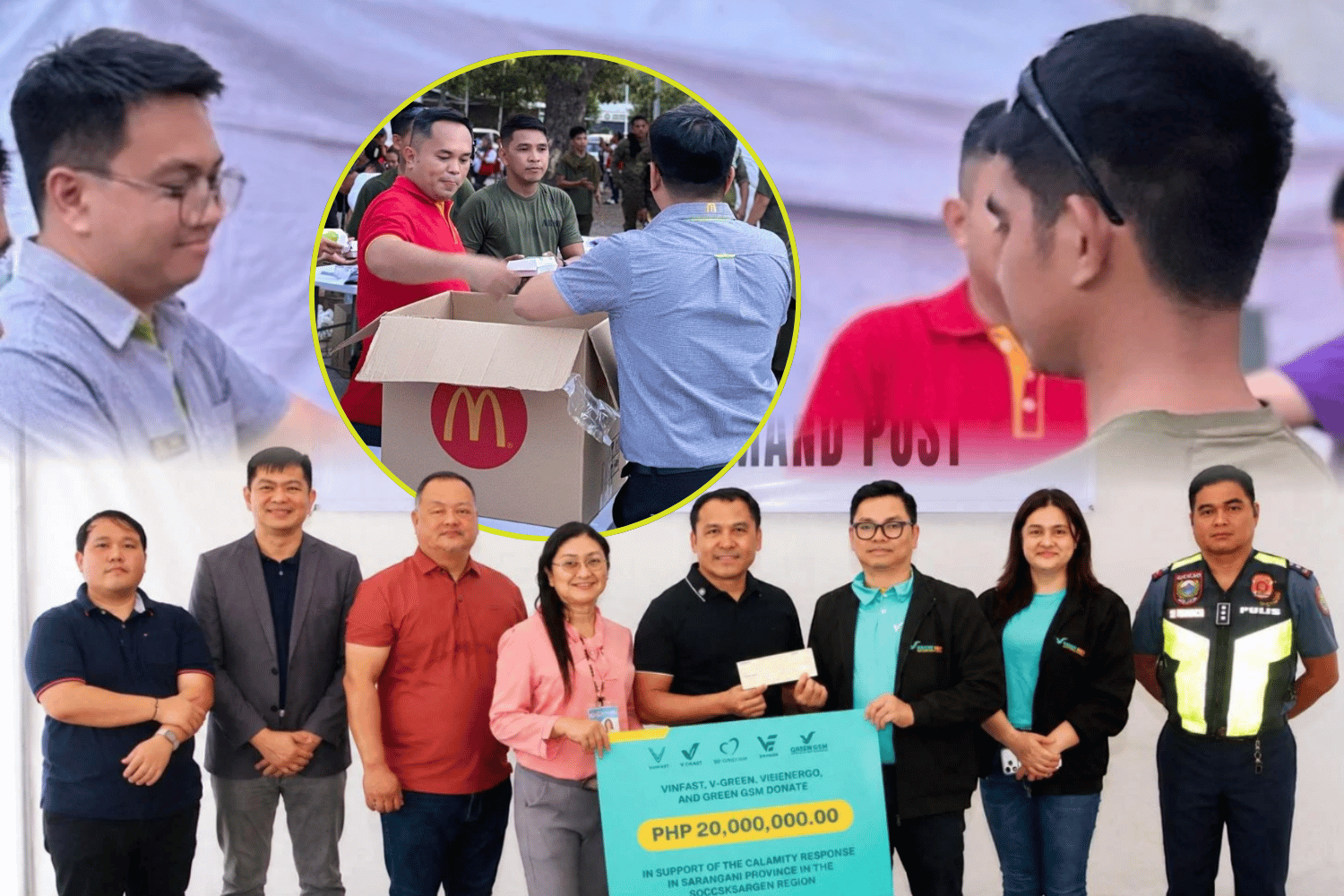
In contrast, McDonald’s Philippines focused on direct operational relief through its McDonald’s Kindness Kitchen program. The company committed to delivering at least 10,000 meals to affected communities in Southern Mindanao. Within 24 hours of the earthquake, initial batches of hot meals were already distributed in General Santos City, with additional deliveries scheduled for other impacted areas. The effort also extended to frontline responders such as rescuers and health workers. Unlike cash donations, this type of response relies on logistics, supply chains, and existing food service infrastructure to meet immediate needs on the ground.
A third approach came from a group of Vietnamese companies operating in the Philippines, including VinFast, V-Green, VinEnergo, and Green GSM. Together, they announced a relief program worth more than ₱50 million. The package included allocations to General Santos City, Sarangani Province, and Davao Occidental, as well as direct financial assistance of ₱100,000 for families of those who died in the earthquake. Unlike single-initiative donations, this type of response is structured across multiple entities and locations, combining corporate funding with targeted distribution coordinated with local governments.
The three initiatives illustrate how corporate disaster response can take several forms. It can come through event-linked donations, operational deployment of services, or structured multi-company assistance programs. Each approach taps into different strengths within the private sector, whether in mobilizing public participation, activating logistics networks, or deploying capital at scale.
What they share is timing and purpose. In disaster situations, speed often matters as much as scale. Early support can help fill immediate gaps while public agencies manage broader coordination efforts. At the same time, corporate participation does not replace government response, but it can provide additional resources and capacity when communities need them most.
These examples are also far from exhaustive. Other companies and organizations have provided assistance or mobilized resources following the earthquake, while additional support efforts continue as recovery progresses. The scale of need after major disasters often exceeds what any single group can address on its own, making contributions from businesses, civil society organizations, and ordinary citizens all the more important.
Aside from CSR commitments, these initiatives can also strengthen relationships with communities, employees, customers, and local governments. Motivations may differ from one company to another, but the immediate impact is measured by how quickly assistance reaches people who need it.
Recovery efforts in Mindanao will continue long after emergency response operations end and public attention shifts elsewhere. The needs that follow a major disaster rarely disappear after the first few weeks, making sustained support just as important as immediate aid. The examples highlighted here offer a glimpse of how businesses can contribute during difficult times and why continued participation from the private sector remains valuable as affected communities rebuild.
READ:
First day of classes disrupted as 7.8-magnitude earthquake hits Mindanao
John Lloyd Aleta
June 8, 2026
Seismic-grade steel push gains urgency after Mindanao earthquake
radar Business
June 24, 2026
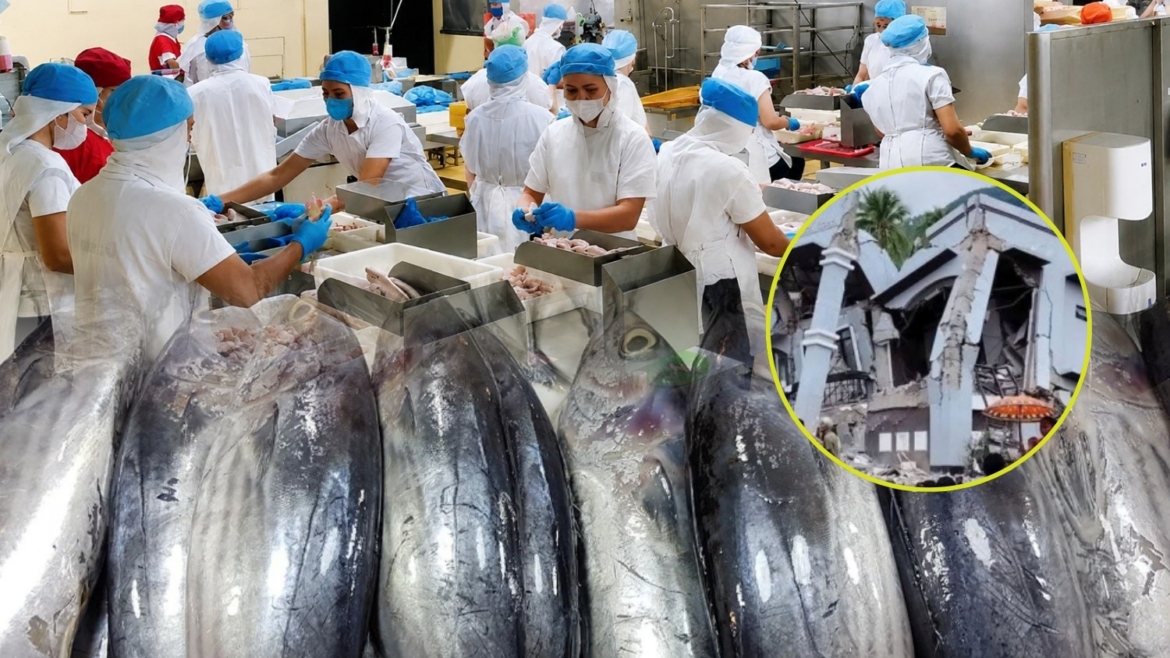
Aftershocks force delay in reopening of tuna and salmon exporter in quake-hit GenSan
John Lloyd Aleta
June 16, 2026