Nganga is the centuries-old chew that stained generations of Filipino smiles.
The ritual always began after lunch.
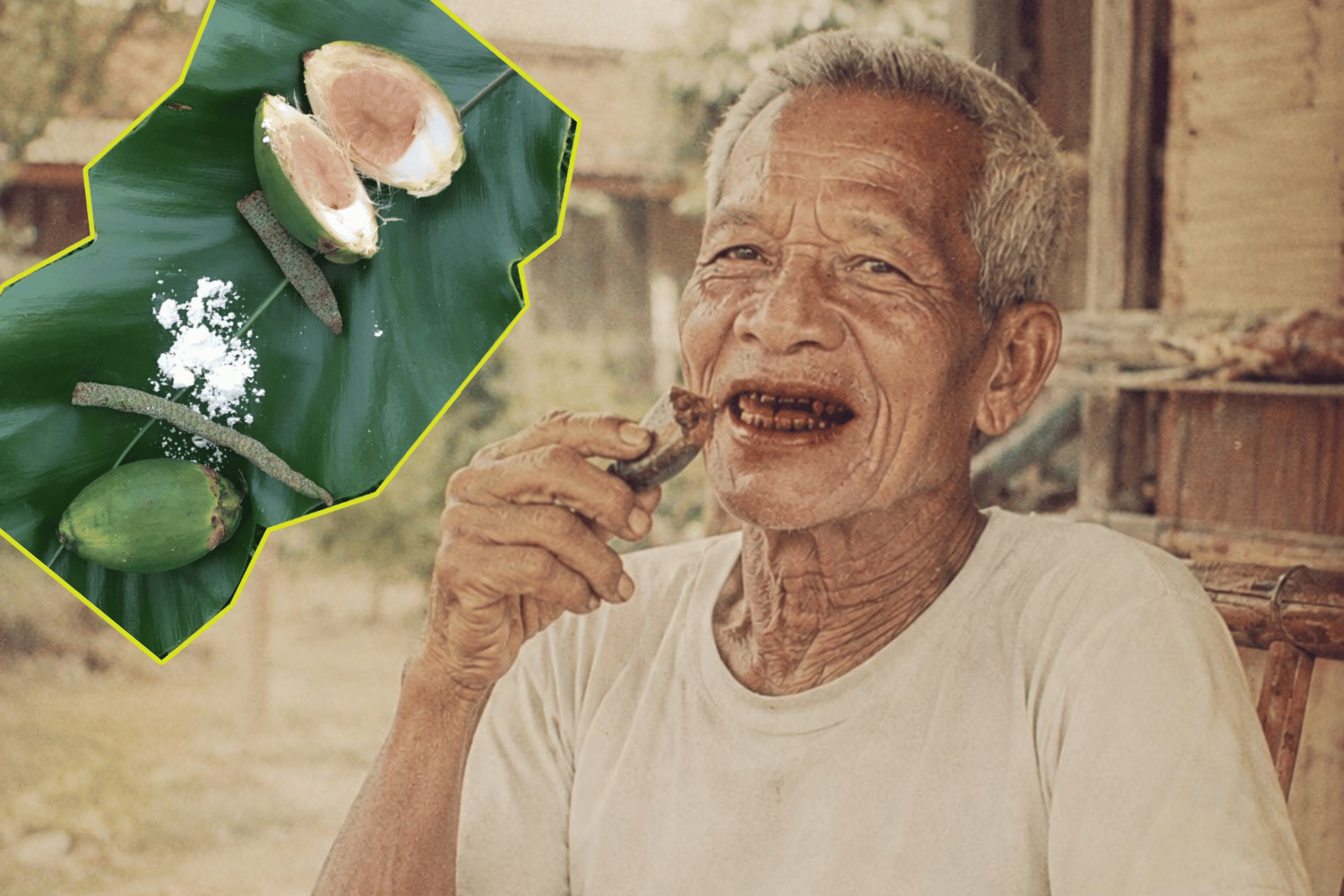
Your lolo would sit quietly outside the house with a small metal container beside him. From it, he carefully took out sliced bunga, green betel leaves, apog, and sometimes tobacco. He prepared everything slowly, almost ceremonially, before chewing. Minutes later, his lips turned reddish, and he would spit a stream of dark red juice onto the ground.
As a child, it looked mysterious. But back then, it was normal.
For many Filipinos who grew up before the late 1990s, seeing grandparents with reddish-brown or almost black teeth was common. The stains came from nganga — also called moma in the Cordilleras — a traditional chew made from areca nut, betel leaf, slaked lime, and tobacco.
Long before coffee chains, energy drinks, or vapes, nganga was the province’s everyday stimulant. Farmers, fishermen, drivers, and elders chewed it to stay awake, suppress hunger, and boost energy during long hours of work. The chemical reaction from the ingredients produced a mild high similar to nicotine or caffeine.
But nganga was more than a habit. It was culture.
Historians say Filipinos had been chewing betel nut for thousands of years before Spanish colonization. Offering nganga was once considered hospitality, especially in indigenous communities across Mindanao and the Cordilleras. Elders carried small pouches of ingredients everywhere, preparing them almost like a sacred ritual.
The practice eventually faded with urbanization and modern beauty standards. Whitening toothpaste commercials and celebrity culture turned white teeth into symbols of success, while nganga became associated with old rural life.
Health warnings also contributed to its decline. Studies later linked long-term betel nut chewing to gum disease, addiction, and oral cancer. The World Health Organization eventually classified areca nut as a carcinogen.
Still, for many Filipinos, nganga remains a vivid memory of grandparents sitting on bamboo benches, quietly chewing while telling stories — their dark reddish smiles becoming part of a disappearing Filipino past.