An error in a marketing campaign sparked widespread hope across the Philippines before leaving hundreds of thousands of people holding worthless bottle caps.
The bottle cap shakes slightly in your hand. You check the number once. Then twice. Then again, just to make sure your eyes are not playing tricks on you.
The same number flashed on television moments ago. The winning number. One million pesos.
Inside cramped sari-sari stores, living rooms with flickering tube TVs, and neighborhood basketball courts where people gathered around radios and small screens, screams erupted almost all at once across the Philippines that night in May 1992. Mothers cried. Fathers hugged strangers. Teenagers ran barefoot down the streets waving bottle caps in the air. For a few breathless minutes, nearly half a million Filipinos believed life had finally changed.
A million pesos back then was not just money. It was escape.
It was the dream of finally leaving the squatters’ area. A chance to stop riding the jeep hanging by the rails every morning. Tuition for children. A small negosyo. A tricycle franchise. A concrete roof replacing rusty yero sheets that turned into waterfalls during typhoon season.
And all of it seemed possible because of a soft drink bottle cap.
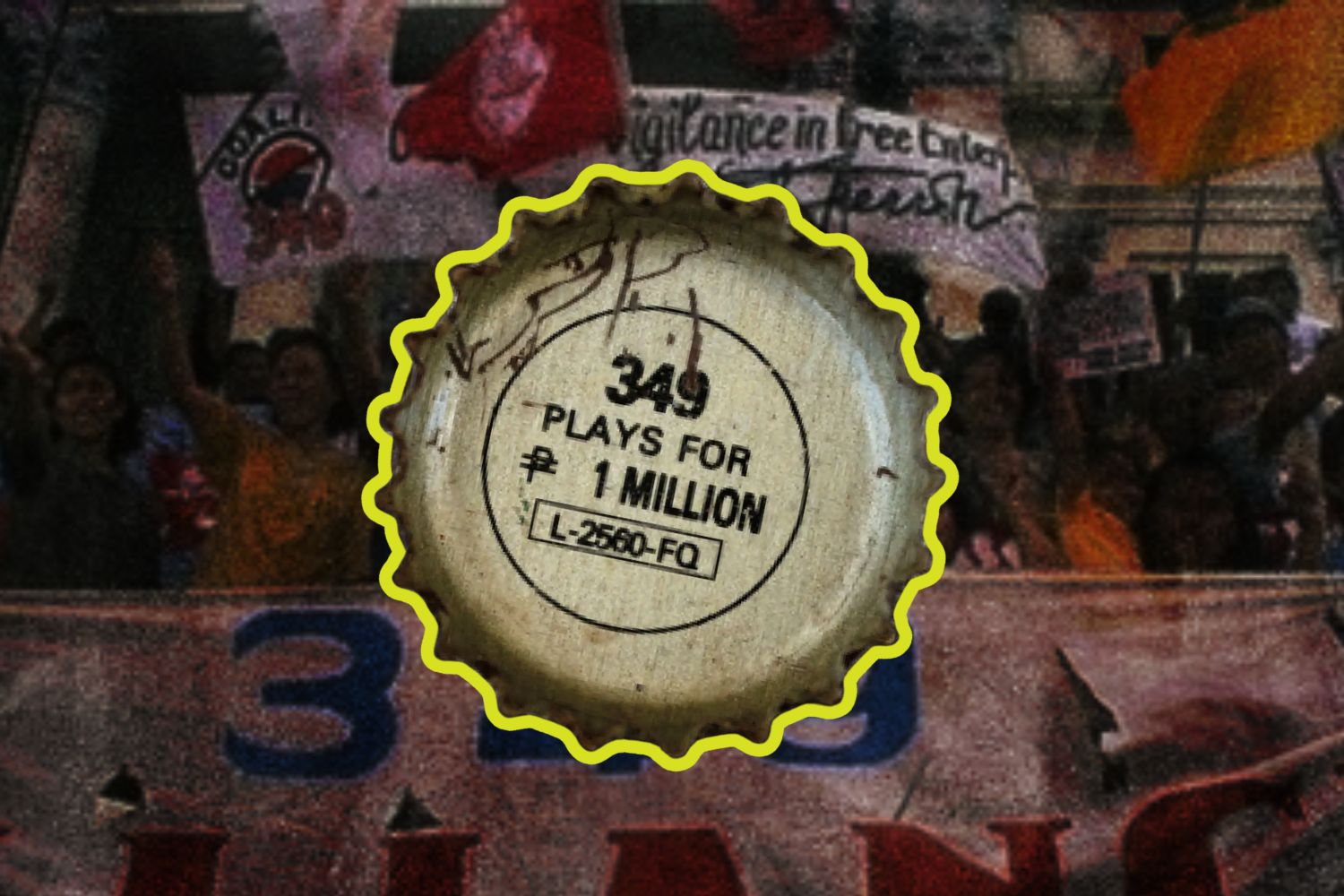
The Pepsi Number Fever promo had become a nationwide obsession almost overnight. Under every cap of Pepsi, 7-Up, Mountain Dew, and Mirinda was a three-digit number. Every evening, television stations announced winning combinations. Smaller prizes already made ordinary Filipinos excited, but the grand prize of ₱1 million transformed the promo into a national ritual.
People bought soft drinks not out of thirst, but out of hope.
Families dug through piles of empty bottles. Store owners carefully stacked caps in plastic containers. Some even developed superstitions about where lucky bottles came from. At its peak, Pepsi’s market share surged dramatically as Filipinos chased what felt like the most accessible shortcut to wealth the country had ever seen.
Then came May 25, 1992.
The winning number announced that evening was 349.
What Pepsi did not know yet was that a catastrophic computer error had accidentally printed hundreds of thousands of bottle caps carrying the same supposedly winning number. Instead of only a handful of jackpot winners, nearly 490,000 Filipinos suddenly believed they had become millionaires overnight.
The next morning felt like a national fiesta.
Factories and Pepsi offices were flooded with people carrying caps. Entire neighborhoods celebrated together. Some reportedly began making purchases in advance. Others borrowed money confidently, believing millions were already on the way.
Then reality crashed in.
Pepsi announced that most of the 349 caps were invalid because they lacked the proper security code. The company refused to honor the payouts.
The excitement instantly curdled into humiliation, rage, and heartbreak.
For many Filipinos, it did not feel like a mere technical glitch. It felt like hope itself had been snatched away after already being tasted. The country was already struggling with poverty, unstable power supply, political uncertainty, and widening economic inequality. Suddenly, hundreds of thousands of people who briefly believed they had escaped hardship were being told it was all a mistake.
The backlash exploded nationwide.
Protests erupted outside Pepsi facilities. Boycotts spread. Angry crowds burned and overturned delivery trucks. Homemade explosives were hurled at company vehicles. Consumer groups like the “349 Alliance” emerged to demand justice. The scandal became so massive that being “349-ed” entered Filipino slang as shorthand for being deceived or scammed.
The violence eventually turned deadly. Several people died during the unrest, including innocent bystanders caught in attacks connected to the controversy.
Pepsi later offered ₱500 as a goodwill payment to holders of the erroneous caps. Many accepted, not because they were satisfied, but because life had to move on somehow.
Years of lawsuits followed. In 2006, the Philippine Supreme Court ruled that Pepsi was not legally obligated to pay the millions tied to the mistakenly printed caps.
But decades later, the story still lingers in Filipino memory because it was never really just about soda.
It was about how easy it was to believe that one lucky break could change everything.
For one strange night in Philippine history, almost half a million people went to sleep thinking poverty was finally over. And when morning came, they discovered they were still exactly where they started.
For many Filipinos, it did not feel like a mere technical glitch. It felt like hope itself had been snatched away after already being tasted. Hundreds of thousands of people who briefly believed they had escaped hardship were being told it was all a mistake.
READ:
Philippines rewrites part of ancient human history
Kenneth M. del Rosario
May 20, 2026
ISP Bonanza and the years of slow pre-paid internet access
radar Lifestyle
April 12, 2026
Makeshift Betamax theaters started my love for cinema
Matahari
May 14, 2026