Improper tapping practices threaten the survival of Almaciga trees.
You have probably encountered Manila Copal without ever realizing it.
It may be the glossy varnish protecting an antique cabinet, the lacquer on a musical instrument, the ink on a printed page, or the fragrant kamangyan burned during church services and family prayers. For centuries, this prized natural resin has quietly traveled from Philippine forests to homes and industries around the world.
Its source, however, is running out.
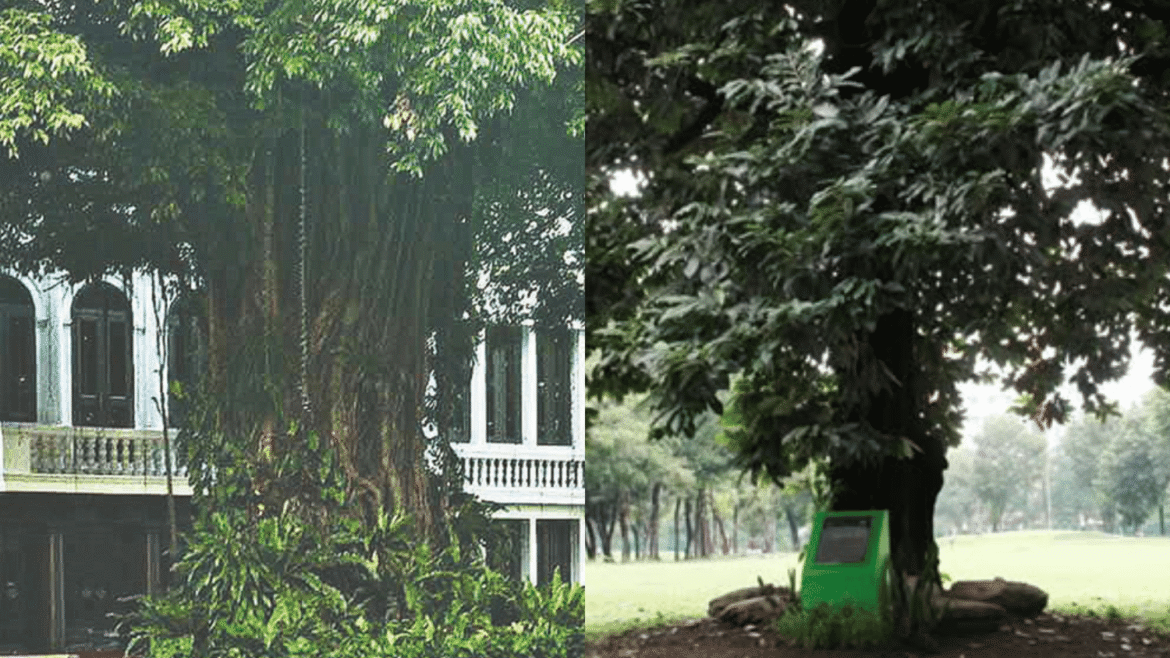
The Almaciga (Agathis philippinensis), also known as the Philippine Kauri, is one of the country’s oldest native tree species. Towering up to 65 meters high and capable of living for more than 1,000 years, it has stood through centuries of Philippine history. Yet conservationists now warn that fewer than 1,000 mature trees may remain in the wild.
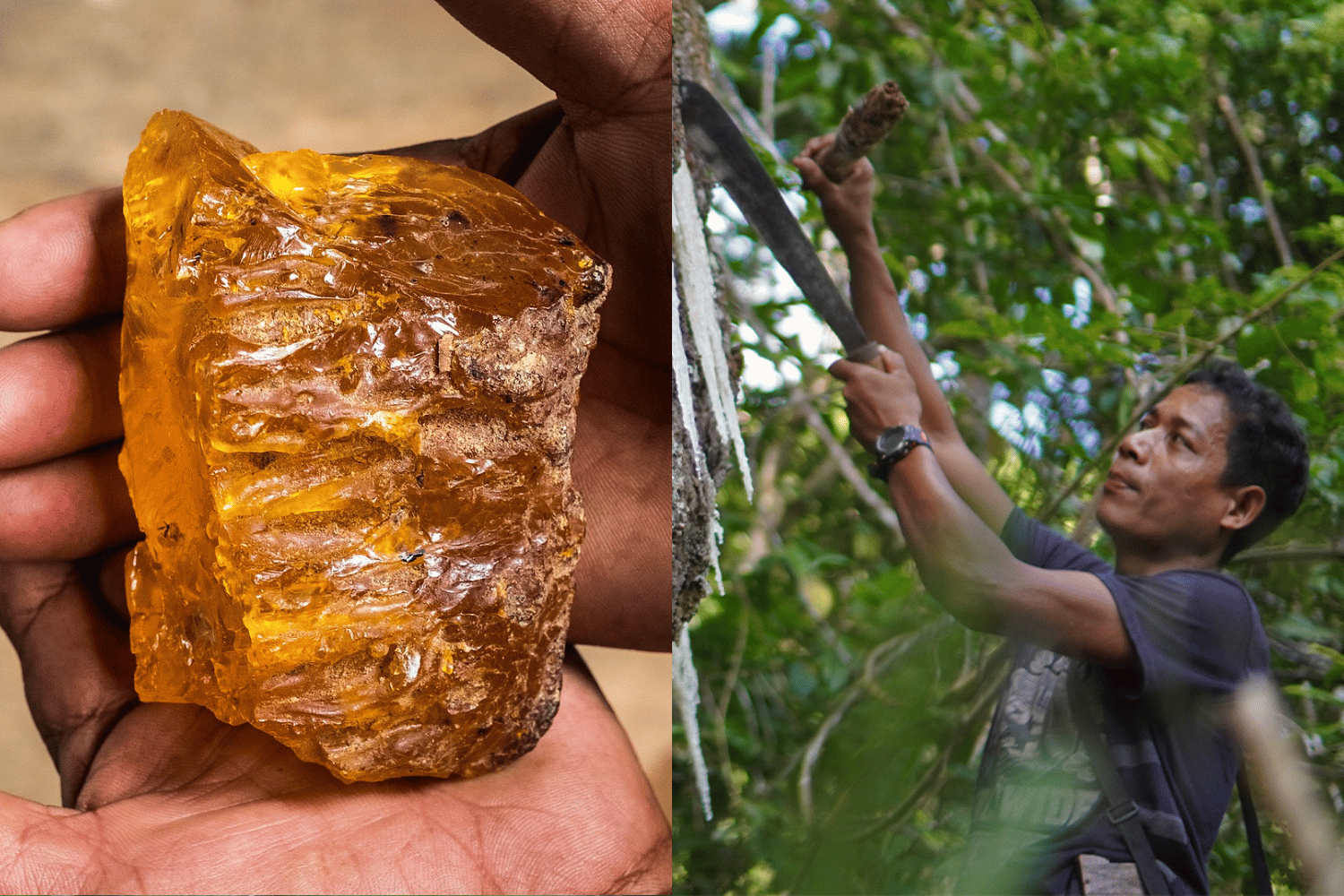
The Almaciga produces the world-famous Manila Copal, a hard, amber-like resin released when its bark is carefully tapped. Named after Manila, once the resin’s main export port during the Spanish colonial era, it has long been used to make premium varnishes, lacquers, paints, printing inks, waterproof coatings, leather waxes, and even laboratory mounting materials.
For Indigenous communities in Palawan, Samar, and parts of Mindanao, the tree is more than a natural resource. Harvesting Manila Copal provides up to 80 percent of household income, making the Almaciga one of the few forest species that can sustain livelihoods without being cut down.
Ironically, it is this very resin that now threatens its survival.
Improper tapping techniques—deep cuts made to increase resin yield—damage the tree’s living tissue, allowing fungi, insects, and decay to kill giants that have stood for centuries. Illegal logging continues to claim mature trees, while the species’ fragile seeds remain viable for only a short time, making natural regeneration painfully slow.
Conservation groups, scientists, and Indigenous communities are racing to reverse the decline through sustainable tapping, seed banking, and forest restoration. Their hope is to prove that protecting the tree is more valuable than exploiting it.
If the Almaciga disappears, the Philippines will lose more than a tree. It will lose a thousand-year-old guardian of its forests, a vital source of Indigenous livelihood, and the living origin of Manila Copal—a product that quietly carried the country’s name across the world.
READ: