Behind the joke is likely a hardworking blue-collar worker hoping someone with a clogged drain will make a call.
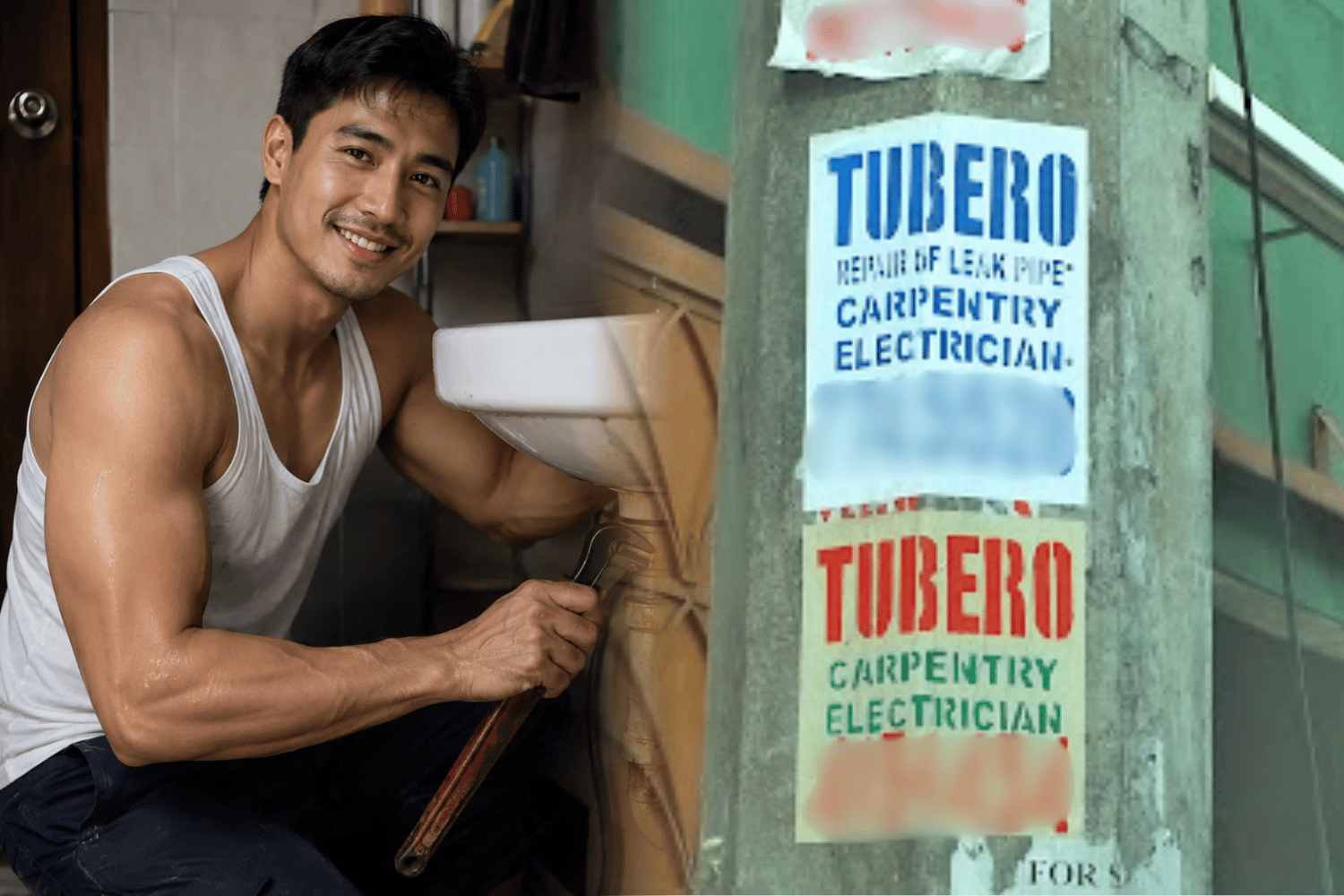
You have probably seen them everywhere—small white stickers or hand-painted signs taped to electric posts, walls, or waiting sheds. They usually contain just one word: TUBERO, followed by a mobile number.
For years, many Filipinos have laughed at a persistent rumor surrounding these humble advertisements. Supposedly, calling the number doesn’t just get you someone to unclog your toilet—it gets you a handsome, muscular man offering “extra services.”
It has become one of the country’s most enduring urban legends.
But is there any truth to it?
The answer is no.
Despite countless memes, jokes, and viral social media posts, there is no credible evidence that the vast majority of these tubero advertisements are coded solicitations for male sex work. In reality, they are exactly what they claim to be: neighborhood plumbers trying to earn a living.
How the rumor started
The myth owes its popularity largely to Filipino humor.
In colloquial Tagalog, the word “tubo” has long been used as a sexual double entendre, while the phrase “paglilinis ng tubo” can carry an unmistakably suggestive meaning. That linguistic coincidence became fertile ground for jokes.
The stereotype that plumbers are physically strong because of the demanding nature of their work added another layer. Online, people began imagining that calling the number on the sticker would summon a shirtless, attractive man arriving for a very different kind of “home service.”
Before long, Facebook posts, Reddit threads, TikTok videos, and memes blurred the line between satire and reality. What started as a joke gradually became something many people genuinely believed.
The real people behind the stickers
The truth is far less scandalous.
Most of these signs belong to independent plumbers, septic tank cleaners, and declogging specialists who cannot afford expensive advertising. Printing dozens of small stickers and placing them around nearby neighborhoods is one of the cheapest ways to attract customers.
When you call them, they ask about your clogged sink, broken pipe, leaking faucet, or overflowing toilet—not your preferences.
They typically arrive carrying pipe wrenches, manual augers, sealants, and other plumbing tools, ready to do messy work that most homeowners cannot do themselves.
For many, every sticker represents a chance to earn enough for the day’s meals.
When memes become “facts”
The tubero legend also shows how quickly internet humor can transform into accepted folklore.
A joke repeated thousands of times eventually starts sounding believable, especially to younger Filipinos who first encountered the stickers through memes rather than through actual plumbing emergencies.
The exaggerated images of shirtless “plumbers,” suggestive captions, and fake advertisements are part of internet comedy—not evidence of a hidden underground industry.
An urban legend that refuses to die
The next time you pass one of those weathered Tubero signs on an electric pole, remember that behind the joke is likely a hardworking blue-collar worker hoping someone with a clogged drain will make a call.
The stickers may have inspired one of the Philippines’ funniest urban legends, but for the people who put them up, there is nothing mysterious about them.
They’re simply looking for their next plumbing job—not their next viral meme.
READ: