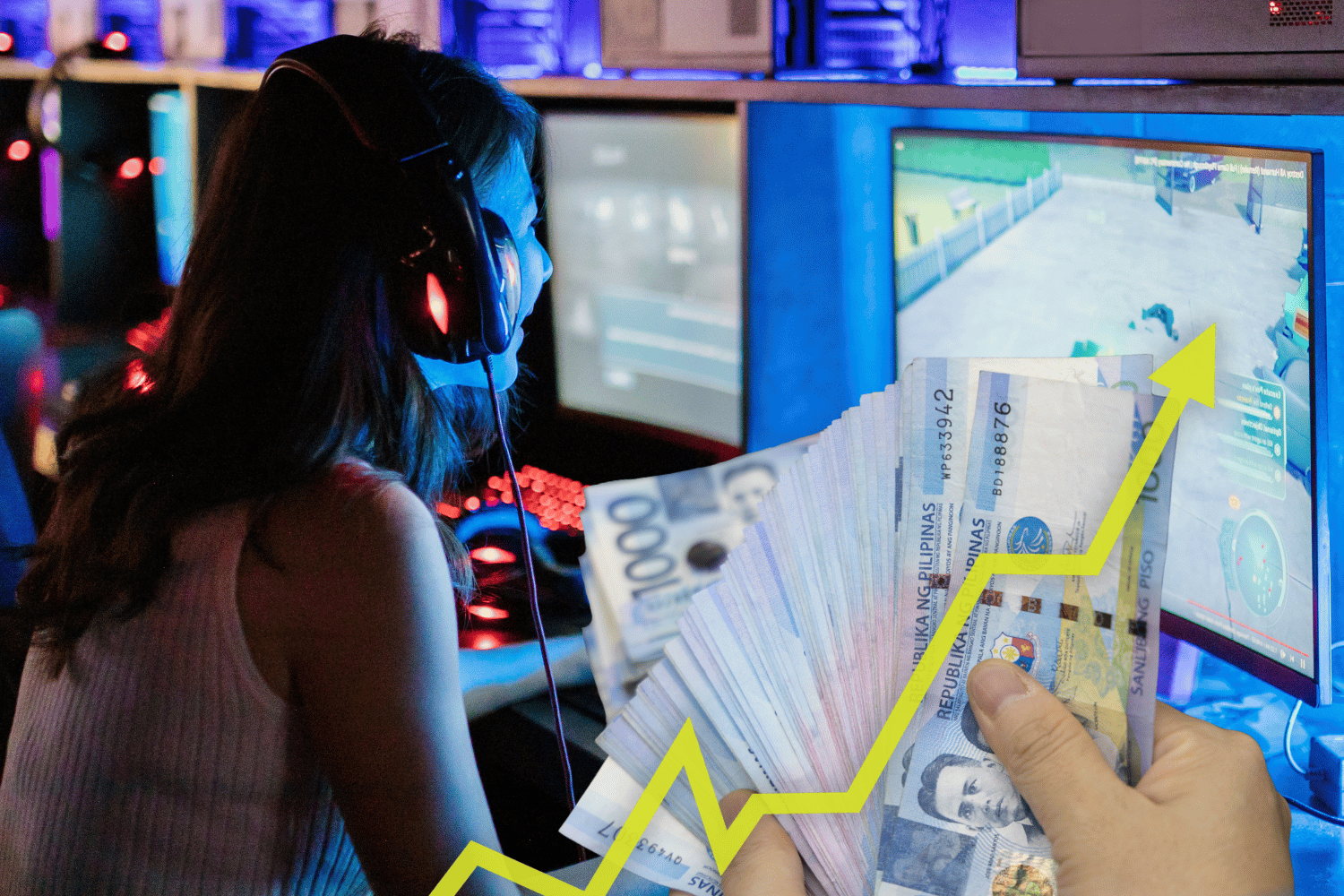
Once considered a hobby, gaming has evolved into a growing informal labor market.
For a generation of Filipinos exhausted by a saturated local job market and entry-level wages, the traditional corporate ladder is rapidly losing its appeal.
Instead, some young Filipinos are turning to the unregulated, borderless economies of global gaming platforms in search of higher-paying opportunities, with some reporting potentially six-figure incomes.
Local Redditors in career forums have shared their successes, with some detailing how they generate substantial monthly revenue through Roblox digital asset trading and freelance Minecraft world-building projects.
What was once considered a hobby has evolved into a growing informal labor market.
This migration to the virtual gig economy is driven, in part, by domestic macroeconomic realities.
According to the Philippine Statistics Authority (PSA), persistent youth underemployment and a lack of high-paying opportunities have led some young workers to seek alternative income streams, including digital platforms that connect them with global markets.
In these digital spaces, income is dictated by global demand and digital arbitrage.
On Roblox, creators and traders can convert highly sought-after in-game assets and virtual currency into real-world money through official channels like the Roblox Developer Exchange (DevEx).
By buying digital goods at a lower market rate and selling them at a premium, Filipino traders are effectively participating in decentralized, cross-border e-commerce operations.
Minecraft, meanwhile, does not have an equivalent cash-out system. Instead, the freelance construction of Minecraft worlds operates as an informal form of offshore digital labor. By exporting skills in 3D modeling and virtual environment design to foreign clients, young Filipinos can take on commissioned projects from content creators and operators of private servers.
Global freelance marketplaces have noted a surge in demand for virtual designers, allowing local workers to earn foreign currency while operating entirely outside the traditional Philippine business process outsourcing (BPO) sector.
However, this financialization of play comes with significant risks.
Because these workers operate in largely unregulated markets, they exist outside the protections of the Department of Labor and Employment (DOLE).
They have no security of tenure, no employer-mandated SSS or PhilHealth contributions, and little to no legal recourse if a platform bans their account or a foreign client defaults on payment.
Furthermore, this informal labor market comes with systemic financial risks.
Virtual asset prices are largely dictated by platform rules, algorithms, and global player demand, meaning a trader’s inventory can lose its real-world value overnight due to a sudden patch update.
Adding to these risks is the rise of digital arbitrage “mentors” on social media who sell courses, exclusive Discord access, or paid “trading signals” claiming to offer guaranteed returns.
Because these transactions occur in unmoderated private channels, buyers have little to no consumer protection or legal recourse when the promised mentorship fails to materialize.
Whether this trend continues will depend on both the local labor market and the sustainability of these digital platforms. For now, the virtual gig economy remains a prominent, though precarious, income source for some young Filipinos looking beyond the traditional corporate grind.
READ: