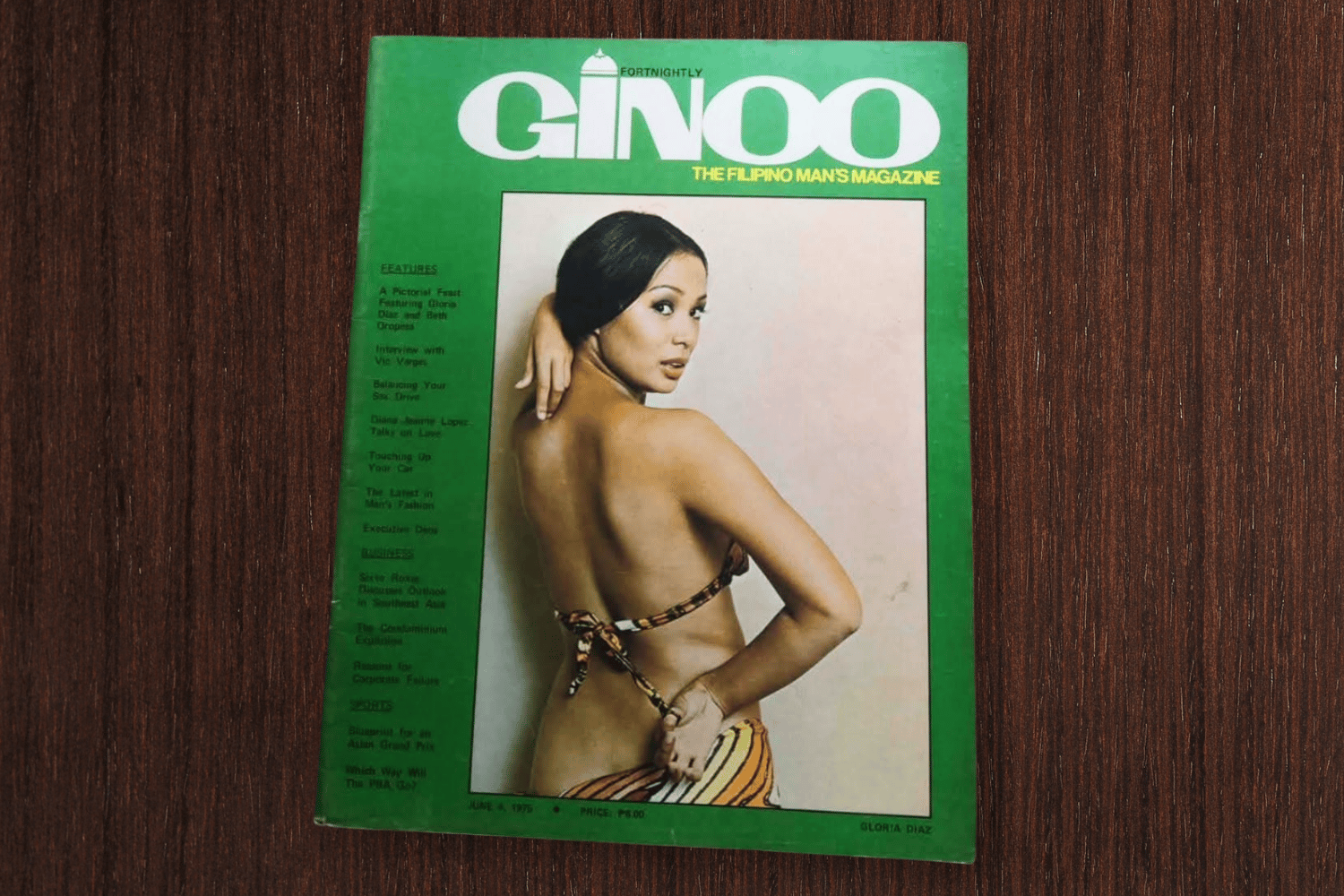
The internet has rediscovered one of Gloria Diaz’s boldest career moves—and it’s turning heads more than 50 years later.
A vintage copy of “Ginoo: The Filipino Man’s Magazine” dated June 4, 1975 has resurfaced online, reminding Filipinos of the time the country’s first Miss Universe posed for what was then the nation’s first men’s magazine.
On the cover, Diaz looks over her shoulder wearing a revealing halter top and a striped wrap skirt that exposes part of her bottom. By today’s standards, the image may seem tame. But in 1975—at the height of the Martial Law era, when censorship and conservative values dominated public life—it was considered daring enough to become one of the magazine’s most memorable covers.
The timing made it even more remarkable.
Diaz was already a national icon after making history as the first Filipina to win the Miss Universe crown in 1969. Instead of carefully guarding a squeaky-clean beauty queen image, she appeared on a publication that openly marketed itself as “The Filipino Man’s Magazine.”
Before “FHM Philippines,” “Maxim,” or other glossy men’s titles hit local newsstands, there was “Ginoo.”
Launched in 1975 by veteran journalist Rod Reyes, the fortnightly magazine became the country’s first homegrown men’s lifestyle publication. It mixed glamorous celebrity pictorials with serious journalism, business stories, sports, literature, and politics. Its cheeky slogan said it all: “It has business and sex (in Ginoo, they mingle well).”
Diaz wasn’t the only famous face to appear on its cover. During its brief but influential run, “Ginoo” also featured some of the biggest stars of the decade, including Alma Moreno, Ana Marin, Beth Oropesa, Daria Ramirez, and Vilma Santos. For many readers, it became a showcase of the country’s most celebrated actresses, beauty queens, and screen sirens.
But the magazine wasn’t all about glamorous photos. Behind the covers were contributions from respected Filipino journalists and writers, including Vergel Santos and Teddy Benigno, helping “Ginoo” earn a reputation for combining provocative imagery with substantial reading.
The publication folded after a little over a year, but its influence lingered. Original copies have since become prized collector’s items among vintage magazine enthusiasts and pop culture historians.
And as the June 4, 1975 issue makes the rounds online once again, it serves as a reminder that long before social media, viral photo shoots, and celebrity magazine covers, Gloria Diaz had already proven she wasn’t afraid to challenge expectations.
READ: