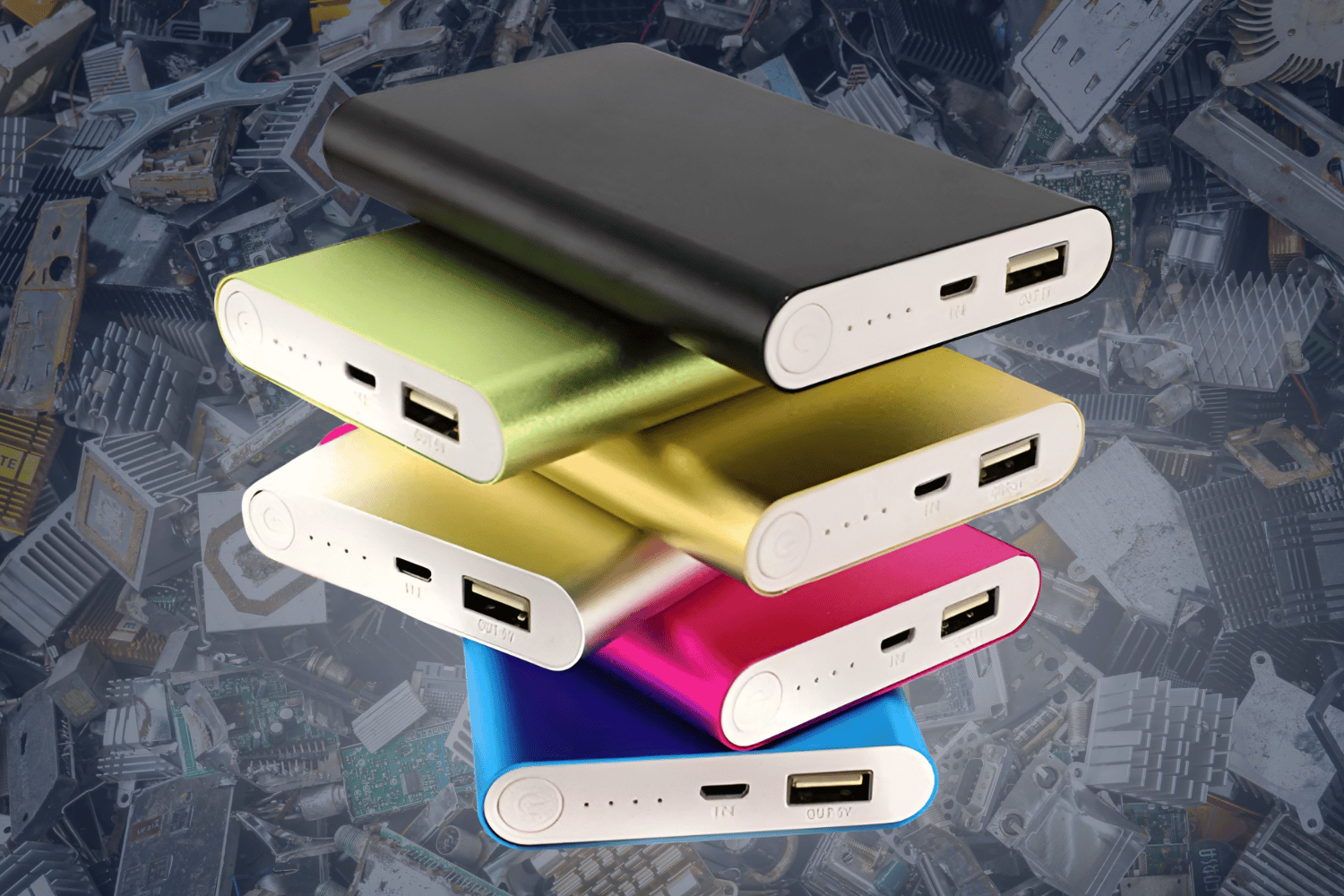
Here’s where it should go.
You finally decide to clean out that drawer full of old chargers, tangled cables, and power banks that no longer hold a charge. Just as you’re about to toss everything into the trash, you stop and wonder: Is that actually safe?
For a dead power bank, the answer is no.
That small rectangular gadget may look harmless, but inside is a lithium-ion battery that can catch fire if crushed, punctured, or exposed to heat. Throwing it into your household garbage doesn’t just risk a fire inside a garbage truck or landfill—it can also release harmful chemicals into the environment.
The good news? Getting rid of a dead power bank properly is easier than most people think.
Don’t throw it in the trash
Unlike ordinary household waste, power banks are considered electronic waste or e-waste.
Even if they no longer charge your phone, their batteries still contain energy and chemicals that require specialized handling. When compacted inside garbage trucks, damaged lithium-ion batteries have been known to spark fires.
Burning them isn’t any better. Lithium-ion batteries can explode when exposed to extreme heat, making incineration one of the most dangerous disposal methods.
Where Filipinos can drop them off
Several malls and technology hubs across the Philippines now have dedicated e-waste collection bins where old power banks can be safely recycled.
SM Supermalls, through its Electronic Waste Collection bins located in many Cyberzone branches nationwide, accepts small gadgets and accessories such as dead power banks.
Globe Telecom also operates E-Waste Zero collection points in select Globe Stores, where customers can drop off old chargers, batteries, mobile accessories, and broken power banks.
Some Robinsons Malls have also installed Smart e-waste bins, while community collection points are available in parts of the University of the Philippines Diliman campus for small electronic devices.
These collection points ensure that batteries are handled by facilities equipped to recycle them safely instead of ending up in landfills.
Prepare it before you drop it off
Before placing your power bank into an e-waste bin, take a few simple precautions.
Cover the USB ports with electrical tape or clear tape to prevent accidental short circuits while the device is transported.
If requested by the collection site, place the power bank inside its own plastic bag.
Most importantly, never try to pry it open to remove the battery yourself. Damaging the casing can expose the battery cells and create a serious fire risk.
Watch out for swelling
If your power bank looks bloated, cracked, or swollen, don’t ignore it.
A swollen battery usually means gases have built up inside the lithium-ion cells, making the device unstable.
Stop using or charging it immediately. Don’t keep it inside your bag, car, or bedroom drawer.
Instead, place it in a non-flammable container away from combustible materials until you can bring it to an authorized e-waste or hazardous waste collection facility.
What you should never do
There are a few disposal mistakes worth avoiding.
Don’t throw a power bank into your regular trash.
Don’t burn it.
Don’t leave it with ordinary scrap metal collectors who aren’t equipped to process lithium-ion batteries safely.
Each of these options increases the risk of fire, environmental contamination, or injury.
That dead power bank may no longer save your phone when the battery runs low, but disposing of it properly could prevent something much worse.
Sometimes, the most responsible upgrade isn’t buying a new gadget. It’s making sure the old one ends its life safely.
READ:
Back-to-school lists now include laptops, tablets, power banks
Annie Azucena
July 24, 2026
Burned laptop post draws hope from strangers
Top Dagohoy
July 25, 2026

Should you return your ex’s gifts after a breakup?
Top Dagohoy
August 2, 2026