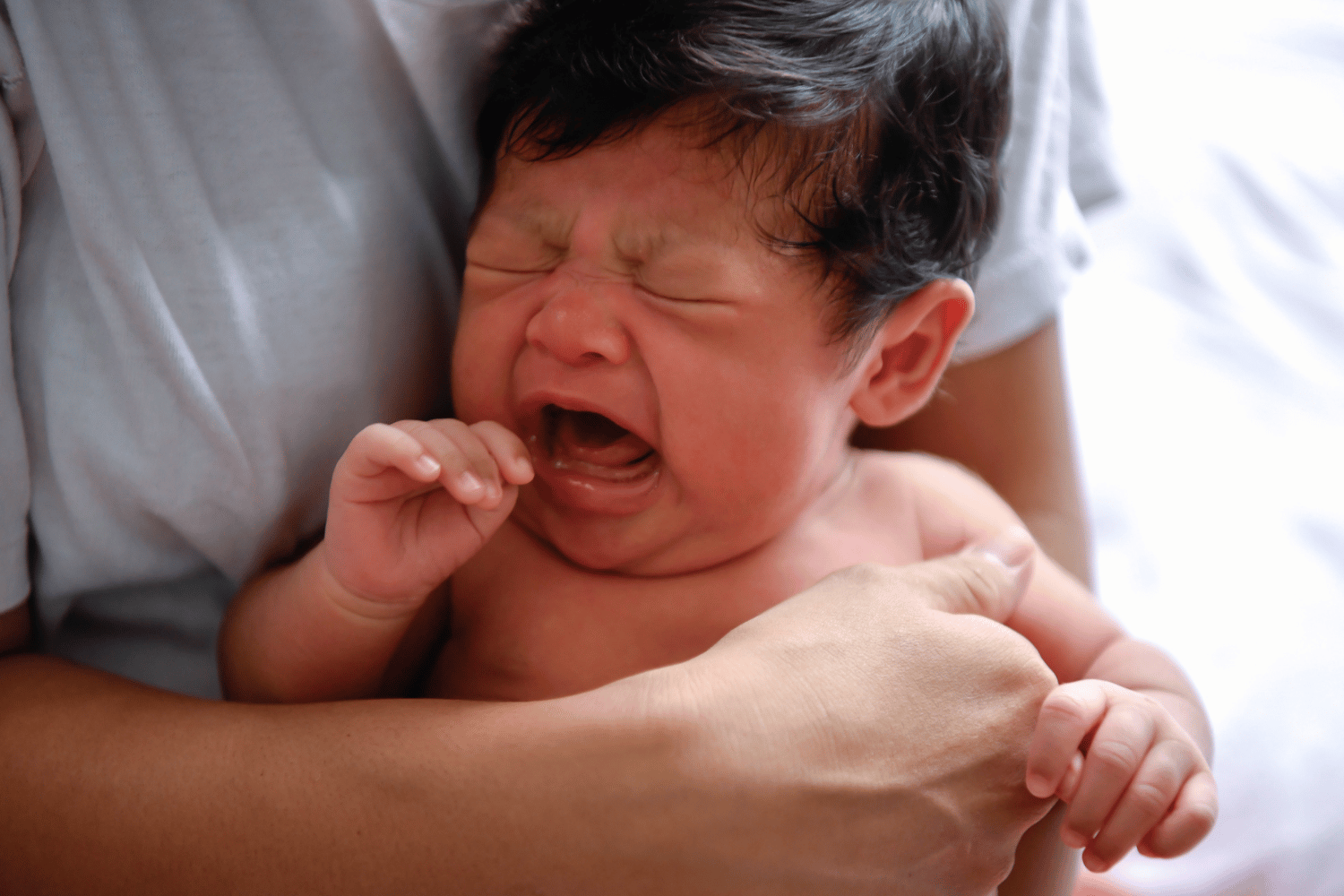
Here’s what really makes babies cry according to doctors.
A family friend drops by to visit your newborn. They smile, admire the baby, and carry the little one for a few minutes. Not long after they leave, your baby suddenly becomes inconsolable—crying nonstop, squirming in discomfort, refusing to feed, or even developing a fever. Someone quickly says the visitor forgot to say, “Pwera usog.”
It’s a scene that has played out in Filipino homes for generations.
For many, the explanation is simple: the baby was “nausog.”
But science says otherwise.
Despite being one of the Philippines’ oldest and most enduring folk beliefs, there is no scientific evidence that usog exists. Medical professionals consider it a cultural superstition rather than a real medical condition. The symptoms commonly blamed on usog have well-understood medical explanations.
Why babies cry after visitors
The belief in usog probably persists because the timing often seems convincing.
A baby appears perfectly fine before visitors arrive. After being carried, talked to, or admired by several people, the infant suddenly becomes fussy, cries uncontrollably, or develops stomach discomfort.
To many, that feels like proof.
Doctors, however, point to something much more ordinary.
Babies have highly sensitive nervous systems. Being surrounded by unfamiliar faces, loud voices, bright lights, and constant handling can overwhelm them. This sensory overload can leave infants overstimulated, making them irritable and difficult to soothe.
The crying itself can also cause babies to swallow excess air, leading to trapped gas and colic—another common symptom often mistaken for usog.
Germs, not “bad energy”
When babies develop fever, vomiting, or diarrhea after family gatherings, the cause is far more likely to be germs than supernatural energy.
Infants have immature immune systems. Visitors who touch, kiss, cough near, or handle babies can unknowingly pass along bacteria and viruses, causing real illnesses.
What appears to be usog may simply be the first signs of a viral infection picked up during the visit.
Why “pwera usog” seems to work
Many Filipinos believe that saying “Pwera usog” and dabbing saliva on a baby’s forehead or stomach immediately cures the problem.
Science offers another explanation.
Most crying episodes naturally end after a baby is comforted, burped, fed, or allowed to rest. Because the ritual happens just before the child settles down, people naturally associate the improvement with the chant rather than the baby’s normal recovery.
Psychologists call this confirmation bias—the tendency to remember events that support an existing belief while ignoring those that don’t.
The danger of the saliva ritual
Ironically, one of the most common usog remedies may pose an actual health risk.
Pediatricians discourage putting saliva on babies because human saliva contains bacteria and viruses that can be transmitted to infants, whose immune systems are still developing.
Instead of protecting a child, the practice may expose them to infections.
Culture and science can coexist
Usog remains an important part of Filipino folklore and reflects how earlier generations tried to explain illnesses before modern medicine became widely available. It is part of our cultural heritage and history.
But culture should not replace science when it comes to a child’s health.
Today, medicine has found no evidence that a stranger’s greeting, compliment, or presence can mysteriously make a baby sick. What does make babies cry are things doctors understand well: overstimulation, gas, colic, viral infections, hunger, fatigue, and many other common childhood conditions.
The best way to protect a baby isn’t asking every visitor to say “Pwera usog.” It’s practicing good hygiene, limiting unnecessary handling, avoiding kisses from people who may be sick, keeping vaccinations up to date, and consulting a doctor whenever an infant develops persistent fever, vomiting, dehydration, or other worrying symptoms.
Sometimes, the real explanation isn’t a mystery at all. It’s simply science.
READ:
The truth about singaw and the fastest ways to make it heal
Top Dagohoy
August 5, 2026
EXPLAINER: What you should do when you have sinok
Top Dagohoy
August 2, 2026
Posts offering cash for children’s smiling photos raise safety concerns
Allyson Capati
July 10, 2026