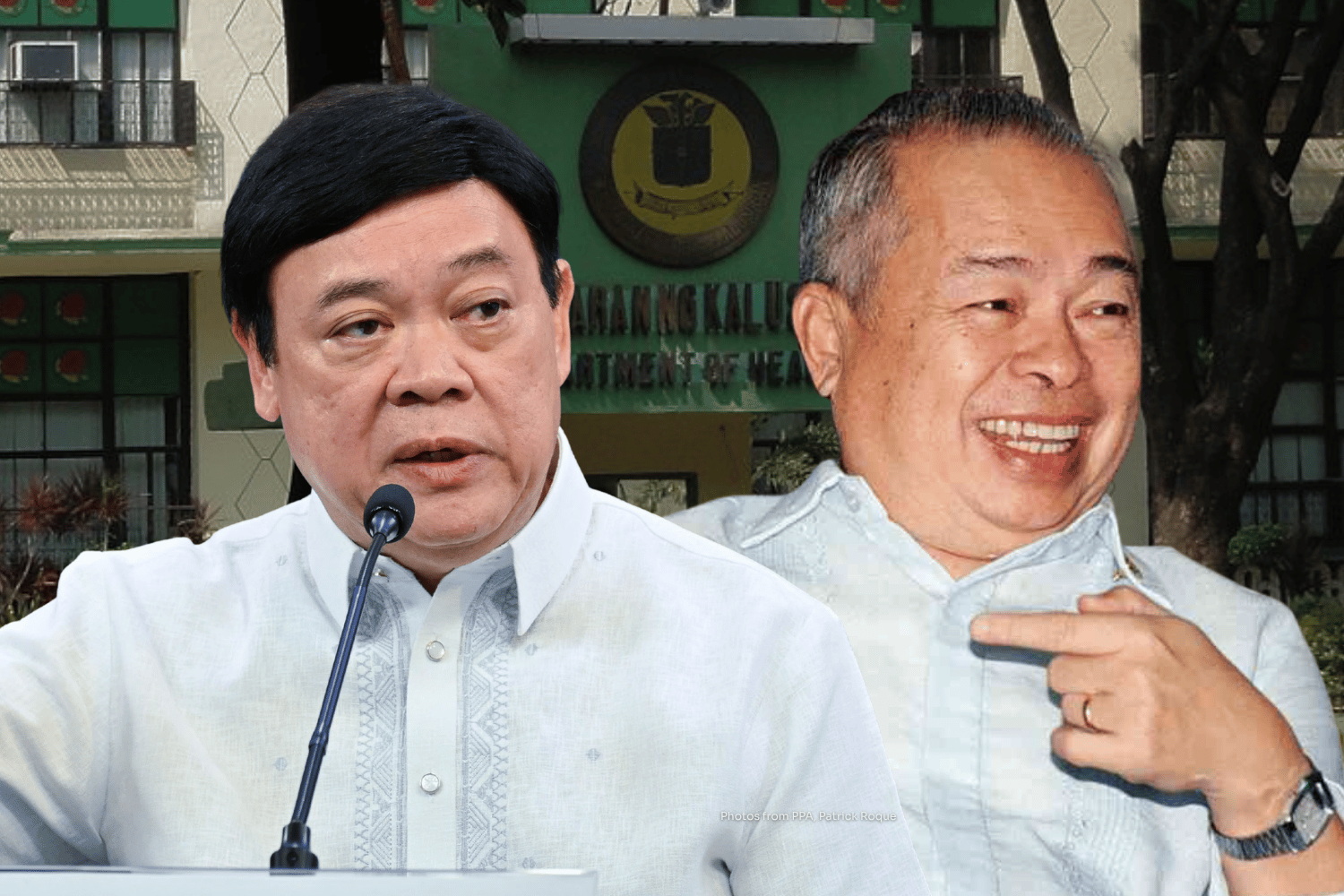
Juan Flavier’s legacy made public health feel human.
Newly appointed Health Secretary Edwin Mercado is taking over one of the toughest jobs in government: keeping more than 110 million Filipinos healthy while confronting overcrowded hospitals, unequal access to care, rising costs and persistent public distrust.
But Mercado does not have to look far for a leadership model.
More than three decades ago, Dr. Juan Flavier led the Department of Health from 1992 to 1995 and transformed what could have been a faceless government bureaucracy into an agency ordinary Filipinos could understand and relate to.
Flavier died in 2014, but many of the principles behind his public health campaigns remain surprisingly relevant.
Here are five things Mercado can learn from him.
1. Speak the language of ordinary Filipinos
Flavier understood something government officials sometimes forget: a technically brilliant health program can fail if nobody understands it.
Instead of drowning people in medical terminology, he turned public health into memorable campaigns.
“Let’s DOH It!” became his infectious battle cry. “Yosi Kadiri” made the anti-smoking campaign catchy and conversational, while “Oplan Alis Disease” helped put immunization front and center.
The lesson for Mercado is simple: Universal Health Care, PhilHealth reforms and other complicated policies must eventually make sense to the patient sitting in a barangay health center.
If people cannot understand a health policy, they are unlikely to benefit fully from it.
2. Get out of Manila
Before becoming health secretary, Flavier spent years working with rural communities as a doctor. That experience shaped the way he saw public health.
He knew that healthcare inequality becomes painfully obvious once you leave major cities.
Under his leadership, the DOH launched Doctors to the Barrios in 1993, deploying physicians to municipalities that had gone without doctors.
For Mercado, the challenge remains familiar.
A healthcare system cannot call itself universal when geography still determines how quickly someone can see a doctor. Strengthening barangay health stations and attracting doctors and other health workers to geographically isolated and disadvantaged areas must remain central to the DOH mission.
3. Listen before you lecture
One of Flavier’s greatest strengths was his ability to understand why communities behaved the way they did.
Accounts of his rural health work tell how some communities resisted using modern scissors to cut umbilical cords because of traditional beliefs. Instead of ridiculing them, Flavier reportedly worked within their practices and encouraged sterilizing traditional bamboo implements.
That philosophy remains valuable in an era of vaccine hesitancy and health misinformation.
People do not automatically change their behavior because an expert tells them they are wrong. Sometimes public health begins by listening.
4. Prevent disease before paying to treat it
Flavier championed nutrition, vaccination, medicinal plants and other accessible interventions that could help Filipinos stay healthy before they reached the hospital.
His administration promoted programs including “Sangkap Pinoy,” while his advocacy for traditional medicine continued during his years in the Senate.
It is a lesson particularly relevant to Mercado, who comes to the DOH after leading PhilHealth.
Hospital treatment is expensive for both government and families. Preventing diabetes, hypertension, malnutrition and infectious diseases—or detecting them early—can be far cheaper than repeatedly financing hospitalization.
Universal healthcare therefore cannot simply mean paying hospital bills. It must also mean preventing people from needing those hospital beds in the first place.
5. Make public health everybody’s business
Flavier understood that the DOH could not solve the country’s health problems alone.
He worked with local communities, NGOs, civic organizations, religious groups and the private sector to extend the reach of government programs.
Mercado inherits an even more complicated healthcare landscape involving the DOH, PhilHealth, local governments, private hospitals, pharmaceutical companies, medical professionals and community organizations.
Getting these institutions to move in the same direction may be just as important as creating another government program.
Flavier’s legacy ultimately went beyond catchy slogans and colorful campaigns.
He made public health feel human.
That may be the most important lesson for Mercado. The DOH deals with enormous budgets, regulations, hospitals, insurance systems and statistics—but behind every statistic is a Filipino trying to find a doctor, afford medicine, protect a child or simply stay alive.
Flavier understood that.
More than 30 years later, it remains a remarkably good place for a new health secretary to start.
READ:

BREAKING: Beverly Lorraine Ho named new PhilHealth president and CEO
Top Dagohoy
August 10, 2026

Frederick Go steps in as interim finance chief
radar Business
November 20, 2025
Marcos names Dr. Jose Pujalte Jr. as new Health secretary
radar Lifestyle
July 13, 2026