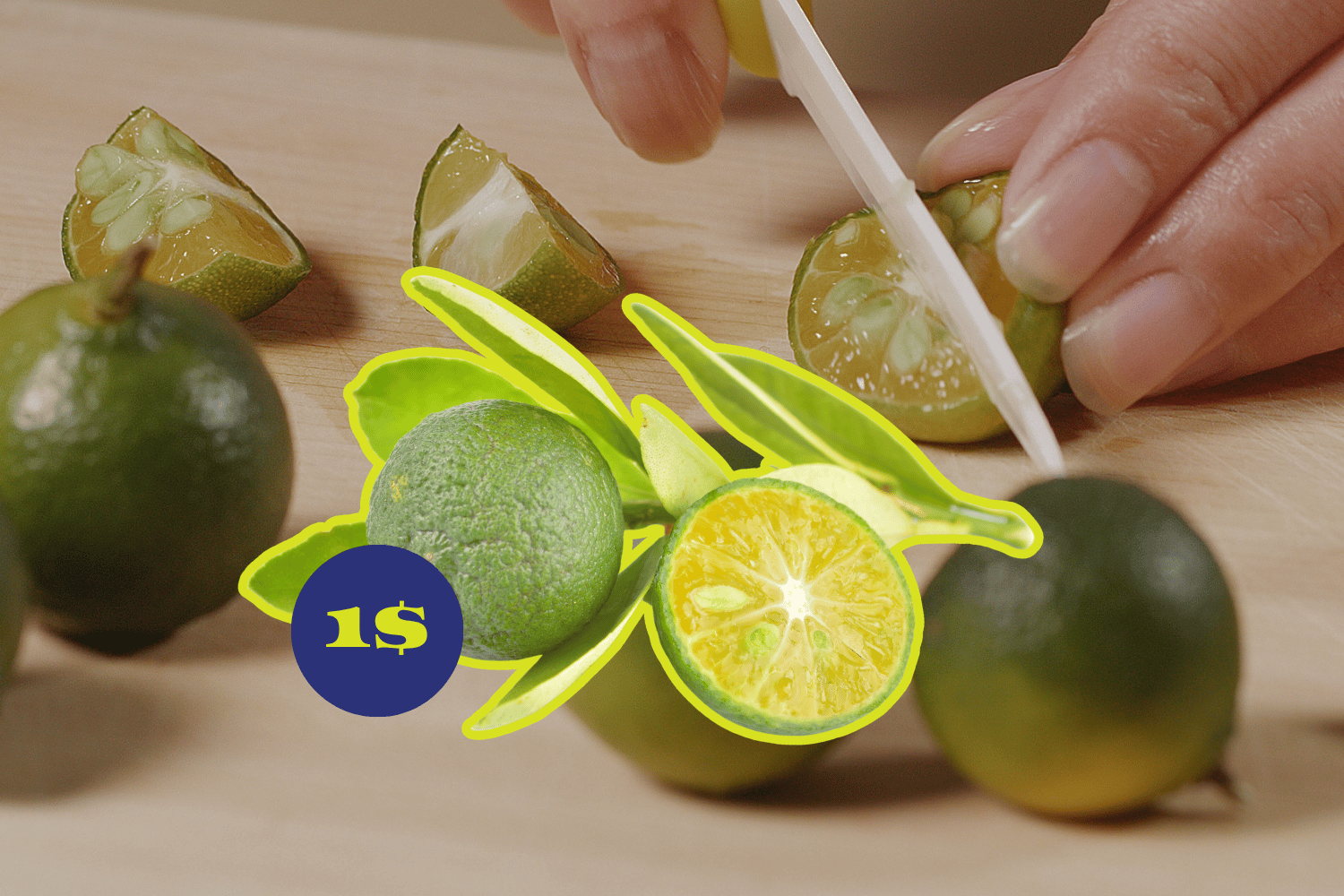
₱112 per kilo ($1.86) in the Philippines in May 2026.
You squeeze two or three calamansi into your pancit or sawsawan without giving it a second thought. Maybe there’s even a tree in your backyard dropping fruit faster than you can use it.
Now, imagine paying up to $1 (about ₱61) for just one calamansi in a specialty grocery store in the United States.
As unbelievable as it sounds, the humble Filipino citrus is increasingly prized overseas, where it is considered an exotic ingredient rather than an everyday kitchen staple.
Here, it is so common: suking tindahan, maglalako, talipapa, grocery store, your own backyard. Each tiny citrus is worth more than what many Filipinos would expect to pay for an entire handful.
According to the Philippine Statistics Authority, a kilo of calamansi had an average retail price of ₱111.32 ($1.86) during the first phase of May 2026.
A small fruit with a big opportunity
There is a huge international market waiting for calamansi.
In his May column for Inquirer, economist Cielito Habito noted that calamansi is the Philippines’ fourth most grown widely fruit, after banana, mango, and pineapple. The country also remains the world’s only major producer of the citrus fruit.
Habito also said the Philippines exports around 160,000 to 190,000 metric tons of calamansi juice each year.
Despite the strong international demand, he said local calamansi production has been steadily declining. Total output has fallen by 43% since 2010—from 188,300 metric tons that year to 116,700 metric tons in 2017, and further down to just 107,700 metric tons in 2025.
Fresh fruit exports have also remained relatively modest. A 2019 report by the Southeast Asian Regional Center for Graduate Study and Research in Agriculture found that calamansi exports ranged from 20 to 35 metric tons in 2008 to 2013—with an average yearly export of 29.5 metric tons in fresh fruits.
The Philippines is now working to expand exports of both fresh and processed calamansi to international markets, including Hong Kong, the United Arab Emirates, and Saudi Arabia.
Why the world wants calamansi
Demand is growing because calamansi has become more than just a souring agent.
In South Korea, it has reportedly a popular health drink ingredient since the late 2010s, while chefs and food manufacturers in other countries use it in beverages, sauces, desserts, marinades, and other specialty products.
Much of the export potential lies not only in fresh fruit but also in value-added products such as bottled juice, concentrates, purees, and powders, which are easier to transport and store.
The challenge isn’t demand
Ironically, the bigger problem isn’t finding buyers.
SEARCA has said that factors that have stunted the calamansi sector’s growth include lack of good-quality calamansi seedlings, high incidence of pests and diseases, declining volume of production, huge post-harvest losses, limited access to market, inconsistent quality of processed calamansi products, and low prices during peak season.
These are evident in Oriental Mindoro, once known as the “Calamansi King.”
In a 2024 study, Mindoro State University reported that land area devoted to calamansi cultivation had shrunk from 3,000 hectares to 884 hectares, as some farmers shifted to other crops amid market saturation, falling prices, and post-harvest losses.
Yet it remains one of the country’s preferred sources of calamansi. According to the Department of Agriculture-Philippine Rural Development Program, buyers favor the province’s produce because it has a thicker rind, stronger taste, longer shelf-life, and better resistance to weight loss.
To help the industry recover, SEARCA said researchers are promoting off-season fruiting technologies, better post-harvest handling, and greater investment in value-added processing so farmers can earn more from every harvest instead of relying solely on selling fresh fruit.
Perhaps the next time you squeeze calamansi over your meal, it’s worth remembering that what feels ordinary in a Filipino kitchen is increasingly becoming a premium ingredient in the global marketplace.
READ:
Bocaue’s pansit alanganin has been confusing Filipinos for generations
Top Dagohoy
July 5, 2026
Could duhat wine be the Philippines’ next world-class vintage?
Top Dagohoy
July 4, 2026

Scientists discover lagundi isn’t one plant—but five
Top Dagohoy
July 5, 2026