Urban gardening doesn’t need hectares of land to begin.
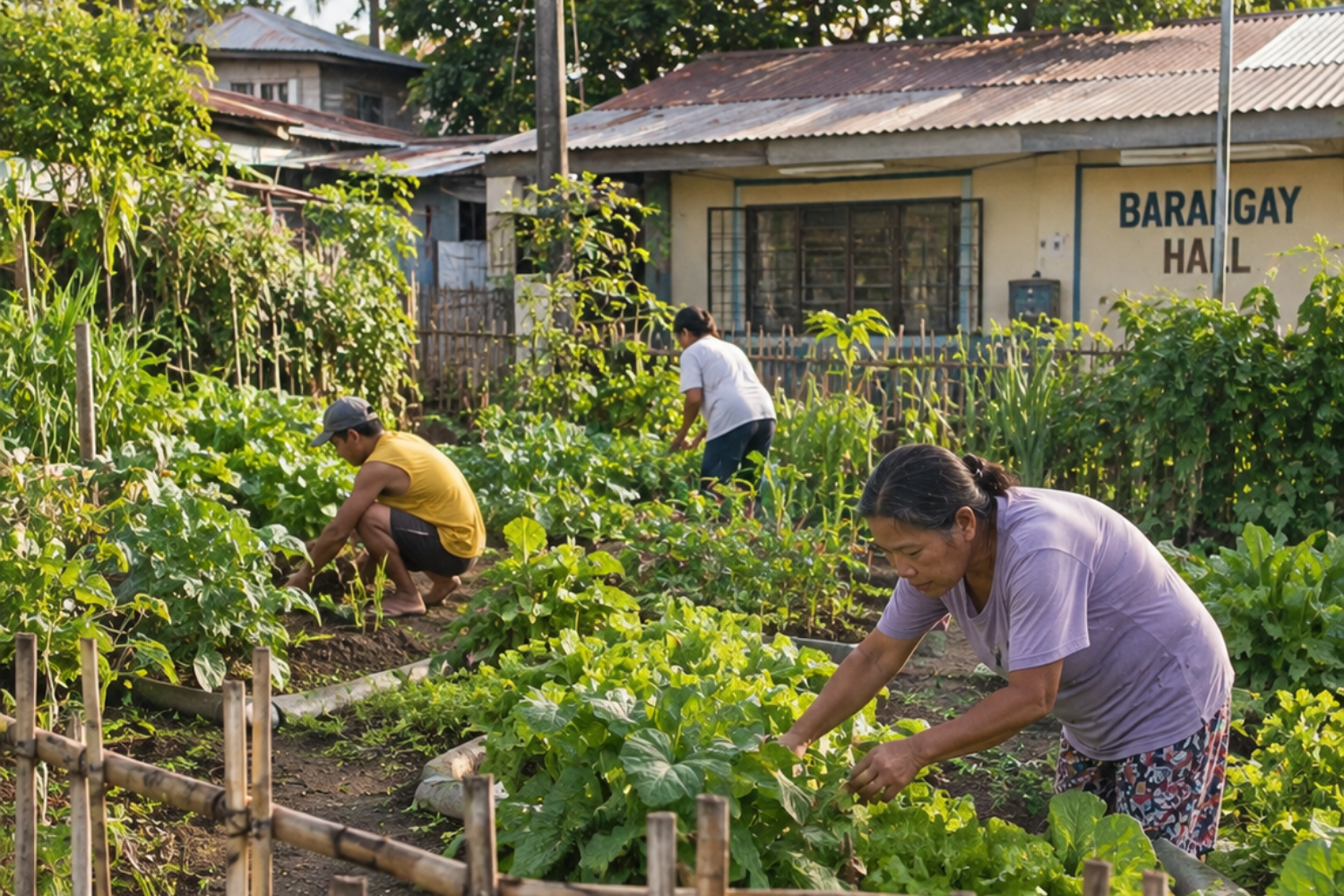
Imagine if every barangay in Metro Manila had its own edible garden—pechay beside the barangay hall, tomatoes growing on vacant government land and calamansi trees replacing purely ornamental plants.
LGUs could make this possible by turning backyard and community food gardening into a grassroots barangay program.
Turn empty lots into food
Metro Manila has unused government lots, corners of parks, school grounds and other public spaces that could potentially become productive gardens.
Even concrete areas can accommodate raised beds, recycled containers and vertical gardens producing pechay, kangkong, sili, kamatis, talong, okra and herbs.
Put barangays in charge
Instead of expensive showcase gardens run by contractors, residents themselves should grow and maintain them.
LGUs can organize neighborhood gardening groups and provide seeds, seedlings, compost, tools and practical training. Experienced gardeners and senior citizens could mentor families and young people.
The goal should be simple: grow food, not gardens designed merely for photo opportunities.
Create barangay seed banks
Every participating barangay could operate a small nursery where residents get free or subsidized seeds and seedlings. Workshops can teach container gardening, composting, natural pest management and seasonal planting.
Kitchen scraps and dried leaves could also be composted locally, reducing biodegradable waste while producing fertilizer.
Plant for the long term
Where appropriate, LGUs can plant calamansi, papaya, banana, guava and other productive trees. Future greening programs could incorporate edible landscaping instead of relying entirely on ornamental plants.
Share the harvest
Part of the harvest could go to participating families, while surplus produce could support community kitchens, daycare centers and feeding programs. Barangays could also hold weekend produce markets, with proceeds sustaining the gardens.
Schools can participate, turning vegetable plots into practical lessons in nutrition, science and environmental responsibility.
Urban gardening will not replace farms or solve food insecurity. But it can supplement household food supplies, create greener neighborhoods and bring communities together.
It doesn’t require hectares of land to begin.
One empty lot. A few packets of seeds. Neighbors willing to plant.
Multiply that across Metro Manila, and forgotten spaces could start doing something remarkably practical: feeding the communities around them.