We need to stop calling this ‘Filipino resilience.’
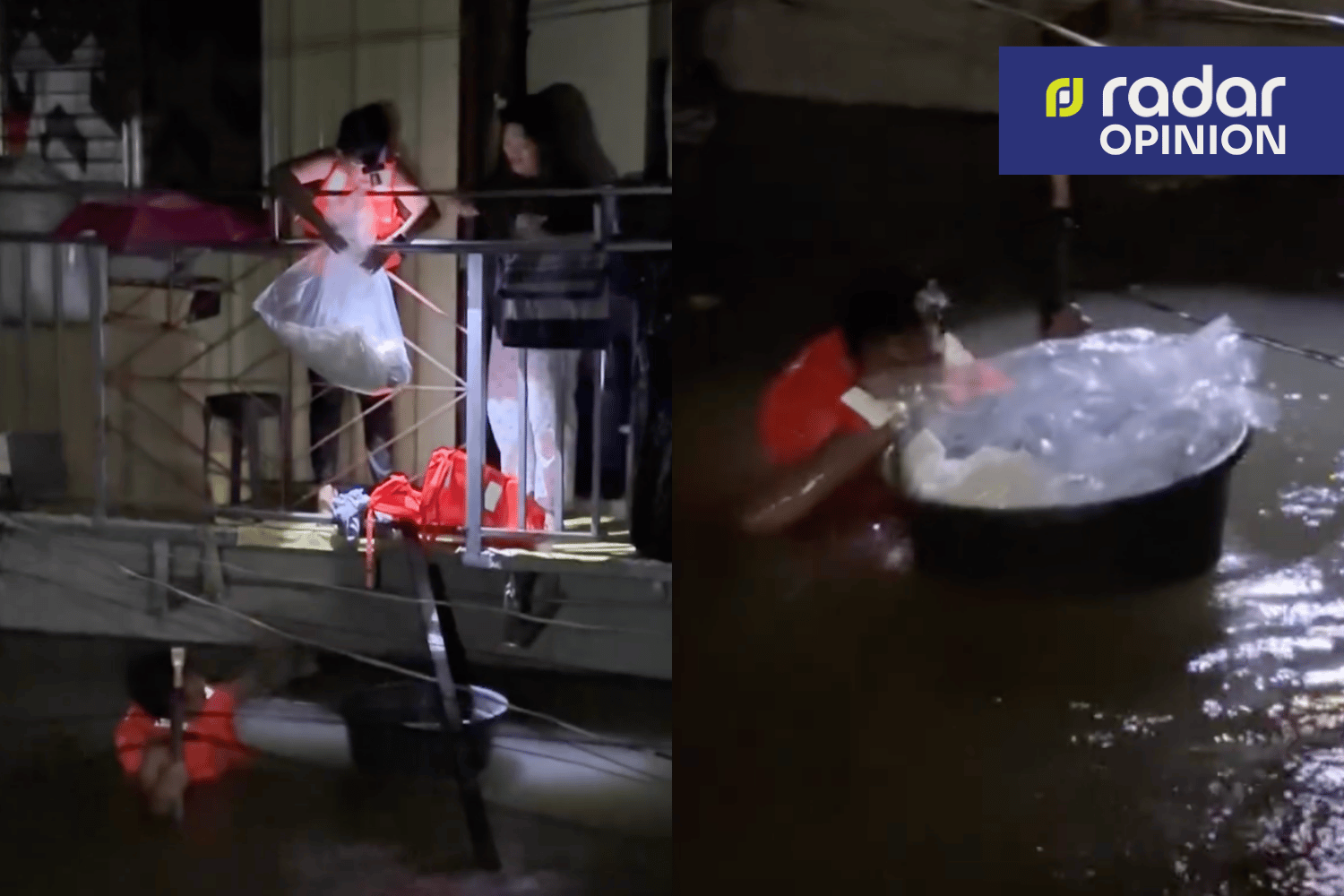
A family in life vests waited out the flood inside their own house. When the water finally went down, no rescuers had come, so the family took matters into their own hands and moved the children themselves.
About a minute long video from Sam showed a family in life vests, water past the level of anything you could call manageable. A baby, sealed inside a large clear plastic bag and lowered from the upper floor to a man standing chest-deep in the flood. He settles the bag into a plastic basin and then quickly walks across to the another house.
“Super disappointing talaga, lumiwanag na lang lahat lahat at humupa na yung baha wala pa ring dumating na rescuers,” the caption reads. The sky cleared, the water receded, and nobody came.
It is not a feel-good clip about what could pass as a real-life version of a movie. Parents trying to be resourceful to keep their kids safe. The man in the water, who turned out to be an older sibling, doing the hard job and bigger responsibility to complete the mission. It is a complaint.
The uploader of the video later added that the bag had been punctured so the baby could breathe, and that both children are safe. In the comments, some viewers were horrified at the method. That reaction is understandable and also beside the point. Nobody in that video wanted to put a baby in a plastic bag. They did it because the alternative was carrying an infant through floodwater with nothing between the child and the water, and because the wait for help had already outlasted the storm.
We have gotten very good at watching this kind of footage and calling it “resourcefulness”, “Filipino ingenuity”, even “resilience”. Pails, basins, styrofoam, banana trunks, whatever floats. It is a compliment we hand out every rainy season and it costs the state nothing.
But the reason why this is so impressive is the reason it should not be happening. A family waiting in life vests for hours, watching the water rise and then fall on its own, is not a story about cleverness and resilience. It is a story about a rescue system that did not reach a household that needed it.
The scale here is not small. The combined effects of the enhanced southwest monsoon and tropical depressions Luis and Maymay have run for weeks. Government situational reports have counted affected people in the millions across Luzon and the Visayas, with dozens of cities and towns placed under a state of calamity and entire provinces in Central Luzon and Calabarzon submerged in parts. Barangays in Pampanga have stayed flooded for a fortnight at a time.
Response capacity does not stretch to meet numbers like that. Rescue teams are limited to zero, boats too, and when every low-lying barangay in a province calls at once, someone is going to be last in line.
The uncomfortable part is that this is not a country that has failed to spend money on the problem. Flood control has absorbed enormous sums of public funds year after year. What has come out of the Senate investigations into those projects is a picture of budgets that went to works that were substandard, unfinished, or in some cases never built at all.
You can draw a straight line from that to a plastic bag. Money that was supposed to become pumping stations and dredged waterways and drainage that works became, somewhere along the way, someone else’s asset. The families are left to improvise with whatever they can find in the house.
So the question is not really whether the rescue teams tried hard enough on a specific night in a specific barangay. They are almost certainly exhausted. The question is why the burden keeps landing on the last unpaid link in the chain, which is always a family member wading into the water themselves.
How many more babies have to go into plastic bags before this stops being a seasonal genre of viral video? How many more families have to work out their own evacuation route? We have had years of this footage. We know exactly what it looks like.
Both children in that video are safe. The brother who carried them across got them there. That much is settled.
What is not settled is what happens the next time the water comes up on that street, which will probably be within the month, and whether anyone will be closer than they were this time. The people in that house already know the answer they are planning around. They bought life vests.
READ:
OPINION: ‘Kamote’ driver rode into a closed road and hit two runners
Mianne Cudal
August 31, 2026
OPINION: Our flood control is so bad, Filipino Gen Z is calling NYC Mayor Mamdani to fix it
Kiara Gorrospe
August 21, 2026

OPINION: After centuries of flooding, our government still acts clueless
Matahari
August 19, 2026
Tags: Bureau of Fire ProtectionCalabarzonCentral LuzonDepartment of Public Works and Highwaysdisaster responseemergencyevacuationflood control projectsfloodsLocal Government UnitsluzonNational Disaster Risk Reduction and Management CouncilPampangaPhilippine Coast GuardPhilippine National PoliceresiliencesafetySenate of the PhilippinesTropical Depression LuisTropical Depression MaymayVisayas