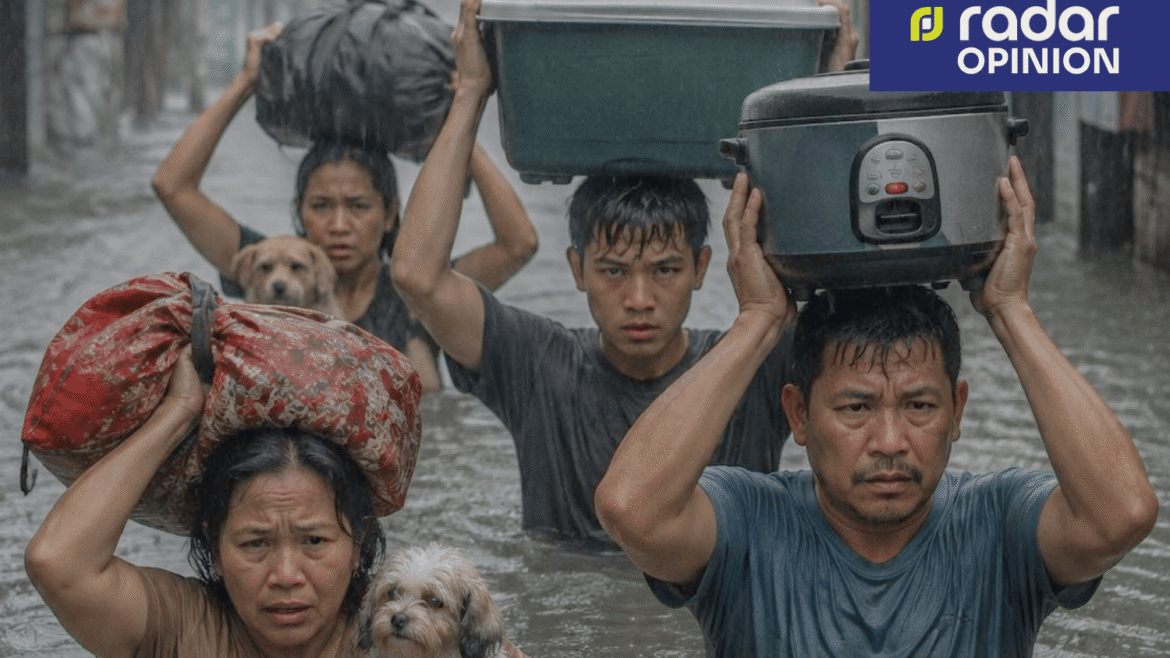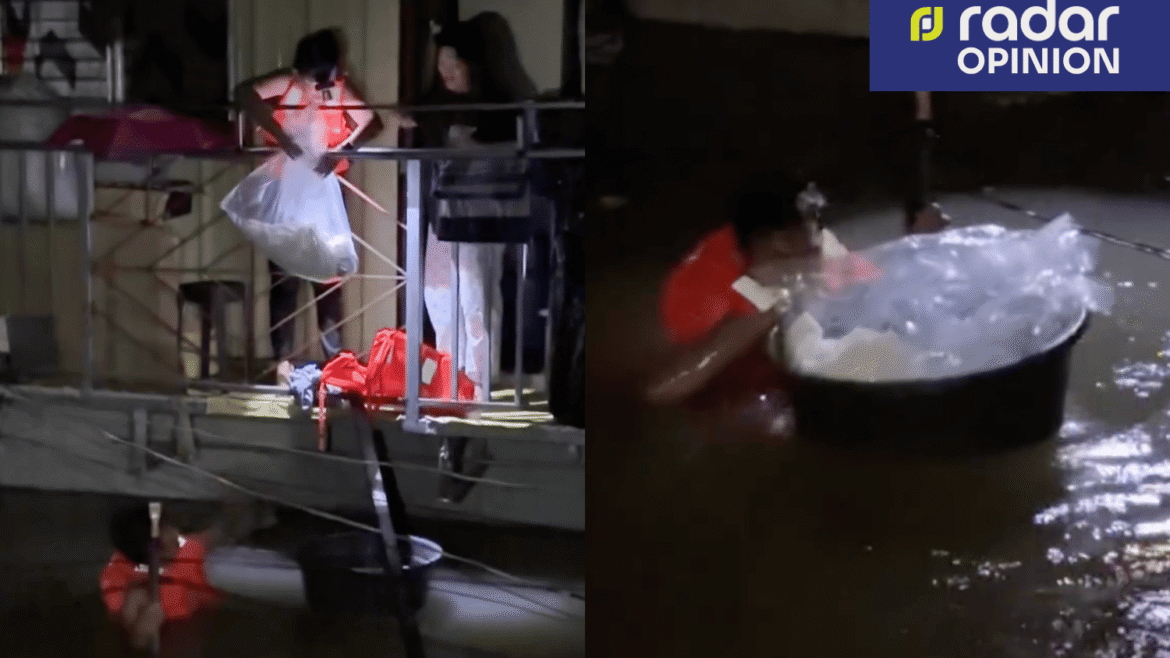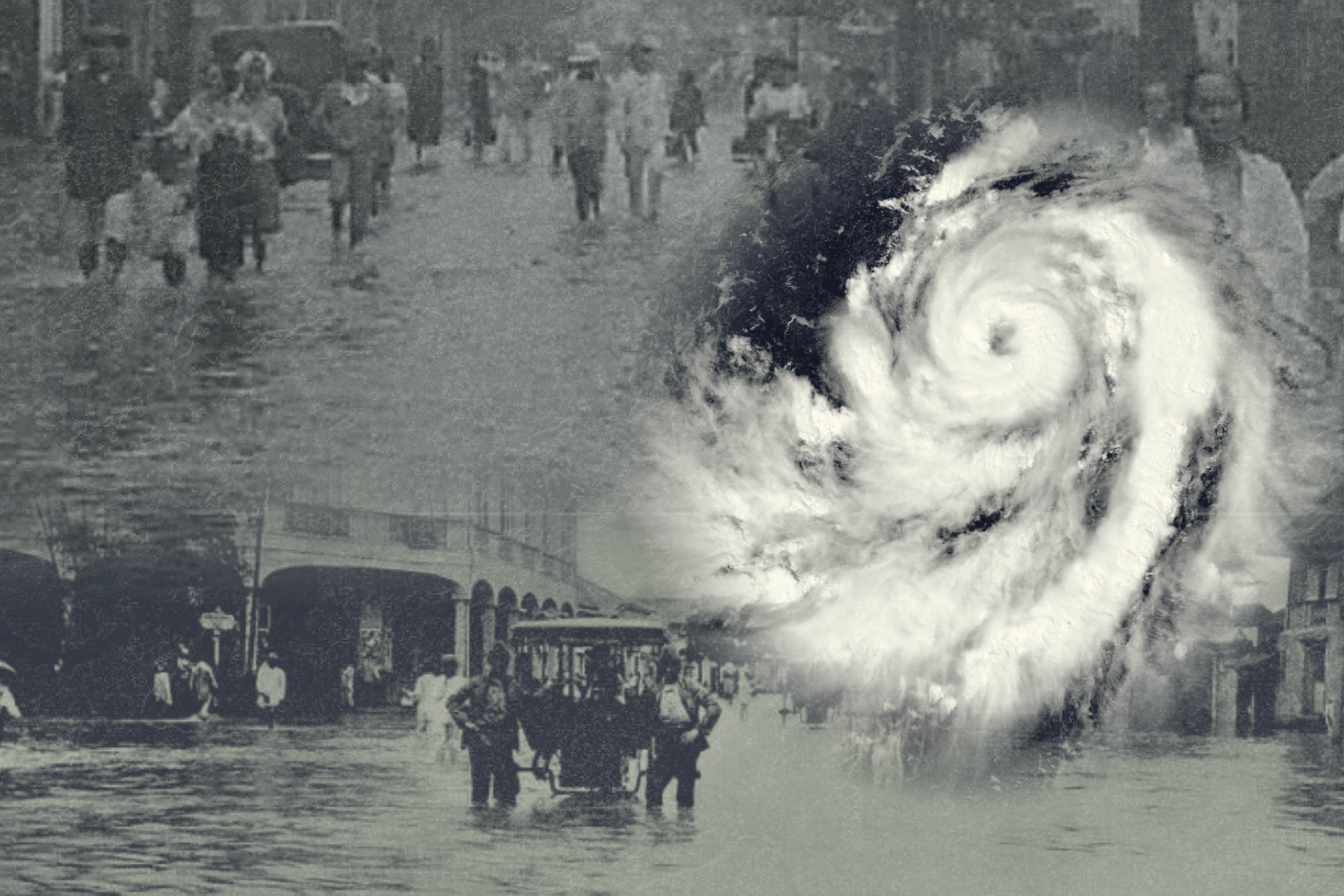
The recent monsoon rains that flooded more than half of Metro Manila and several provinces raised questions about the government’s preparedness for such disasters.
There was also the usual finger-pointing over the causes of the floods: trash dumped in waterways, overdevelopment in urban and rural areas, large-scale reclamation projects, and climate change.
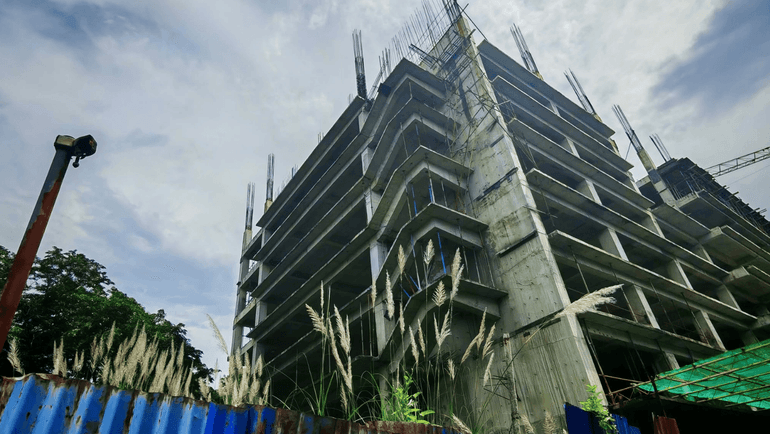
Now, there are ongoing investigations into corruption and the pocketing of the funds from flood control projects. There is also the challenge of planning and re-planning projects such as dredging esteros, building catch basins, and constructing megadikes—projects that can become increasingly difficult to carry out as the capital continues to modernize.
We have a long history of typhoons. The Philippines sits astride the Pacific typhoon belt, with an average of 20 tropical cyclones entering or developing within the Philippine Area of Responsibility each year. About eight or nine of these cross the country, with July to October marking the peak of the typhoon season. Storms would ravage the land, causing widespread damage and casualties.
So it is no surprise that Manila floods during the rainy season. Pre-war pictures show flooded streets, with people wading through knee- to waist-deep waters. The situation only worsened with the post-war modernization of the city.
The Great Typhoon of 1943
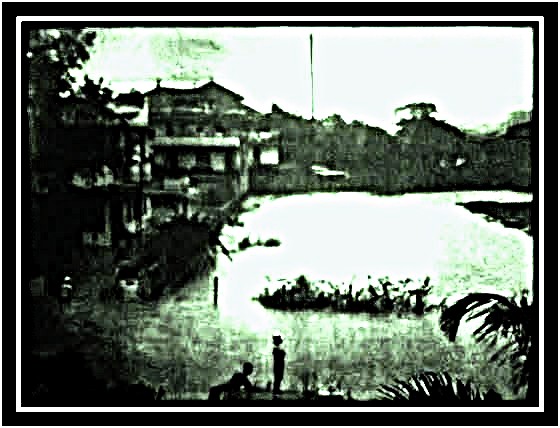
The Great Typhoon of 1943 was one of the many storms that lashed Manila through the centuries. But this one added to the misery of the Filipinos already struggling through the hardships of World War II.
The typhoon struck on Nov. 15, 1943—almost unexpectedly. That’s on top of the hunger, inflation, and fear of living under Japanese occupation that many Manileños were already dealing with.
The Second Republic under President Jose P. Laurel was barely a month old. Plans were underway for a three-day celebration of parades, concerts, and outdoor games—distractions for a city suffering under the grip of a foreign enemy.
The celebrations had already begun, with the Japanese Imperial Government sending musicians on a Nippon Musical Mission for a series of unity concerts. With American jazz and other Western music prohibited, concerts and lectures on Oriental music were held around the city. The first, on May 7, 1943, was supported by the New Philippine Musical Federation headed by Kosak Yamada.
But by November, ominous signs of bad weather had already appeared. Strong winds blew across the city, while intermittent rains had been pouring for days.
Then, on Nov. 15, disaster struck.
When Manila went dark
More than 50 years after the typhoon, the late historian Benito Legarda Jr. remembered that it began to rain on the evening of Nov. 14, 1943. By midnight, the city went dark as the electricity went out, and the streets of Manila began to flood.
In his 1949 diary, Dear Mother Putnam, lawyer, diplomat, and writer Marcial Lichauco wrote: “Today we are in the throes of the worst flood Manila has experienced in 40 years. It had been raining intermittently during the past five days and, last night, the skies seemed to burst wide open. When we woke early this morning, we found that the Pasig River had overflowed its banks… There is, of course, no electricity, no gas, and no telephone service.”
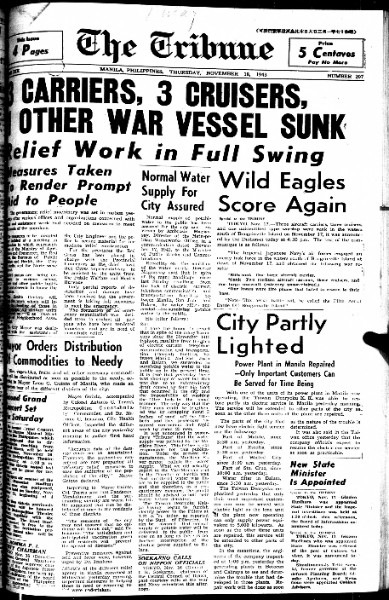
Fr. Juan Labrador, the rector of Colegio de San Juan de Letran, described in his wartime diary the extent of the disaster: “Four days of typhoon and devastating floods. Rare had I seen such torrential rains, and certainly never during this month of November. The flood was high in all streets and ground floors of buildings in all districts of Manila, except Intramuros. The electric plant was inundated and the big light factory of Laguna blew up and for four days we had no light, no streetcars, no telephone, no cooking gas, no newspapers, no radio and almost no running water.” He then wrote ruefully, “Were we in Manila or in Batanes?”
Interment camp flooding
The 3,000 Allied civilian internees at the Santo Tomas Internment Camp—located within the University of Santo Tomas in Sampaloc—were already struggling to make do with limited food and makeshift shelters. The camp was inundated, with water reaching the first floors of the dormitories, though the campus suffered minimal damage. The Dominicans had to suspend classes at the Seminary because there was no power or water.
American internee Elizabeth Thomas Meyer captured the scene in her diary: “It continued to pour all night and when Mum and I looked out of our window (of the Main Building) the next morning, Santo Tomas was again one huge lake, with debris and bits of shanties floating around everywhere. We were naturally worried about Dad (who was sleeping in their shanty outside), but had no possible means of getting out to him, for even the ground floor of the Main Building itself had a foot of water covering it. Everyone was worried about their shanties, and anxious about the fate of the few who had decided to remain in their shacks and consequently were not marooned.”
Internees spent several days shoveling mud and debris from their living areas, while seminarians cleaned up the chapel and rooms in the Central Seminary.
Manila was in a state of calamity. It took two days to restore the water supply and another three for full electric power to return. For several weeks, Manileños had to wade through knee-deep floodwaters to get around the city.
Food crisis amid the flood
The Laurel government faced problems beyond those created by the occupation. A food crisis already existed, with rice stocks being confiscated by the Japanese Army.
Officials had hoped for an early November harvest to replenish dwindling supplies, but the disaster destroyed the crop. Flooded roads slowed the entry of food from the provinces, while efforts to enforce laws against smuggling and black marketeering proved futile.
The devastation soon hit Manila’s already strained economy. Commodity prices skyrocketed. A sack of rice that once cost ₱30 rose to ₱150, then ₱200 a month later.
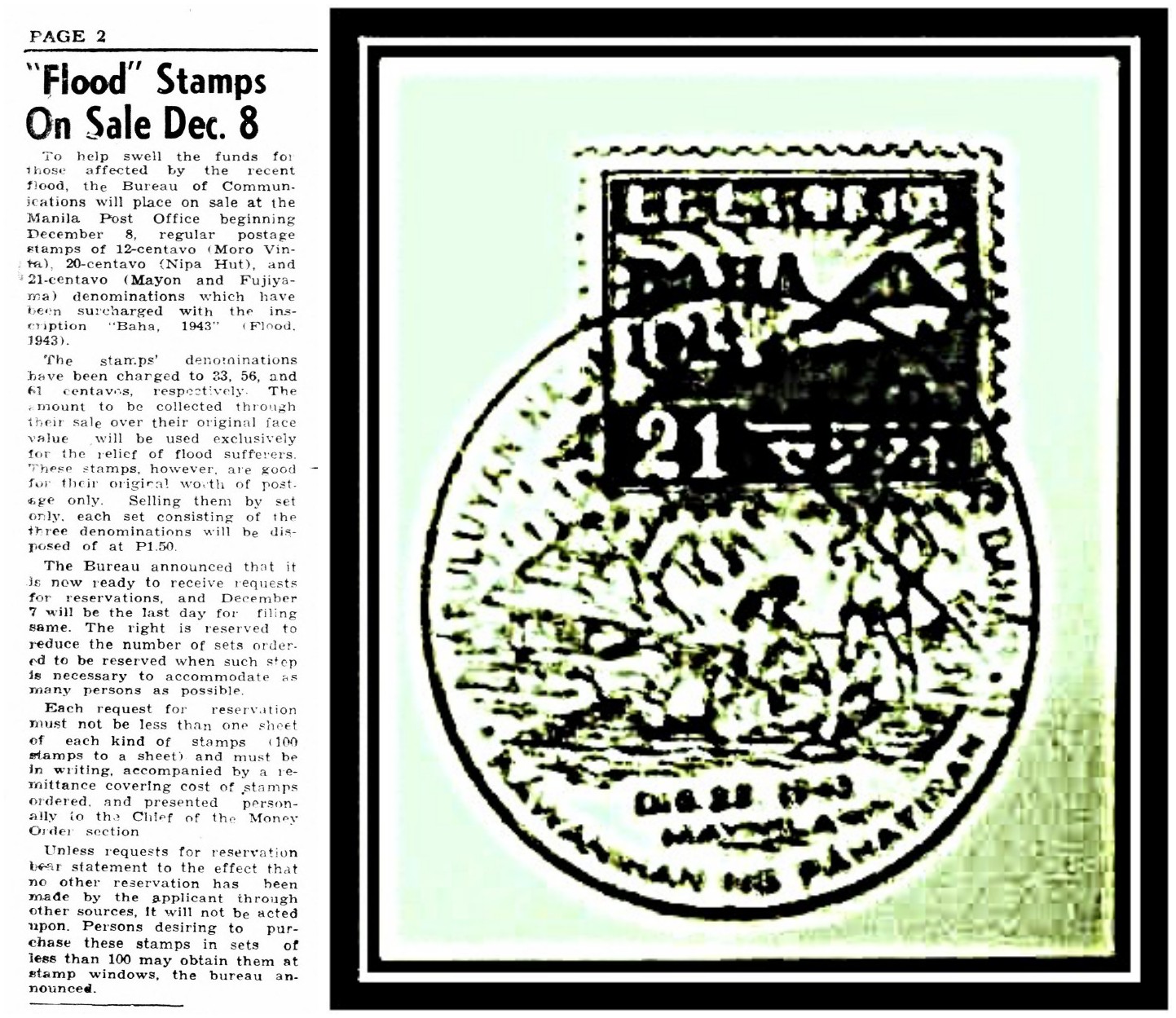
The government was helpless. Along with food rationing, it had to provide for areas badly hit by the typhoon. In December, commemorative stamps bearing the words “BAHA, 1943” were issued to raise funds. But the money only trickled in.
The Great Typhoon of 1943 came at a time when Manila was already struggling to survive. As Legarda later wrote of that year: “It was a defining date of sorts, marking the end of what might be called a period of sullen submission, and the beginning of sharp distress and deprivation—not because of the flood, but simply because it provided a convenient dividing line.”