Coletos can also learn human speech, whistles, and everyday sounds they often hear.
You hear someone talking nearby—but when you look around, there is no person speaking.
It could be a coleto.
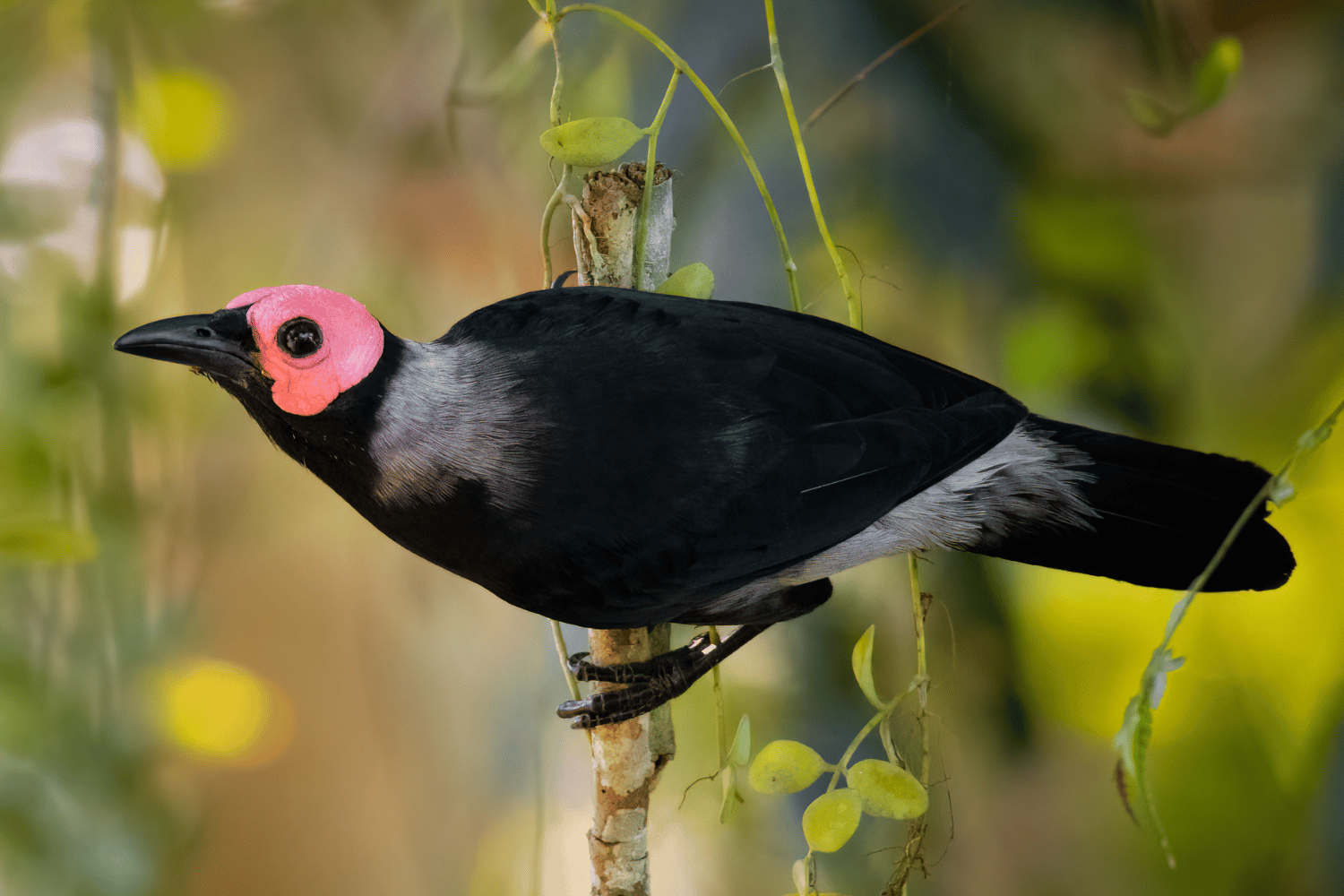
Found only in the Philippines, the coleto (Sarcops calvus) is one of the country’s most unusual birds. With its glossy black plumage, silvery-gray back and distinctive patches of bare pinkish skin around its eyes and head, it already looks unlike most birds Filipinos encounter.
But its voice is even more remarkable.
A pinoy bird that can “talk”
The coleto belongs to the starling family, the same family that includes mynas—birds internationally famous for their extraordinary ability to imitate sounds.
Its natural calls include whistles, metallic notes, clicks and strange mechanical-sounding chatter. Like other vocal-learning birds, the coleto uses its syrinx, the specialized vocal organ of birds, to produce a surprisingly wide range of sounds.
When exposed to people, coletos can also learn to imitate human speech, whistles and other noises they repeatedly hear around them.
The result can be uncanny: a sound coming from a bird that seems remarkably close to something produced by a person.
Coleto vs. parrot
So can a coleto actually compete with a parrot?
In mimicry, it certainly can.
Parrots, particularly African grey parrots, are among the animal kingdom’s most accomplished vocal learners. Some can develop large vocabularies, while scientific studies have demonstrated that exceptional individuals can associate certain spoken words with objects, colors, quantities and requests.
The coleto has a different strength.
As a member of the starling family, it is related to mynas, which are famous for reproducing human speech with remarkable clarity and human-like tone. Rather than simply accumulating words, these birds can be strikingly good at reproducing the sound quality of what they hear.
That means parrots may have the advantage when it comes to vocabulary and the documented ability to use some words contextually, while starling-family mimics can be extraordinarily convincing impersonators.
Think less conversation, more imitation.
Its talent can also put it in danger
Unfortunately, the same ability that makes the coleto fascinating can also make it attractive to people looking for unusual cage birds.
But the coleto is Philippine wildlife, and the capture, possession, collection and trade of wildlife are regulated under Republic Act No. 9147, or the Wildlife Resources Conservation and Protection Act. Keeping or trading wildlife without the necessary authorization can carry penalties.
And the coleto belongs in an ecosystem, not simply in a cage. It feeds on fruits and insects and forms part of the complex web of life in Philippine forests.
Parrots may be the world’s most famous “talking” birds.
But the Philippines has its own remarkable vocal mimic hiding in plain sight—and its name is the coleto.
READ: