Here’s why they disappeared.
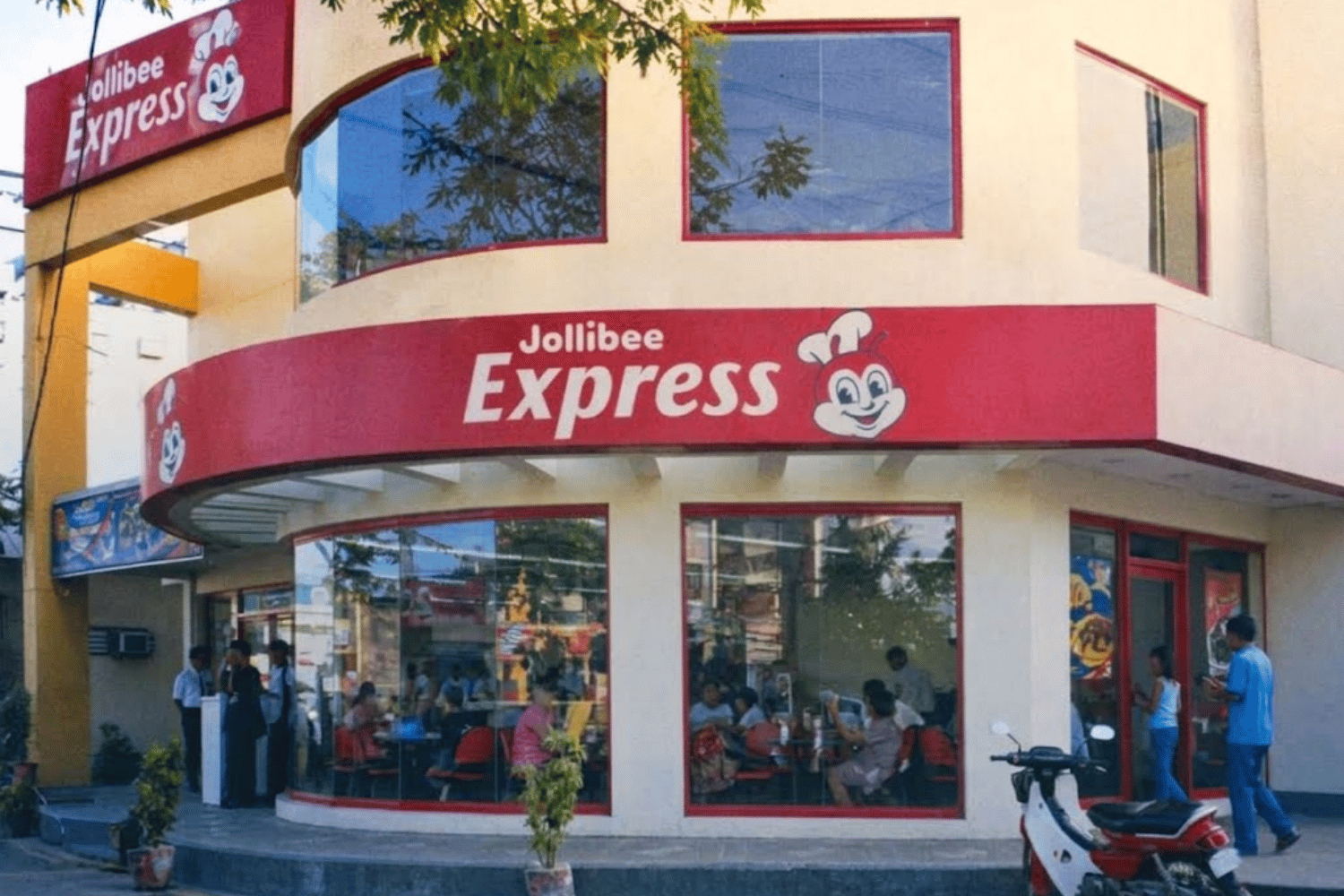
If you grew up seeing Jollibee almost everywhere, you may remember a strange little version of the fast-food giant: a Jollibee that looked like Jollibee, sold Jollibee food—but wasn’t quite a complete Jollibee.
It was Jollibee Express.
Instead of the familiar restaurant with tables and a full kitchen, these smaller outlets were built around convenience. They occupied compact spaces where a regular restaurant would have been impractical, serving customers who simply wanted to buy food and leave.
Today, however, the physical Jollibee Express format has largely vanished.
And its disappearance illustrates one problem with shrinking a beloved restaurant: customers may want the brand precisely because of the things that are difficult to squeeze into a tiny store.
A Jollibee without everything
The advantage of a small-format outlet was obvious. It required less space and could fit into high-traffic locations where a full restaurant could not.
The compromise was the menu.
A small kiosk could not necessarily accommodate the equipment, storage and food-preparation areas of a regular Jollibee kitchen. That meant fewer products could be prepared and served.
For a brand built around powerful signature products, that was a serious limitation.
Chickenjoy, in particular, became so central to Jollibee that encountering a Jollibee outlet without the complete menu could be disappointing for customers expecting their usual orders.
Convenience eventually changed
The bigger problem was that fast food itself evolved.
Drive-thrus allowed customers to grab food quickly without restaurants drastically reducing their menus. Takeout became standard. Then smartphones transformed food delivery.
Customers no longer needed a miniature Jollibee kiosk to get their food quickly. A full-sized branch could offer dine-in, takeout, drive-thru and delivery while maintaining a much broader menu.
In other words, the problem Jollibee Express was designed to solve—getting Jollibee quickly without sitting inside a full restaurant—could increasingly be solved without maintaining a separate small-store format.
“Express” didn’t completely disappear
The word survived in another form.
“Jollibee Express Delivery” became associated with the company’s centralized delivery service, while the physical Express outlets gradually faded from view as regular branches, drive-thrus and digital delivery became the dominant ways of reaching customers.
Perhaps that is the irony of Jollibee Express.
Making Jollibee smaller allowed the brand to squeeze into places where a normal restaurant could not.
But ultimately, customers didn’t necessarily want a smaller Jollibee.
They wanted the whole Jollibee.
READ: