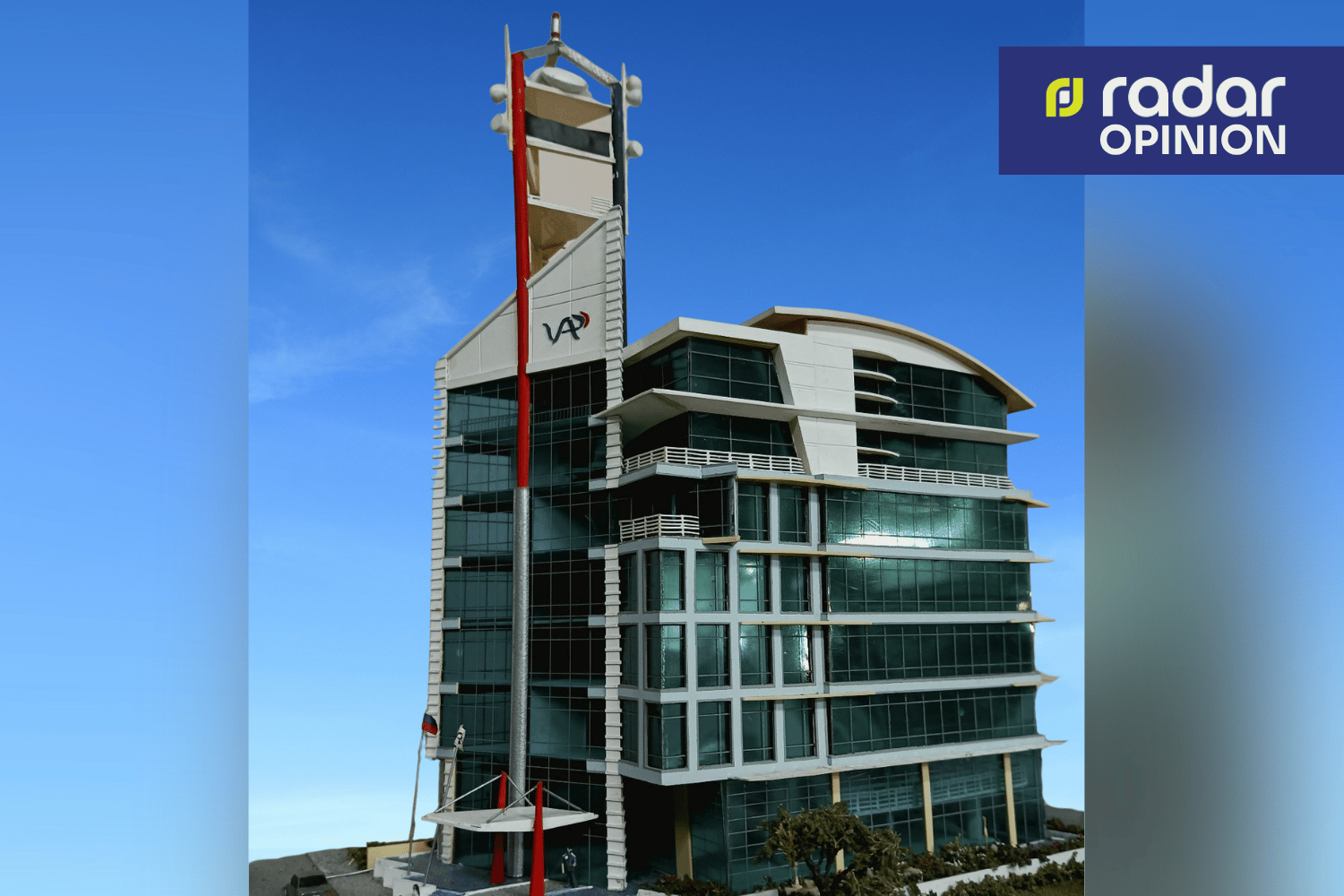
Its facade combines a large curved glass section with bulky geometric forms, balconies and beige surfaces.
Drive along Scout Rallos Street in Quezon City and you might pass an office building without giving it a second look.
Then you see the name: United Architects of the Philippines.
And suddenly, the building becomes much harder not to judge.
The UAP National Headquarters has become a subject of jokes, memes and unflattering commentary among some architecture students, professionals and members of the public online. Calling any building “ugly” is subjective, of course, but the irony behind the ridicule is obvious: this isn’t an ordinary office. It is the home of the country’s national professional organization of architects.
And perhaps that’s why its appearance can feel so surprisingly underwhelming.
This design actually won
The headquarters at 53 Scout Rallos was completed in 2005 and designed by architect Teofilo I. Vasquez.
Even more interestingly, UAP’s own historical account says the design emerged from a nationwide competition. Vasquez’s proposal, envisioned around “simple lines of glass and steel,” was selected as the winner and judged to embody the character and aspirations of UAP.
Look at it today, however, and “architectural showpiece” may not be the first description that comes to mind.
Its facade combines a large curved glass section with bulky geometric forms, balconies and beige surfaces. It is unmistakably reminiscent of the commercial architecture that proliferated around the late 1990s and early 2000s.
Nothing is necessarily wrong with that.
But that’s precisely the problem.
Would we even notice it without the UAP sign?
Imagine removing “United Architects of the Philippines” from the facade.
Could it be a bank? A corporate headquarters? A condominium from two decades ago?
Probably.
Now compare that visual anonymity with what UAP itself celebrates today. Its Design Excellence Awards recognizes architectural artistry, mastery of form, proportion, light and detail, as well as designs that interpret Filipino identity and context.
Inevitably, people wonder: shouldn’t the architects’ own house demonstrate those ambitions?
To be fair, architecture isn’t sculpture. A headquarters must function, and the UAP building accommodates offices, professional activities and facilities such as Teatro Arkitektura. UAP has also undertaken efforts over the years to renovate and reimagine spaces within its headquarters.
Function matters.
But so does symbolism.
The headquarters of the country’s architects inevitably becomes a showcase of the profession whether its designers intended it or not. That’s what makes the public ridicule particularly fascinating—and perhaps understandable.
Maybe the building’s biggest aesthetic problem isn’t that it is catastrophically ugly.
It’s that for the headquarters of Filipino architects, it looks remarkably ordinary.
And when your occupants literally make a profession out of designing buildings, ordinary can be a rather unfortunate look.
READ: