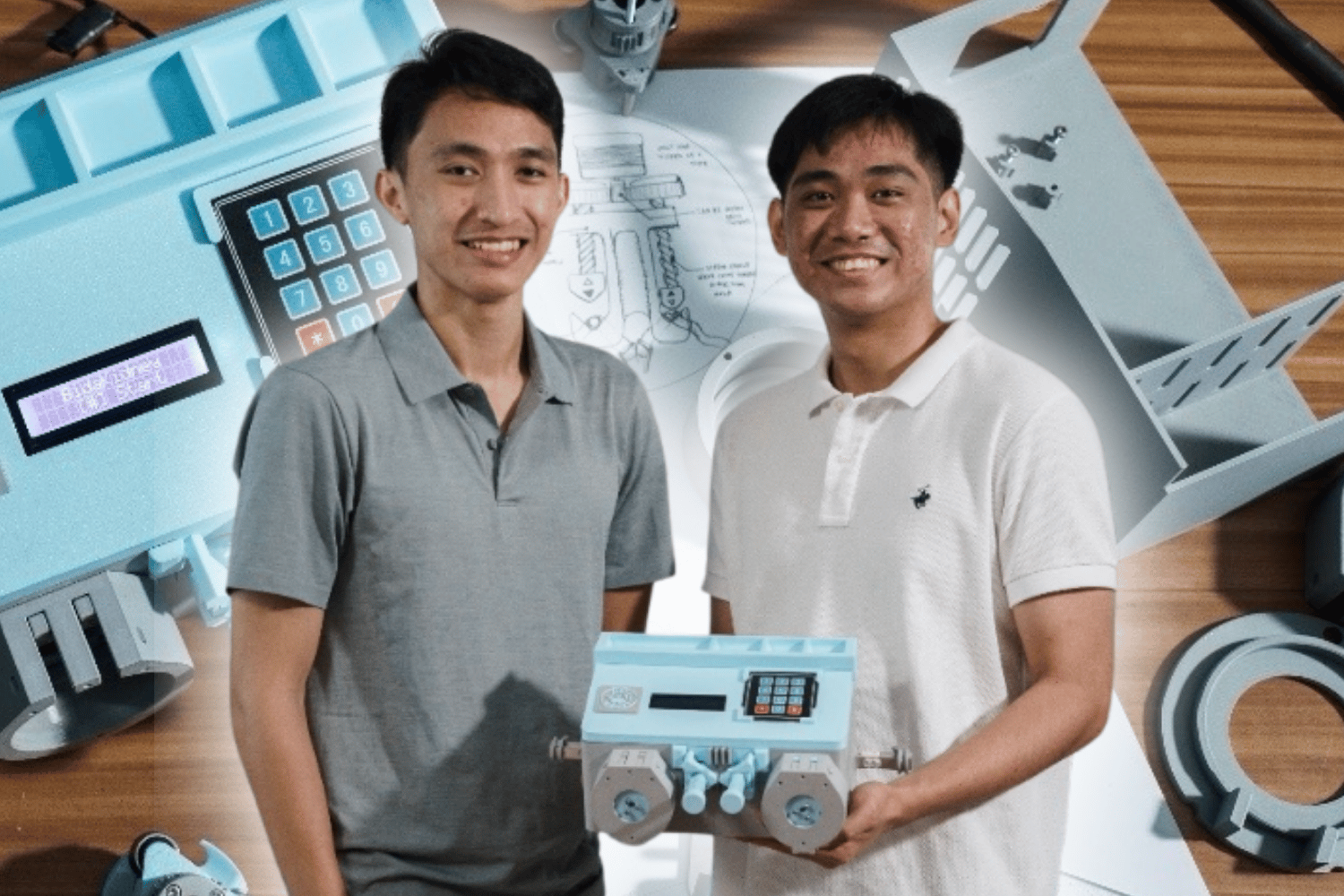
3D-printed device makes home dialysis simpler for patients.
Two University of the Philippines Diliman graduates have developed a low-cost dialysis machine that could give Filipino patients another option for managing peritoneal dialysis (PD) at home.
Unlike the hemodialysis commonly seen in dialysis centers, which filters blood through a machine outside the body, peritoneal dialysis uses the lining of the abdomen as a natural filter. Dialysis fluid is placed into the abdomen through a catheter, where it draws out waste and excess fluid before being drained and replaced.
BiDaKidney, developed by Andrew Jacob Buensalido and Allyson Cabrestante, is a semi-automated PD machine that uses widely available dialysis sets, peristaltic pumps, and load cells to automate the delivery and measurement of dialysis fluid.
The team used 3D printing during the development process, particularly for early iterations of the peristaltic pump and other components, allowing them to test and modify designs before moving toward more scalable manufacturing methods.
The team hopes to eventually keep BiDaKidney’s cost at no more than ₱5,000, putting it far below commercial automated PD machines that can cost more than ₱500,000.
The potential difference is significant in a country where dialysis remains a long-term financial burden. PhilHealth currently provides ₱389,640 or ₱510,140 in annual coverage for adult peritoneal dialysis, depending on the patient’s daily PD solution requirements.
Department of Health data show that 39,954 Filipinos began dialysis in 2024, including 612 who began peritoneal dialysis. While BiDaKidney is not yet available for clinical use, its most immediate potential users would be people with chronic kidney disease who are eligible for and trained in manual PD at home, as well as their caregivers.
BiDaKidney is not meant to replace dialysis itself or directly compete with high-end machines. Instead, it is designed as a lower-cost upgrade to manual PD, reducing the work involved for patients and caregivers during fluid exchanges.
It could be particularly useful for patients who need to manage treatment around school or work, or who live far from dialysis facilities and may benefit from a more flexible home-based option. It would not automatically benefit all dialysis patients, since most Filipinos on dialysis undergo hemodialysis rather than PD.
The project recently received a major boost after BiDaKidney won the 2026 James Dyson Award in the Philippines, earning ₱398,280 to support further development.
The machine weighs about 2.5 kilograms and is designed for use at home, school, or work, potentially giving patients more flexibility in managing their treatment.
BiDaKidney remains a prototype and has yet to undergo formal clinical testing, which could affect its eventual production cost and determine the additional requirements needed before it can be used clinically.
The team plans to improve its chassis, add features such as audio cues, develop a single circuit board, and conduct better patient evaluations as it works toward a version that can eventually be manufactured and clinically tested.
READ: