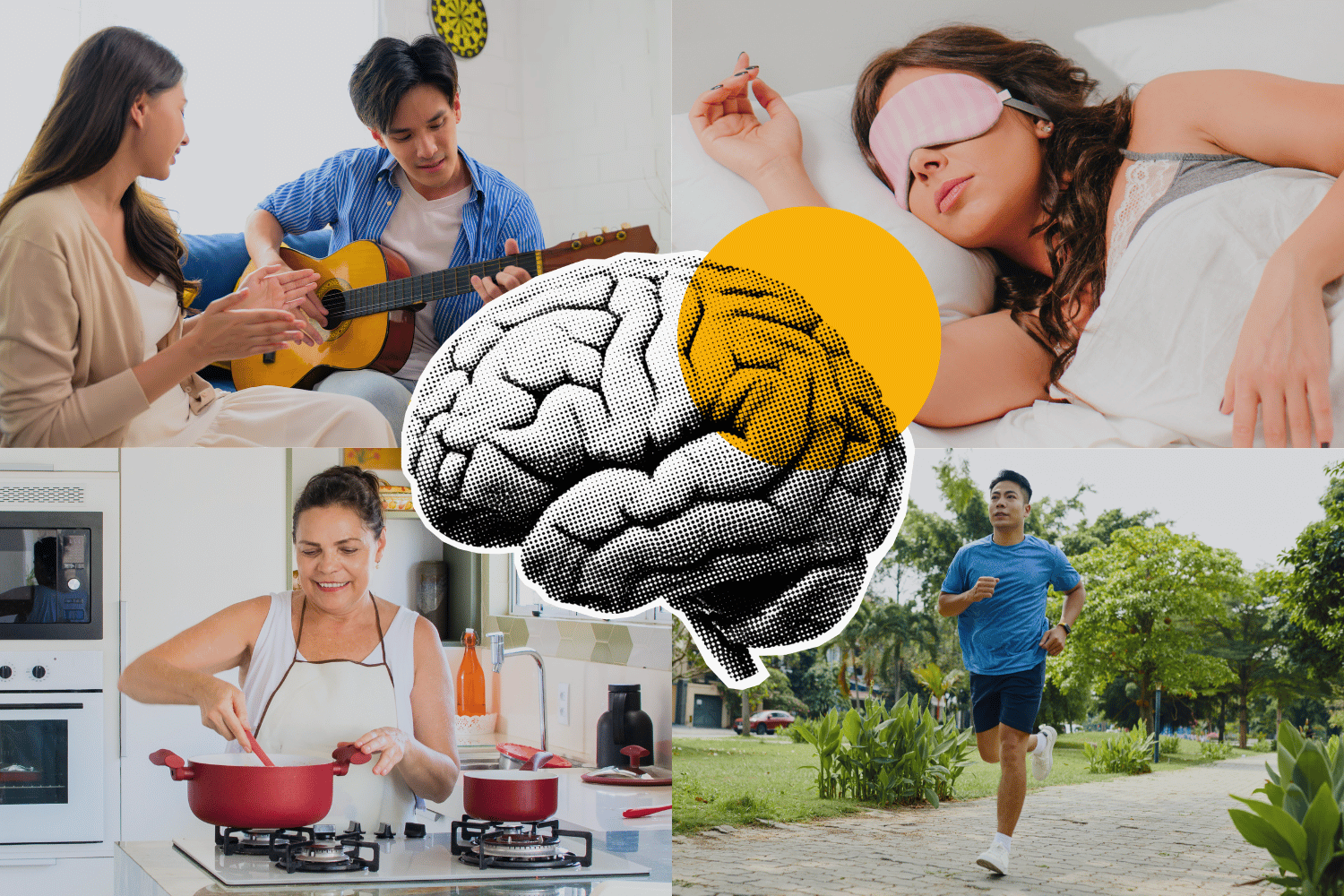
Through neuroplasticity, repeated small actions can help you build healthier routines and learn new skills.
You wake up, reach for your phone and start scrolling. Five minutes becomes 30.
Or maybe you lose your temper in traffic, procrastinate whenever work gets difficult, or freeze when you have to speak English in a meeting.
It can feel like, “Ganito na talaga ako.”
But neuroscience says your brain is not permanently stuck with the patterns it has learned.
Your brain can actually change
This ability is called neuroplasticity—the brain’s capacity to reorganize its neural connections through learning, experience and repeated behavior. And it continues into adulthood.
Think of your brain like a trail through a bukid. Walk the same route repeatedly and the pathway becomes easier to follow.
Habits work similarly. Repeat a behavior often enough and it can become increasingly automatic.
Want to stop doomscrolling? Replace the routine
Say your automatic response after a horrible EDSA commute is scrolling through social media.
Stress becomes the cue. Scrolling becomes the response.
Try deliberately replacing it. Put your phone away and walk for 15 minutes, shower, listen to music or play with your dog.
Do it repeatedly. You are not magically “rewiring” your brain overnight—you are practicing a different response until it becomes more familiar.
Procrastinating? Start small
Have a presentation due Friday but keep checking TikTok instead?
Do just 10 minutes of work. Repeat tomorrow.
Learning guitar? Practice one chord progression daily. Improving your English? Speak it for a few minutes every day.
For learning, small and repeated often beats ambitious and occasional.
Give your brain a challenge
Learn Excel. Study Japanese. Take dance lessons. Cook an unfamiliar dish. Play an instrument.
Neuroplasticity is encouraged by sustained learning and practice—not simply doing something unusual once.
Brushing your teeth with your other hand may provide novelty, but it is not a magical brain hack.
Move your body
Physical activity supports brain health, learning and memory and is associated with effects involving brain-derived neurotrophic factor or BDNF, a protein important to neurons and neural connections.
No gym required. Walk around your barangay, jog at the oval, dance at home or take the stairs.
Sleep is part of learning
Your brain uses sleep to help consolidate newly learned information and skills.
So staying awake until 3 a.m. to study is not necessarily helping. Sleep is part of the learning process.
Stop saying ‘Ganito na talaga ako’
Neuroplasticity does not mean you can transform yourself simply by thinking positively.
Its practical lesson is much more powerful: what you repeatedly practice matters.
Choose one small behavior you want to change. Practice a different response today. Do it tomorrow. Then again.
Your brain is still capable of learning a new way.
READ: