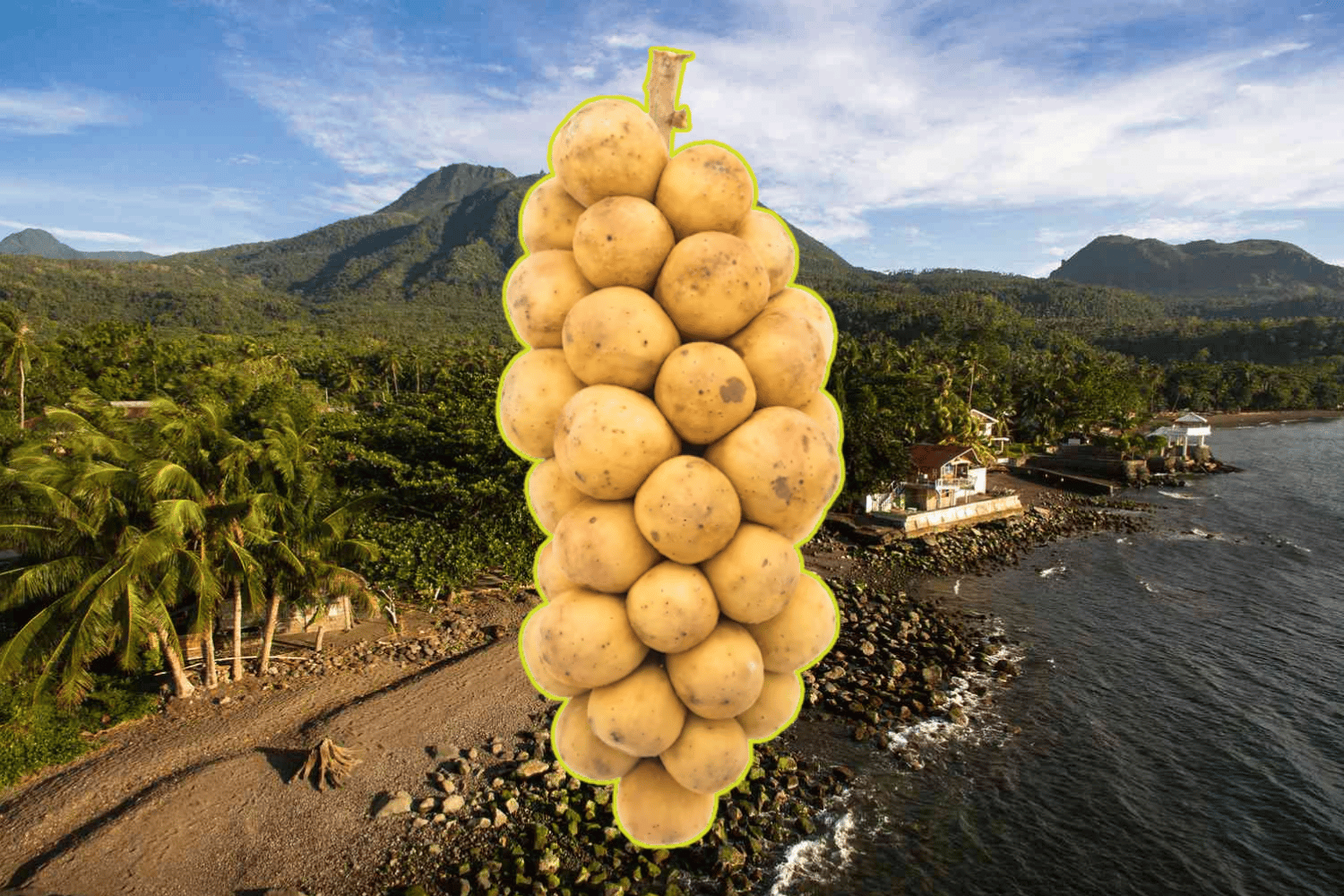
Every October, Camiguin celebrates lanzones with food, dances, parades, and shows.
When we think of Camiguin, we tend to picture volcanoes first.
The Island Born of Fire, after all, was shaped by 14 of them. There are mountains to trek, reefs to dive, White Island’s shifting sandbar, and the moss-covered ruins of Gui-ob Church, partly buried in the lava of Mt. Vulcan’s 1871 eruption.
To say the least, Camiguin is spectacular, so much so that it made The New York Times’ “52 Places to Go in 2026″—the only Philippine destination to make the list. According to writer Patrick Scott, it’s “foremost a destination for those who love the water, with treasure-chest-size neon clams, an abundance of sea turtles around white sandbar islets, hot and cold springs, and waterfalls for bathing.”
Scott also cited its rich local cuisine and cultural heritage, including its much-anticipated Lanzones Festival.
And there it is: lanzones.
For all the volcanoes, waterfalls, and underwater wonders, one of Camiguin’s biggest claims to fame is a small, brown-skinned fruit that can be cracked open with a thumb.
Inside are translucent segments of flesh and bitter seeds, with a sweet-and-sour flavor that some compare to pomelo. Freshly picked, the fruit is at its juiciest and most refreshing. But leave it sitting around for a few days, and it begins to lose its sweetness.
The flesh is sticky enough to leave a little juice on your fingers. You eat one. Spit out the seed. Eat another. Before long, the empty skins have gathered into a small pile beside you.
Aside from being tasty, lanzones is also packed with nutrients. According to the National Nutrition Council, 100 grams of the fruit has about 57 calories, no saturated fat or cholesterol, and around 0.8 grams of dietary fiber, which helps with digestion and healthy blood sugar and cholesterol levels.
Its natural sugars, fructose and sucrose, provide a quick energy boost, while B-complex vitamins help turn food into energy and keep cells functioning normally. Lanzones also delivers calcium and phosphorus for strong bones and teeth, iron for healthy red blood cells, and potassium to help regulate blood pressure and muscle function.
Lanzones has also been studied for its potential medicinal properties. The NNC notes that compounds in its seeds, skin, and leaves have shown activity against Plasmodium falciparum, the parasite that causes malaria. Its vitamin C supports immunity, skin repair, and inflammation response, while crushed seeds have traditionally been used to help lower fever. Bark resin has also been used in traditional medicine for gastrointestinal colic, swellings, ulcers, and flatulence.
But in Camiguin, lanzones is more than a fruit to peel by the handful. Come October, the island celebrates it in grand fashion, bringing together parades, street dancing, cultural performances, and community celebrations.
Now on its 47th year, the festival is held in the third or fourth week of October. This year, it runs from Oct. 15 to 25, celebrating Camiguin’s culture, people, and agricultural heritage through its beloved fruit.
Volcanoes may have given Camiguin its dramatic landscape, but it’s lanzones that gives the island its taste.
READ:
Camiguin braces for tourism boom, keeps prices in check
John Lloyd Aleta
September 21, 2026
The fruit of the common Talisay tree is edible
Top Dagohoy
September 1, 2026
Palawan hides 10 of the Philippines’ strangest and most exotic fruits
Top Dagohoy
September 6, 2026