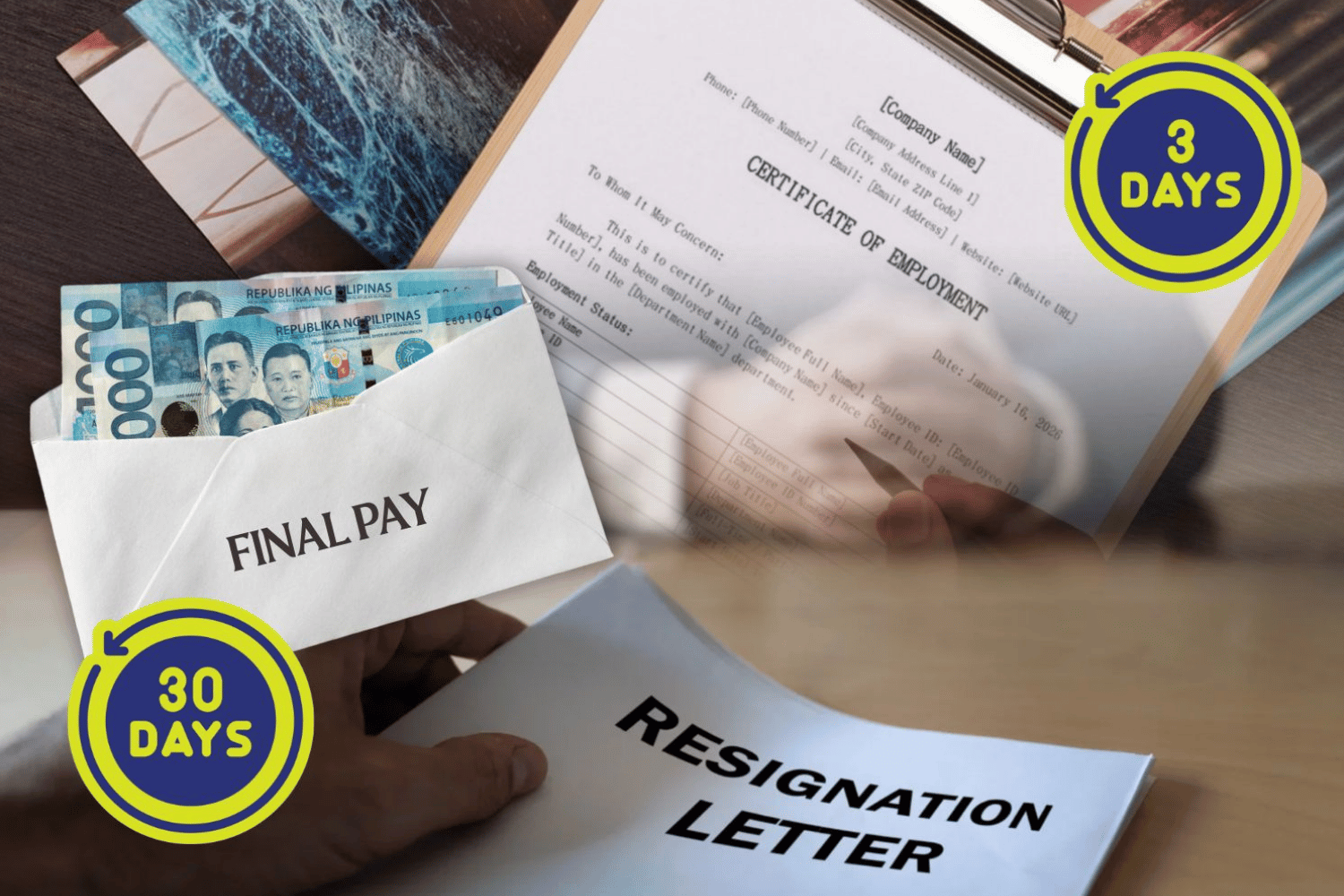
Your employer still owes you these things.
Leaving a job does not automatically end an employer’s obligations to a worker.
The Department of Labor and Employment’s Bureau of Working Conditions (DOLE-BWC) has reminded employers that resignation, termination or any other form of separation comes with post-employment responsibilities—from releasing final pay to issuing a Certificate of Employment (COE).
“Employee exit? Make sure your compliance doesn’t exit with them,” the bureau said in a social media advisory.
And one of the most important reminders is that final pay is not the same as separation pay.
Final pay vs. separation pay
According to DOLE-BWC, final pay refers to the total wages and monetary benefits still owed to an employee after leaving the company.
Depending on the circumstances, this may include unpaid salary, conversion of unused Service Incentive Leave, other applicable leave conversions, prorated 13th-month pay and other benefits. Separation or retirement pay may also form part of it—but only when applicable.
Separation pay, meanwhile, is not automatically given every time someone leaves a job.
Whether an employee is entitled to it depends on how employment ended. DOLE identified several modes of separation, including resignation, retirement, dismissal for just cause or authorized cause, completion of a contract or project, completion of seasonal employment, and death.
The 30-day rule
For employees waiting for their money, DOLE-BWC highlighted an important deadline: final pay should generally be released within 30 calendar days from separation or termination.
A company policy, collective bargaining agreement or employment contract may provide for an earlier release.
Employers also cannot simply use an unfinished clearance process to delay payment indefinitely.
DOLE said employers should identify actual accountabilities, allow workers to respond, avoid unreasonable delays, distinguish company property from monetary claims and maintain proper records.
Want your COE? There’s a 3-day rule
Employees can request a Certificate of Employment regardless of why they left the company.
According to the advisory, employers should issue the COE within three business days from the employee’s request.
That means even a worker who resigned or was terminated may request documentation of their employment.
DOLE also reminded employers that closing an employee’s file involves more than releasing money. Businesses must properly document the mode of separation, comply with applicable notice requirements, correctly calculate final pay and lawful deductions, review benefits, prepare tax documents and update government benefit records.
The agency’s message is particularly relevant to workers who assume that once they hand over their resignation letter—or receive a termination notice—the employment relationship simply ends.
The employee may have walked out the door, but the employer’s legal and administrative obligations can remain.
As DOLE-BWC put it: “When employment ends, compliance shouldn’t.”
READ: