

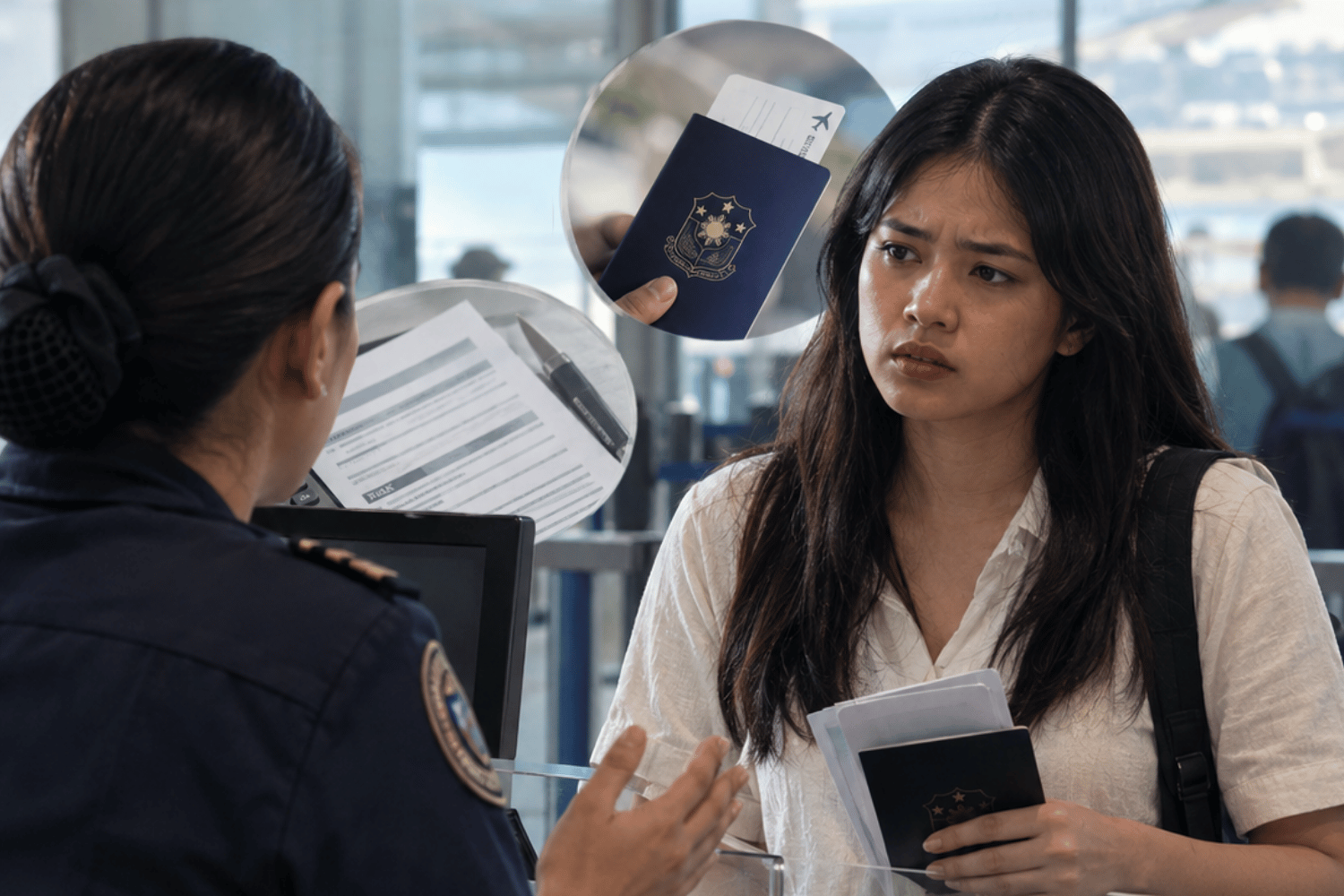
The incident highlights growing frustration among Filipino travelers over aggressive immigration questioning.
A Filipino businesswoman preparing to leave the country was reportedly subjected to an uncomfortable immigration interview after an officer questioned whether she was paying her taxes.
The incident, shared by Threads user @coco_el00416, went viral with more than 562,000 views, triggering criticism of what some netizens described as excessive and unnecessarily intimidating immigration questioning.
According to the traveler, the officer initially asked about her source of income. She explained that she operated a business and presented her business permit and Certificate of Registration.
But instead of moving on to her travel arrangements, the officer allegedly remarked, “Tax-free kayo, ’no? Hindi kayo nagbabayad ng tax.”
She clarified that she paid taxes, but the officer reportedly continued asking exactly how much she paid the previous year and whether she had already paid her current taxes.
The traveler explained that her bookkeeper handled her tax obligations and that she could not remember the exact amounts.
“How bold of you to assume I’m not paying taxes,” she later wrote, explaining that she had no problem answering legitimate questions but found the officer’s remarks judgmental and offensive.
Her experience sparked a debate: Just how far can Philippine immigration officers go when questioning departing Filipino travelers?
Can immigration officers ask about taxes?
Yes, but there are limits.
Philippine immigration officers have the authority to examine a passenger’s identity, travel purpose, employment, source of income, and financial capacity when relevant to immigration screening.
For business owners and self-employed travelers, officers may ask about business operations and request supporting documents when further verification is justified.
Income tax returns and other financial records may help establish legitimate income in appropriate circumstances.
However, immigration officers are not tax auditors. Their primary responsibility is to screen travelers and identify possible immigration violations, human trafficking, illegal recruitment, and other relevant risks.
There is no general requirement for ordinary Filipino tourists to memorize their annual tax payments or demonstrate complete tax compliance before traveling abroad.
More importantly, forgetting the exact amount of taxes paid does not automatically mean someone is evading taxes.
What can immigration officers ask?
Officers may ask where passengers are traveling, how long they intend to stay, who will finance their trip, where they work, and how they earn their income.
They may also inquire about previous international travel, accommodation arrangements, travel companions, and sponsors.
During justified secondary inspections, additional documents may be requested to verify information or address legitimate concerns.
However, these powers are not unlimited.
Questions should serve a legitimate immigration purpose. Officers should not use their position to intimidate, insult, discriminate against, or humiliate travelers.
Personal questions are not automatically prohibited, but their relevance and manner of questioning matter.
An officer may investigate inconsistencies in a traveler’s financial declarations. That does not mean the officer should automatically accuse someone of tax evasion without sufficient basis.
Can travelers refuse to answer?
Filipino travelers may respectfully ask why a particular question or document is necessary, especially when it appears unrelated to their travel.
They may also request assistance from an immigration supervisor if they believe they are being treated improperly.
However, refusing to cooperate with legitimate immigration screening may result in additional questioning or delays.
Travelers should answer truthfully and explain when information is unavailable rather than inventing answers.
Those who experience alleged harassment or misconduct may file a complaint with the Bureau of Immigration.
When does screening become harassment?
The Bureau of Immigration has a legitimate responsibility to protect Filipinos from human trafficking, illegal recruitment, and other immigration-related risks.
But protecting travelers should not mean treating every departing passenger as a potential criminal.
In the viral incident, the traveler’s account remains an allegation, and the immigration officer’s explanation has not been presented.
Nevertheless, the controversy exposes a concern among Filipino travelers who feel that some immigration interviews have become unnecessarily confrontational.
An immigration officer may legitimately ask where a passenger’s money comes from, how a trip is financed, and whether supporting financial documents are available.
But asking questions to establish facts is different from making accusations without sufficient basis.
Immigration screening is a government responsibility, not a license to humiliate Filipino travelers.
READ:
Passenger calls DSWD clearance ‘stupid’ after niece is barred from flight
Kiara Gorrospe
October 10, 2026
Philippine passport fee may rise to ₱1,500 despite limited visa-free access
John Lloyd Aleta
September 21, 2026
EXPLAINER: Did you know Filipinos once traveled to the United States without a visa?
Top Dagohoy
October 16, 2026


