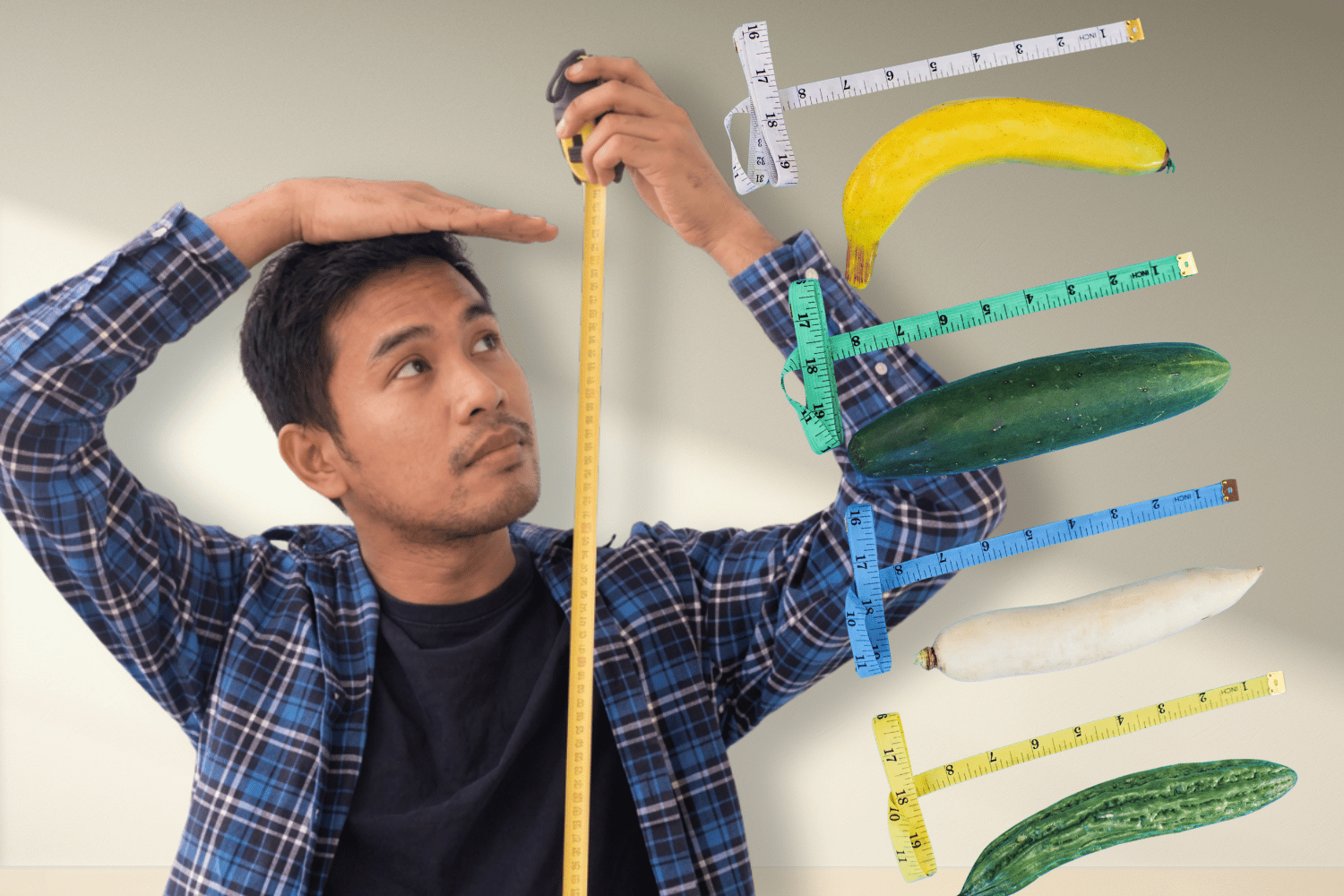
A guy claims he is 5’10”, but when you finally meet him, he barely reaches 5’7″. Another insists he weighs 70 kilograms, although the bathroom scale tells a different story. And then there is the man who proudly announces he is packing seven inches.
Welcome to the world of inflated male measurements, where a few extra inches or missing kilograms can supposedly make someone more desirable.
Research on self-reported physical attributes suggests that men sometimes exaggerate or downplay their measurements to match society’s expectations of masculinity.
Height: the extra two inches
In the Philippines, where many men stand below six feet, claiming to be 5’10” or six feet tall can instantly become a dating advantage.
A man who stands 5’6″ might conveniently round up to 5’8″, especially on dating apps where height can influence first impressions.
Studies of online dating behavior have documented height exaggeration among men, although not everyone does it.
Weight: the magic 70 kilograms
Ask a Filipino man about his weight and 70 kilograms might sound like a convenient answer.
Men carrying extra belly fat may shave a few kilograms off their actual weight, while skinny guys trying to project a muscular physique may add some.
The pressure comes from the increasingly popular gym-built aesthetic: broad shoulders, defined arms, and a flat stomach.
Penis size: the seven-inch claim
Perhaps no male measurement attracts more exaggeration than penis size.
In Filipino barkada conversations and dating culture, claims of six, seven, or even eight inches can become unofficial badges of masculinity.
But science tells a different story.
A major 2015 review published in BJU International found an average erect penis length of 13.12 centimeters, or approximately 5.16 inches.
As for Filipino men, widely circulated online figures suggest an average of around 4.3 inches, but these estimates lack sufficiently robust, nationally representative clinical evidence to establish a reliable Filipino average.
Claims that Filipino men are naturally smaller than other nationalities should therefore be treated cautiously.
Gym measurements: flexing the numbers
The exaggeration does not stop in the bedroom.
Some gym enthusiasts claim 16-inch biceps, single-digit body fat, or impressive lifting records that have never been independently verified.
In fitness culture, numbers can become another way to establish status.
Ultimately, these exaggerations reflect what psychologists call social desirability bias: the tendency to present ourselves in ways we believe others will admire.
For some men, being taller, leaner, more muscular, or better endowed becomes a shortcut to feeling more masculine.
But whether the subject is height, weight, or what’s inside the underwear, confidence is not something a measuring tape can establish.
READ: