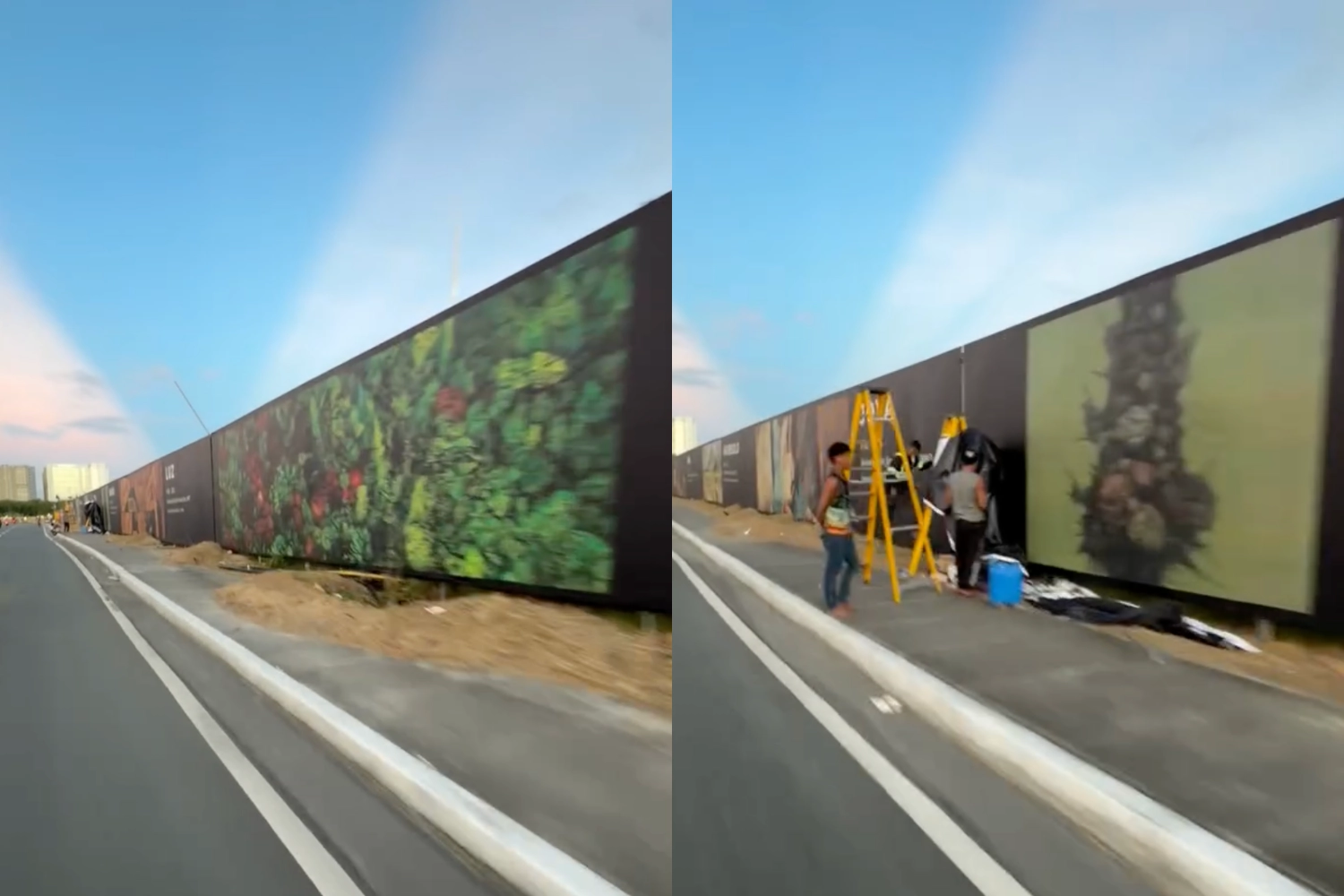
Critics argue that Filipino art deserves year-round support and funding, not just a quick spotlight for foreign visitors. Screengrabs from TJ Parpan / Threads
An outdoor display celebrating some of the Philippines’ greatest visual artists along J.W. Diokno Boulevard in Pasay City has sparked criticism over its timing, appearing days before the country hosts the ASEAN Summit.
The extensive tarpaulin installation features reproductions of works by celebrated Filipino masters, transforming a roadside barrier into a public art gallery.
Among the featured artists are National Artists Fernando Amorsolo, H.R. Ocampo, Vicente Manansala, Ang Kiukok, Abdulmari Asia Imao, José Joya, and J. Elizalde Navarro, alongside renowned glass sculptor Ramon Orlina.
Why only now?
The installation attracted attention after social media user @tjparpan shared photographs taken along a regular cycling route.
“It’s commendable to honor our great visual artists, but I wonder why these tarps only came up on the week before our hosting of the ASEAN summit,” the user wrote.
The observation triggered criticism from commenters questioning the government’s priorities.
One described the display as “your typical pakitang-tao from the govt.”
Another wrote, “It’s the government putting on a lot of make-up on its ugly face.”
Questions over public spending
Some commenters questioned the cost of printing and installing the extensive display, suggesting that government beautification projects often receive greater attention ahead of international events.
However, the project’s budget, procurement arrangements, and funding source have not been independently verified. No evidence of financial irregularities involving the installation has been established.
Art for Filipinos or foreign visitors?
The installation comes as the Philippines prepares to welcome Southeast Asian leaders and international partners for the ASEAN Summit.
Showcasing works by the country’s most celebrated artists offers an opportunity to highlight Philippine cultural achievements before an international audience.
Yet critics argue that Filipino artistic heritage deserves sustained recognition and public investment, not merely heightened visibility during diplomatic gatherings.
For them, the question is not whether Filipino masters deserve to be celebrated, but why such celebrations appear to become urgent only when foreign visitors are coming.