Children competed over flavors that never existed.
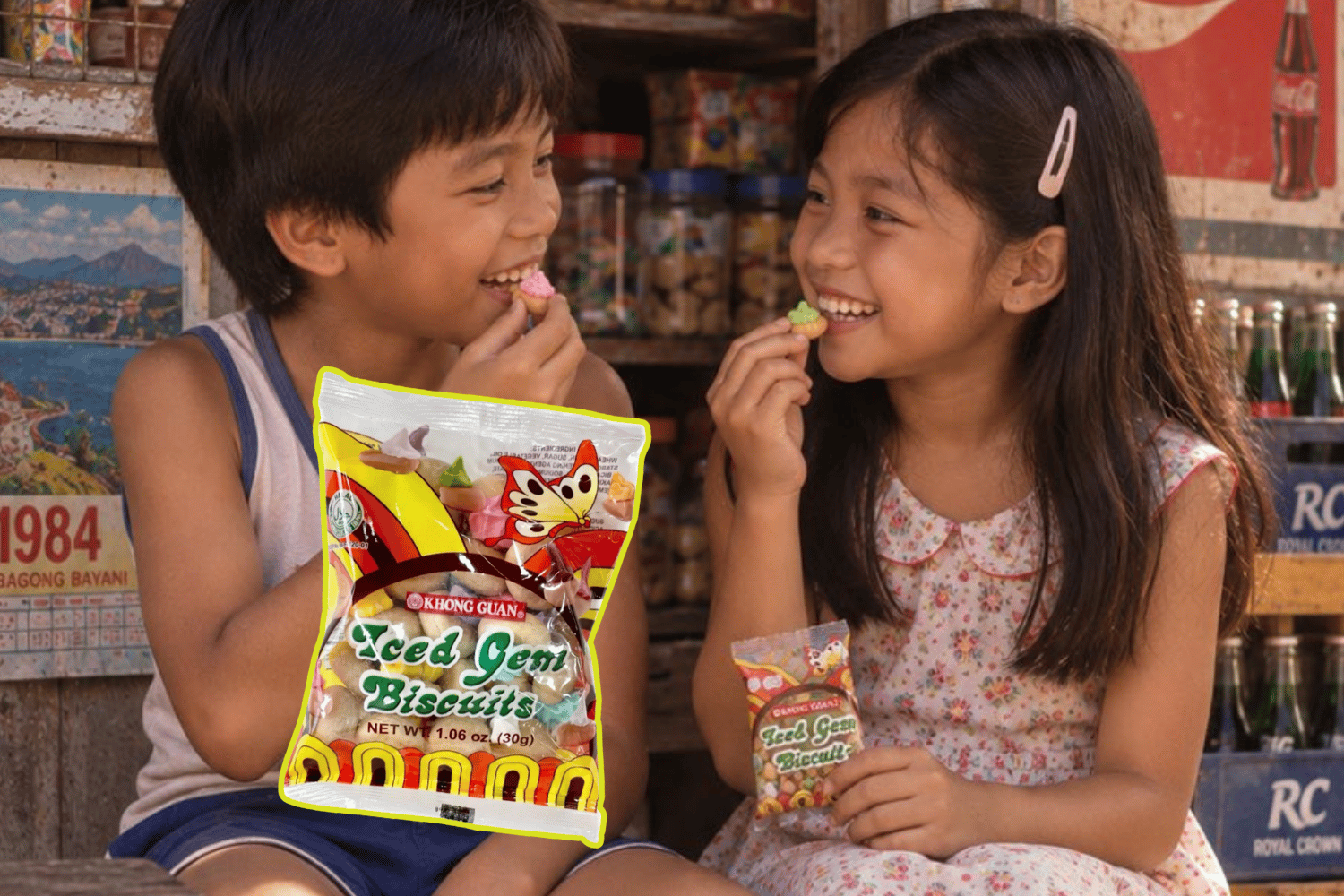
Open a pack of Iced Gem Biscuits in front of a group of children and watch what happens.
Small hands immediately dig through the pile, hunting for favorite colors. Pink disappears quickly. Green has its loyal fans. Purple looks special. Yellow gets claimed by someone convinced it tastes different from the rest.
For generations of Filipino kids, choosing an Iced Gem was almost as important as eating one. We believed pink was strawberry, yellow was lemon, purple could be grape and green was something entirely different.
Except they essentially tasted the same.
The colorful crowns did not represent different flavors. They were the same sweet, crunchy icing differentiated mainly by food coloring. Our eyes—and childhood imagination—did much of the flavoring.
But Iced Gems became much more than biscuits in the Philippines.
They were sari-sari store treats bought with spare coins, slipped into school baon, poured into bowls during merienda and shared with siblings, cousins and playmates.
They also came with an eating ritual.
Some kids bit off the icing immediately and reluctantly finished the plain biscuit. Others carefully ate the biscuit around it, saving the sugary crown for last. And some simply hunted through the pack for their favorite colors.
For a snack so deeply associated with Filipino childhood, however, the Iced Gem came from somewhere surprisingly far away.
Its history stretches back to Victorian England.
The original Gem biscuit was introduced by Huntley & Palmers of Reading, England, in the 1850s. Historical accounts link its miniature size to biscuit-making machinery that produced unexpectedly small biscuits.
The Gems were originally plain. Iced versions appeared around 1910, creating the familiar tiny biscuit topped with a hard, piped crown of sugar.
The treat eventually became popular across Asia.
Khong Guan, established in Singapore in 1947 by brothers Chew Choo Keng and Chew Choo Han, became one of the brands strongly associated with Iced Gems in Southeast Asia. Its biscuits would also become familiar fixtures on Philippine grocery and sari-sari store shelves.
That is perhaps why Iced Gems can trigger memories bigger than their tiny size: recess, merienda at a grandparent’s house, cousins gathered around a table, and a pack picked clean of the “best” colors.
The funny part is that generations of us were competing over flavors that never existed.
Pink, green, yellow, purple or white—it was mostly color and childhood imagination.
And somehow, the pink one still tasted better.
READ: