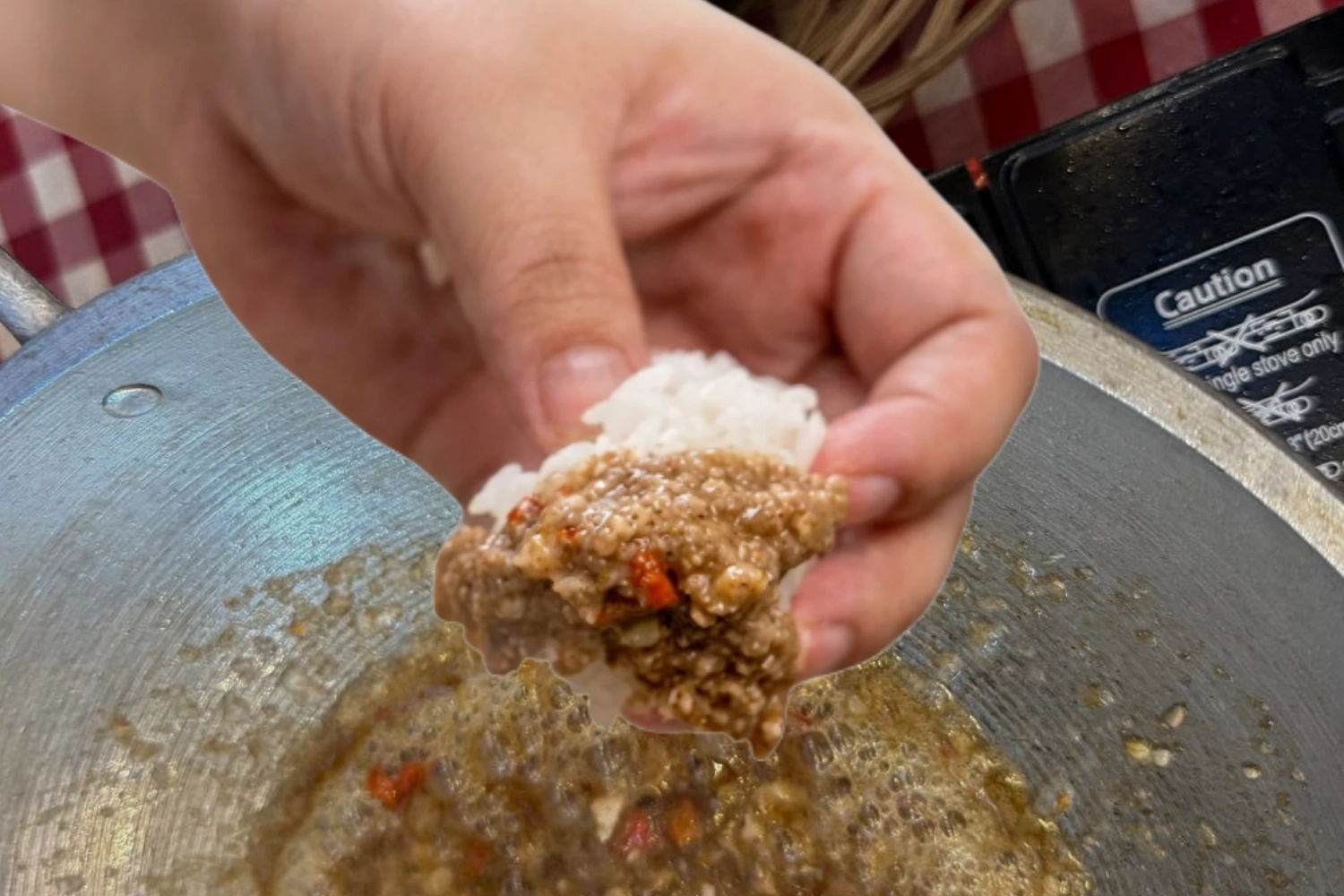
You are in Cebu, sitting around a sizzling pan of thick, bubbling gravy. Someone hands you rice wrapped in woven coconut leaves and tells you to dip it straight into the mixture.
Then you discover what is cooking in the pan: pig brains.
For first-timers, the revelation can be unsettling. But for generations of Cebuanos, this unusual dish called tuslob buwa has been a familiar comfort food.
What many visitors do not realize is that this now-famous delicacy began in Cebu’s working-class neighborhoods, where families learned to turn inexpensive and discarded ingredients into something delicious.
Born out of poverty
Tuslob buwa traces its origins to the communities of Pasil, Suba, and Duljo in Cebu City during the 1950s.
Its name comes from two Cebuano words: tuslob, meaning to dip, and buwa, meaning bubbles or froth.
Interestingly, the earliest versions reportedly did not contain pig brains.
Residents originally dipped their pusô, or rice cooked inside woven coconut leaves, into the flavorful foam left behind after frying sinudlan, a local pork sausage.
By the 1960s, variations using pork innards and rich stew sauces had emerged.
The familiar pig brain version became popular in the 1970s, when vendors began using an ingredient that many butchers previously discarded.
Cooked with garlic, onions, soy sauce, pork fat, and sometimes liver, pig brains produced the creamy, savory mixture that would eventually define modern tuslob buwa.
From street food to global fame
Traditionally, customers gathered around a communal wok, dipping their rice into the same bubbling mixture.
By the 2010s, restaurants began introducing individual tabletop stoves, allowing customers to prepare their own tuslob buwa.
The dish gained international attention in 2019 when Netflix featured it in the documentary series “Street Food: Asia.”
The episode highlighted Cebu’s street food culture and restaurateur Ian Sekong of Azul, who helped bring tuslob buwa to mainstream diners.
The delicacy has since inspired community festivals, attracted international food vloggers, and even sparked a trademark dispute over ownership of its name.
Today, tuslob buwa stands alongside Cebu’s famous lechon as one of the city’s distinctive culinary attractions.
What began as an inexpensive meal for struggling communities has become a celebrated symbol of Cebuano ingenuity.
A dish once associated with having very little is now something visitors deliberately travel to Cebu to experience.