“Today, Naga City has claimed its future.”
That was how Mayor Leni Robredo opened her message to Nagueños after residents voted to ratify the city’s conversion into a highly urbanized city on Saturday, Nov. 21.
The vote made Naga the Philippines’ 34th HUC, ending its 78-year run as an independent component city. Of the valid votes cast, 30,538—or about 82%—favored the conversion, while 6,648 voted against it.
“Showing a united front for this historic milestone is an act of faith—in ourselves and in our highest aspirations for the city we love,” Robredo wrote in a Facebook post.
She also credited Naga’s progress to “good governance and people’s participation,” adding that its next chapter should be measured not simply by growth, but by “the dignity, opportunity, and security felt by every Nagueño.”
But Naga’s story did not begin with its city charter—or its latest milestone.
Long before the Spanish arrived, a thriving settlement had already taken root along the banks of the Naga River. The city’s name is commonly traced to the narra trees, locally called naga, that once grew abundantly in the area.
In 1573, Spanish explorer Juan de Salcedo reached the settlement. Two years later, in 1575, Captain Pedro de Chávez established a Spanish city nearby, naming it Ciudad de Cáceres in honor of then Governor-General Francisco de Sande’s hometown in Spain. The native settlement and the Spanish city eventually merged and became known as Nueva Cáceres.
Its influence soon extended beyond the surrounding communities. In 1595, the Diocese of Nueva Cáceres was established, making the city an important religious center during the Spanish colonial period. It also grew as a center of trade and administration in the region.
Naga later figured in the struggle against Spanish rule. On Sept. 18, 1898, Guardia Civil corporals Elías Ángeles and Félix Plazo led an uprising in Nueva Cáceres. Spanish authorities surrendered the following day.
Under American rule, Nueva Cáceres was dissolved in 1902 and merged with the neighboring municipality of Naga. The Spanish name was eventually dropped, and the native name was officially restored in 1918.
Naga regained its cityhood through Republic Act No. 305, signed on June 18, 1948. Its city government was formally inaugurated on Dec. 15 that year, with Leon S. A. Aureus as its first appointed mayor.
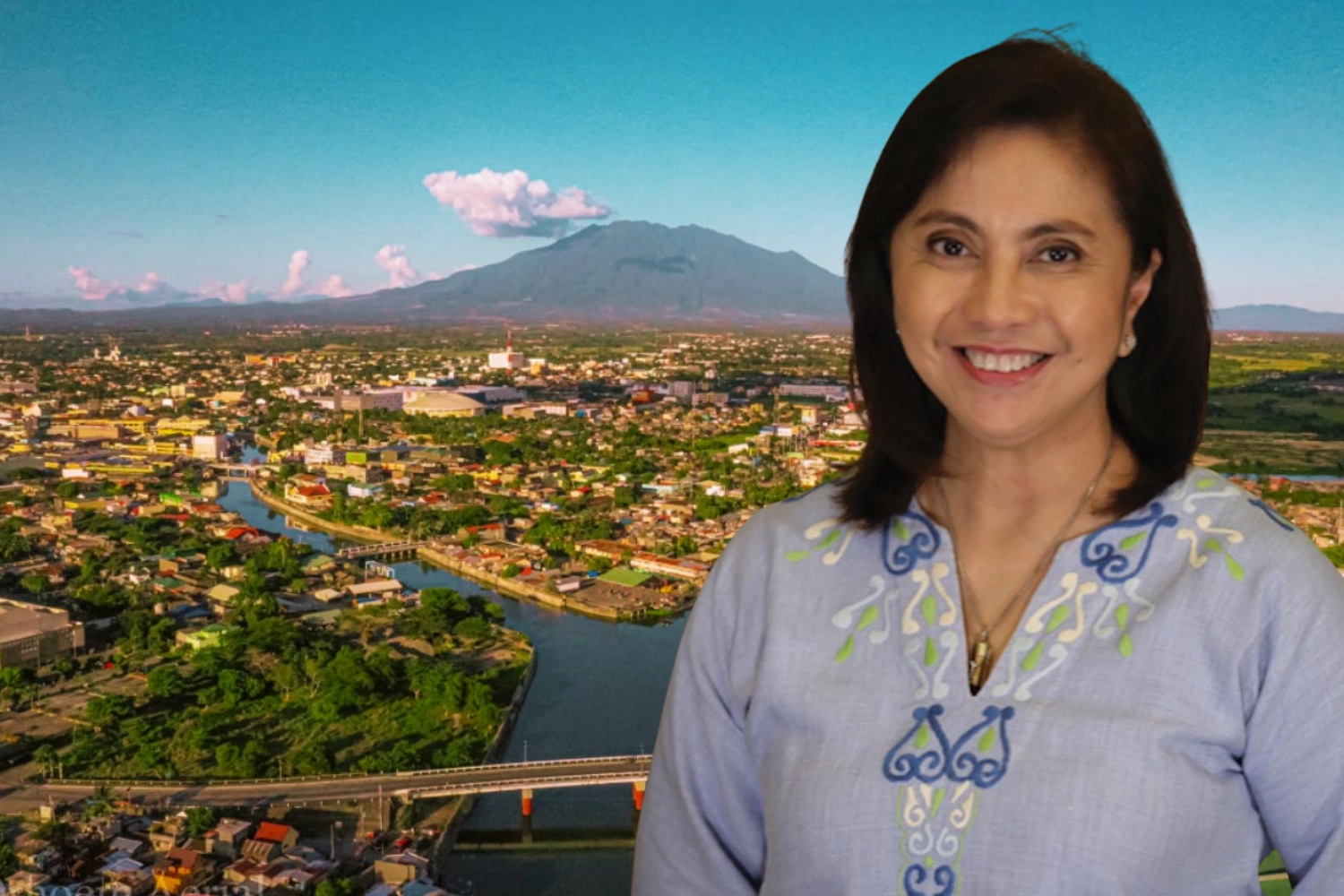
Today, Naga remains a major center of commerce, education, culture, and religion in the Bicol Region. Its location along the Naga River, with Mount Isarog rising in the distance, gives the city a landscape that connects its urban life to the region’s natural surroundings.
It is also known as the Pilgrim City, drawing devotees from across the country for the annual Peñafrancia Festival. Held every September, the celebration brings together religious processions, music, and thousands of pilgrims honoring Our Lady of Peñafrancia, the beloved patroness of Bicol. Among its most anticipated traditions are the Traslacion, which brings the image of the Virgin from her shrine to the Naga Metropolitan Cathedral, and the fluvial procession along the Naga River.
Beyond the festivities, the city’s character can be found in its churches, public markets, schools, heritage sites, and food traditions. Naga serves as a gathering place for people from neighboring towns and provinces, making it an important crossroads of Bicolano life.
Its new HUC status gives the city greater fiscal and administrative independence from the provincial government, as well as more room to chart its own development priorities.
But Robredo’s message made clear that the work ahead will not be measured by status alone.
“From here, our work truly begins,” she said, urging residents to stay engaged, hold public institutions to high standards, and lend their voices and hands to the city’s future.
She hopes to see a Naga that is “more sustainable, more livable, and truly worthy of being called An Maogmang Lugar”—a happy place.
“Dios Mabalos po saindo gabos. Padagos kita!” Robredo said.