The search for the Philippines’ first Nobel laureate in Literature continues.
Canadian poet, essayist, classicist, and translator Anne Carson was awarded the 2026 Nobel Prize in Literature on Oct. 8 “for her bold and inventive oeuvre that, in playful dialogue with the classical tradition, has created new forms for contemporary literature.”
Among the Nobel Prize’s six categories—Physics, Chemistry, Physiology or Medicine, Literature, Peace, and Economic Sciences—the Literature prize has a distinct place in the public imagination. Each year, it singles out one writer among the world’s countless literary voices, recognizing not just a single work but a body of writing shaped over a lifetime.
Held every October, the announcement draws the attention of literary communities around the world, including in the Philippines, where many hold on to the hope that one day, a Filipino writer might claim the honor.
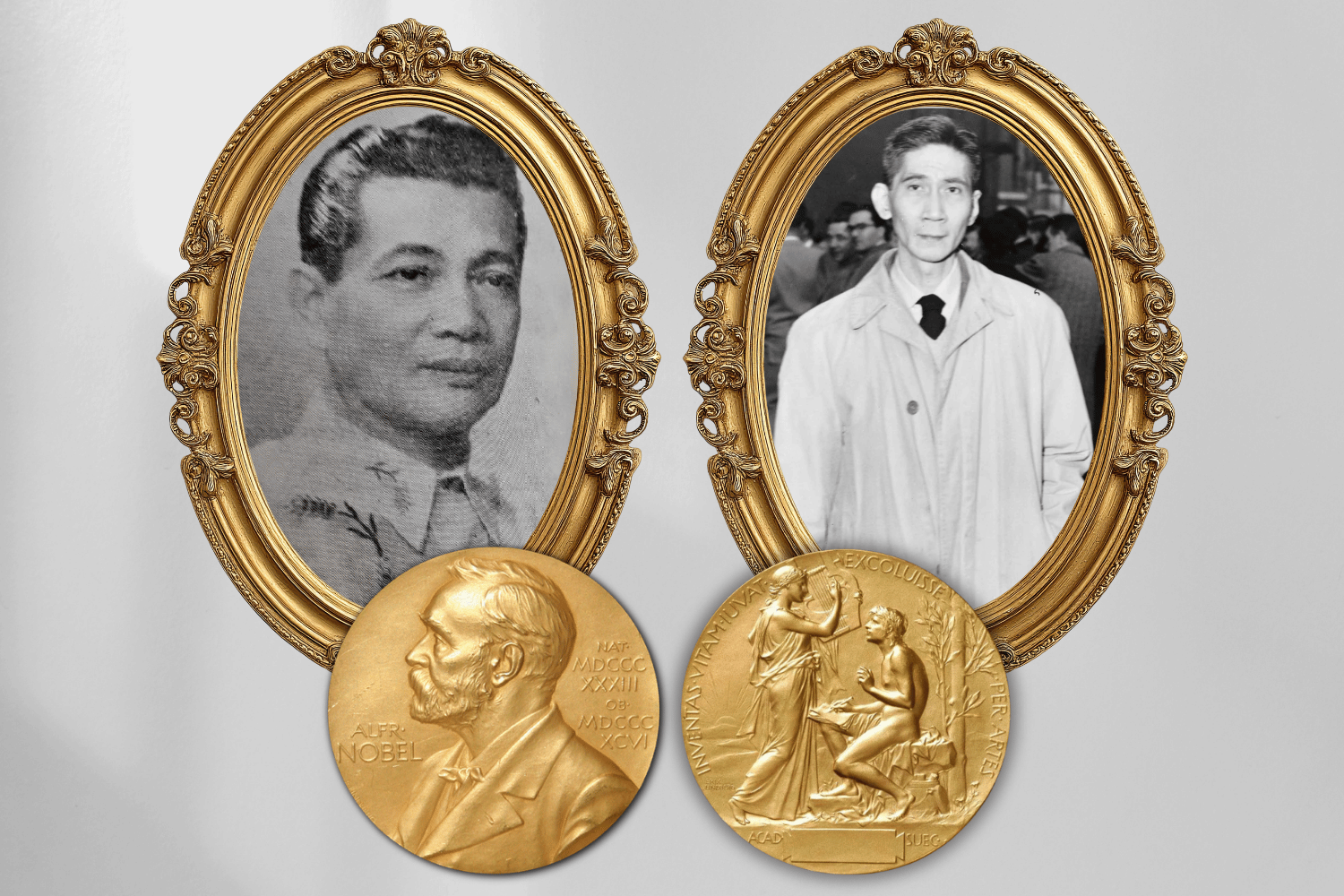
In the prize’s 125-year history, no Filipino has won the Nobel Prize in Literature. But the Nobel’s declassified nomination archives show that two Pinoys appeared in the records in the ’70s: José García Villa and Amado Magcalas Yuzon.
García Villa
García Villa received four recorded nominations: two in 1971, from Filipino educator Pacita Habana and colleagues, and from fellow writer Alejandro Roces, and one each in 1973 and 1974, both from art critic Purita Kalaw-Ledesma.
A poet, short story writer, and literary critic, García Villa was one of the Philippines’ most distinctive modernist writers. Born in Manila in 1908, he moved to the United States in 1930 and became known for his poetic experiments. These included his comma poems, which placed commas after words to create a distinctive rhythm, and reversed consonance, a rhyme scheme in which the final consonant sounds of rhyming words are switched around, as in “near” and “run.”
Also known by his pen name Doveglion, García Villa’s works include short story collection “Footnote to Youth” and the poetry collections “Have Come, Am Here” and “Volume Two.” He was named a National Artist for Literature in 1973.
García Villa died in 1997 at 88 years old.
Yuzon
Yuzon received three recorded nominations: two in 1970, from Filipino poet Emeterio Barcelón y Barceló-Soriano and Chinese poet Chung Tin-Wen, and another from Barcelón in 1973.
Born in Guagua, Pampanga in 1906, Yuzon was a poet, journalist, educator, and public servant whose work spanned Kapampangan, Spanish, and English.
He was a prominent figure in crissotan, a Kapampangan tradition of poetic debate in which participants trade improvised verses, often in rhyme. His poetry collections include “Ding Capampangan,” “Ing Kakung Dampa,” “Poems for Screen Heroines” and “The Citizen’s Poems,” while his essay books include “Salitang paca-versu sinukuan at aliwa pa, declamaciones, leyendas ding sampanga” and “The Passion of Rizal, Poet and Martyr.”
Beyond literature, Yuzon served as a member of the House of Representatives for Pampanga’s 1st District from 1946 to 1949 and founded United Poets Laureate International in 1963.
Yuzon died in 1979 at 72 years old.
What the nobel archives say—and don’t
Beyond García Villa and Yuzon, other Filipino writers have also figured in public speculation about possible Nobel nominations, including Nick Joaquin, F. Sionil José, and N.V.M. Gonzalez.
These claims remain unverified because Nobel nominations are kept confidential for 50 years under the Nobel Foundation’s statutes. The Nobel Committee does not announce nominees, neither to the media nor to the candidates themselves.
“Any rumours regarding recent nominees are either just rumour, or someone among the invited nominators has leaked information,” the Nobel website says in its FAQ page. “Since the nominations are kept secret for at least 50 years, you’ll have to wait until then to find out.”
To date, the Nobel Prize’s online nomination archive currently contains records only through 1975. No Filipino nominees appear in that year’s records, but this does not establish whether Filipino writers were nominated in later years. Records for 1976 could become available late this year or in early 2027.
Who can nominate?
Not everyone can nominate a writer for the Nobel Prize in Literature. The Swedish Academy limits nominations to four groups: members of the Swedish Academy and comparable institutions; professors of literature or linguistics at universities and colleges; previous Nobel laureates in Literature; and chairs of writers’ organizations considered representative of their country’s literary output. Self-nominations are not allowed.
Even a nomination doesn’t guarantee a place on the shortlist, much less a win. The Swedish Academy reviews the eligible candidates and narrows the field before selecting a laureate.
For García Villa and Yuzon, there’s another limitation: neither can now receive the prize. Under the Nobel Foundation’s current rules, a prize cannot be awarded posthumously unless the recipient dies after the announcement.
Until the rule changed in 1974, the Nobel Prize could be awarded posthumously, as in the case of Swedish poet Erik Axel Karlfeldt, who became a Literature laureate in 1931.
There has been an unusual exception under the current rules, however. In 2011, Canadian immunologist Ralph Steinman was named a Nobel laureate in Physiology or Medicine, only for officials to discover that he had died three days before the announcement. The Nobel Foundation allowed the award to stand because the decision had been made without knowledge of his death.
García Villa and Yuzon’s chances have passed, but the search for a Filipino Nobel laureate continues.
READ:
National Artist for Literature Resil Mojares dies at 83
radar Lifestyle
September 5, 2026
Philippine literature and journalism mourn the passing of writer and art critic Amadis Ma. Guerrero
radar Lifestyle
May 14, 2026
OPINION: CHED cuts humanities for job-readiness. History’s top scientists, leaders drew from art, literature
Nikko Miguel Garcia
May 11, 2026
Tags: Alejandro RocesAmado Magcalas YuzonAnne CarsonChung Tin-WenEmeterio Barcelon y Barcelo-SorianoErik Axel KarlfeldtFrancisco Sionil JoseGuaguaJosé García VillaManila CityNestor Vicente Madali Gonzaleznick joaquinNobel FoundationPacita HabanaPampangaPurita Kalaw-LedesmaRalph SteinmanSwedish AcademyUnited Poets Laureate InternationalUnited States