In Filipino, alanganin means uncertain, caught in between, or unable to decide.
Picture yourself invited to a fiesta in Bocaue. A smiling host places a steaming bowl of noodles in front of you. After a few spoonfuls, you beam with approval.
“Ang sarap ng mami!”
The table suddenly erupts in laughter.
“Hindi ’yan mami,” someone quickly corrects you. “Pansit ’yan.”
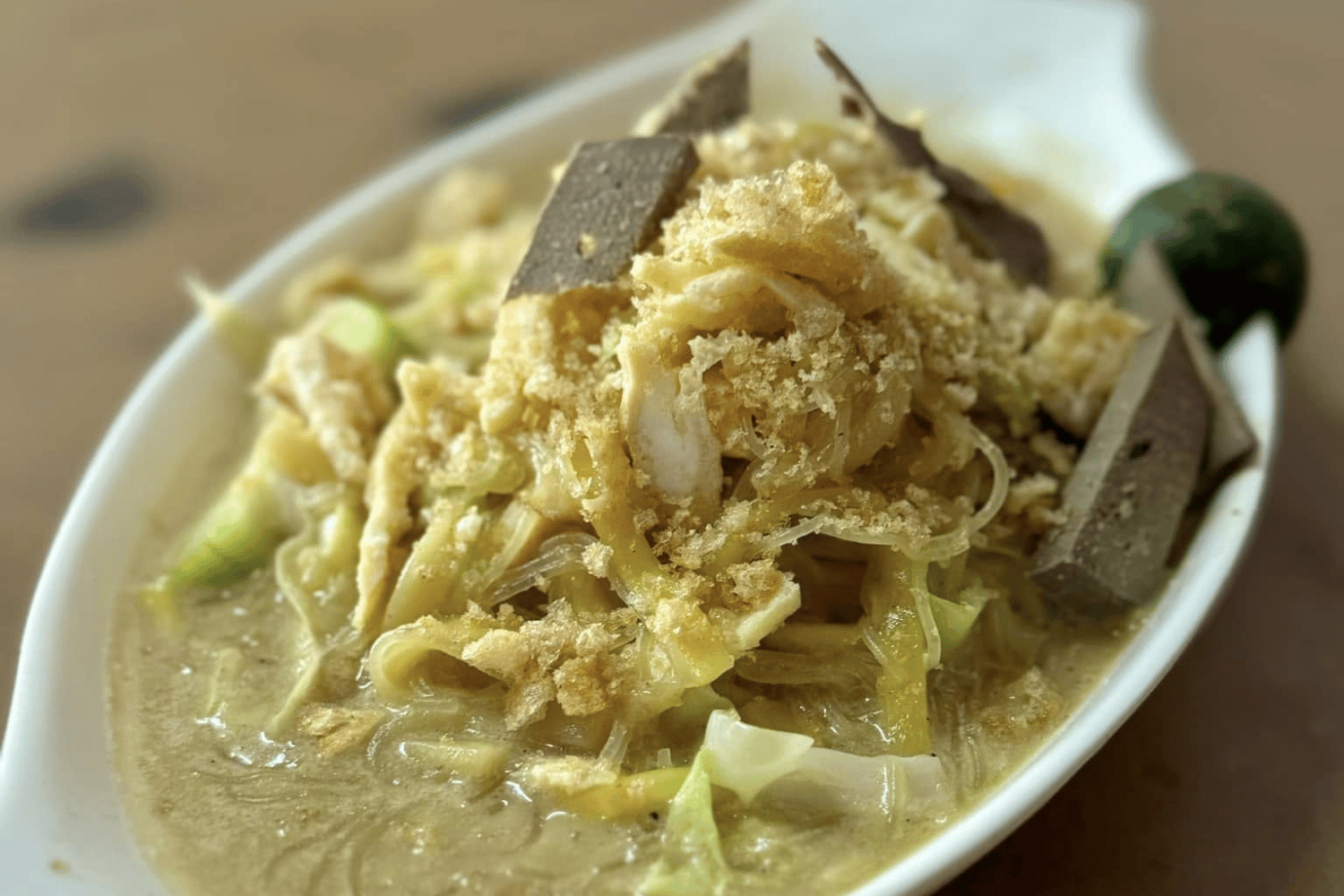
You look back at your bowl. It has broth like mami, but not enough to be soup. It has noodles like pancit, but it’s too creamy and saucy to be called the usual guisado.
Congratulations—you’ve just met Pansit Alanganin, perhaps the only Filipino noodle dish that proudly leaves first-time diners scratching their heads.
A pansit with an identity crisis
Among Bulacan’s many culinary treasures, none is quite as delightfully confusing as Pansit Alanganin.
Its name perfectly captures its personality. In Filipino, alanganin means uncertain, caught in between, or unable to decide. The dish refuses to choose whether it wants to be a dry pancit guisado or a comforting bowl of mami. Instead, it happily exists somewhere in the middle.
Locals have long embraced this quirky identity, even affectionately calling it “pansit bakla” because it defies the usual categories—a playful nickname referring to the dish’s fluid identity rather than fitting neatly into one style of noodle.
The dish that refused to choose
Unlike ordinary pancit, Pansit Alanganin isn’t completely dry.
But unlike mami, it isn’t swimming in broth either.
Instead, a shallow pool of rich, light-brown gravy remains at the bottom of the plate, slowly soaking into the noodles as you eat. Every minute changes the dish’s texture. The first few bites feel almost like soup; by the last few forkfuls, it has transformed into a rich, saucy pancit.
It’s a dish that seems to change its mind as you eat it.
The secret is in the broth
Its unique character comes from an unusual combination of ingredients.
Traditional recipes combine thin bihon with thicker miki or canton noodles, creating two distinct textures in every bite. A splash of evaporated milk is added to the pork broth, giving the sauce a velvety richness that reminds many of creamy Filipino sopas.
Instead of relying heavily on cabbage, authentic Bocaue versions feature generous slices of patola or sayote, vegetables that soak up the flavorful broth while adding natural sweetness.
The dish is finished with pork, liver, bits of scrambled egg, and a generous handful of crushed chicharon, which slowly softens as it absorbs the sauce while still retaining a bit of crunch.
Born in Bocaue
The story of Pansit Alanganin is inseparable from Nory’s Restaurant, one of Bocaue’s oldest and most beloved eateries.
Founded in 1936 by Felicidad Esguerra, fondly known as Lola Felizidad, the family-run restaurant is widely credited with creating the dish.
According to local culinary heritage accounts, it was born from practicality and ingenuity. The goal was to serve hardworking laborers a filling, affordable merienda that combined the comforting warmth of noodle soup with the satisfying bite of stir-fried pancit.
Nearly a century later, the restaurant still cooks the dish over traditional wood-fired ovens, giving it a subtle smoky flavor that has become part of its signature taste.
A dish that changes with every bite
Perhaps that’s what makes Pansit Alanganin unforgettable.
Unlike most noodle dishes that stay the same from the first bite to the last, this one continues evolving as the noodles absorb the creamy broth. Locals recommend eating it immediately while it’s piping hot, mixing the sauce with the crushed chicharon and finishing it with a squeeze of calamansi to balance the richness.
In the end, Pansit Alanganin never really answers the question of whether it’s mami or pancit.
Instead, Bocaue simply serves both—in one deliciously confusing bowl.
READ: