1,450+ branches transition as power costs and supply uncertainty grow.
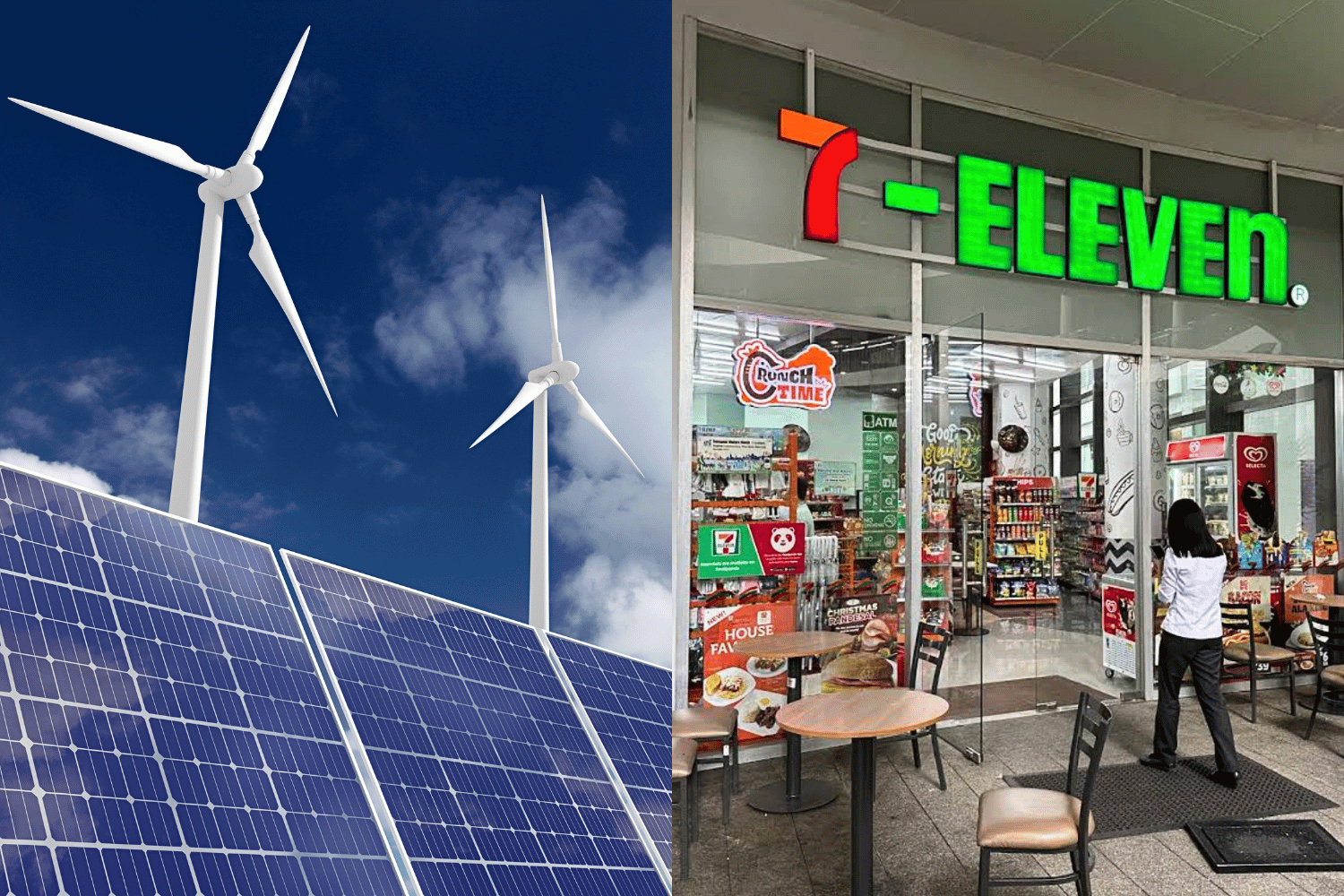
A major move is underway for one of the country’s biggest convenience store networks, with over 1,450 7-Eleven branches in Luzon transitioning to renewable energy, covering roughly 32% or about one-third of its nationwide store network, amid rising electricity costs and global supply uncertainty.
Philippine Seven Corp. (PSC), the operator of 7-Eleven Philippines, has partnered with the Ayala group’s ACEN Corp. to power the stores using 100% renewable energy through the government’s Retail Aggregation Program.
The arrangement covers branches across Metro Manila, Batangas, Pangasinan, Bulacan, Cavite, and Nueva Ecija. With the agreement, 7-Eleven Philippines becomes the country’s largest retail network participating in the program so far, as more stores are expected to join the clean energy rollout alongside the chain’s ongoing nationwide expansion.
Recent global energy disruptions and oil-related volatility have exposed the risks businesses face from fluctuating power costs, prompting companies to look toward more stable and locally sourced renewable energy options.
The PSC also said the move aligns with the growing number of consumers becoming more conscious of sustainability and environmental impact.
The convenience store giant currently operates more than 4,500 stores nationwide and is targeting its 5,000th branch by the end of the year, backed by around ₱5 billion in expansion spending for 2026.
ÂÂBeating the global energy squeeze at the counter. 7-Eleven shifts 32% of its network to ACEN clean power.
ÂÂ
radar Recommends
Using energy deregulation for franchise and commercial upgrades
Don't think your commercial assets are too small to access low-cost renewable energy markets. Follow 7-Eleven's model if you own a chain of small retail stores, bakeries, or quick-service restaurants on the same franchise grid. Work with a licensed Retail Electricity Supplier (RES) to consolidate your monthly power bills into a single purchasing account, allowing you to completely avoid local distribution monopolies.
Before seasonal heat indices rise, take quick action to safeguard your retail balance sheets. Conventional grids are severely strained by peak cooling loads during the dry summer months, pushing spot-market power rates to all-time highs. Using an aggregator to secure a long-term, fixed-rate clean energy contract protects your monthly cash flow from erratic peak-hour electricity surcharges.
Prior to signing a retail aggregation program contract, carefully consider your options. Prioritize suppliers that maintain a well-balanced portfolio of wind, solar, and continuous baseload geothermal power. Relying on a green supplier that depends solely on solar assets can expose your 24-hour retail operations to volatile pricing mismatches during nighttime hours when solar arrays go completely dark.
Â
READ:
Ayala Land suspends Laurean Residences rollout amid global volatility
John Lloyd Aleta
April 20, 2026
SM now gets 31% of its energy from renewables
radar Business
May 23, 2026
New southbound terminals open at Ayala Malls Manila Bay, serving Cavite and Las Piñas routes
John Lloyd Aleta
May 7, 2026
Tags: ACEN Renewable Energy Solutions ACEN RES Eric FranciaConvenience store 24/7 cooling power overhead costindigenous solar wind geothermal generation assetsJose Victor Paterno PSC chairman energy volatility statementLuzon regional grid commercial power integrationPhilippine Seven Corp 7-Eleven ACEN Corp renewable energy 2026Retail Aggregation Program RAP electricity contract thresholdtarget 5000th branch network expansion capital expenditure