The Philippines wants a bigger share of the global textile market, but rebuilding an industry requires more than factories, machinery, and access to raw materials. It also needs people with the technical knowledge to make the industry competitive.
A nationwide audit by the Department of Science and Technology–Philippine Textile Research Institute (DOST-PTRI) offers an interesting picture of where the country stands. While 1,765 higher education institutions (HEIs) offer programs covering competencies related to the textile supply chain, none currently has a curriculum dedicated solely to textile science.
This does not mean that Philippine universities do not teach textile-related skills. Rather, these are covered by separate degree programs, such as chemistry, engineering, fashion design, and industrial technology, instead of being brought together under a dedicated textile science curriculum.
The finding points to a potential weakness in the country’s efforts to revive an industry that has struggled to keep pace with international competition.
Textile-related skills are already being taught in various academic programs. However, these competencies remain scattered across different disciplines, without a standardized academic framework that brings them together.
This could become a concern as the Philippines looks to develop a more integrated domestic textile supply chain and reduce its reliance on imported materials. Building local production capabilities requires people who understand not only garment design and manufacturing but also fiber development, textile chemistry, materials science, and production technologies.
To address this, DOST-PTRI established the Philippine Textile Consortium to formalize its partnerships with universities and higher education institutions, with nearly 60 schools expected to join. The consortium will support the development of a standard textile science curriculum, joint research initiatives, laboratory linkages, and technical assistance. It will also facilitate degree programs, short courses, hands-on training, and research opportunities for faculty members and students.
The consortium could help bring together academic expertise that is currently spread across different disciplines, while giving universities a more coordinated way to work with the country’s textile research institutions. Industry participation will also be important in ensuring that the training and research developed through these partnerships respond to actual manufacturing needs.
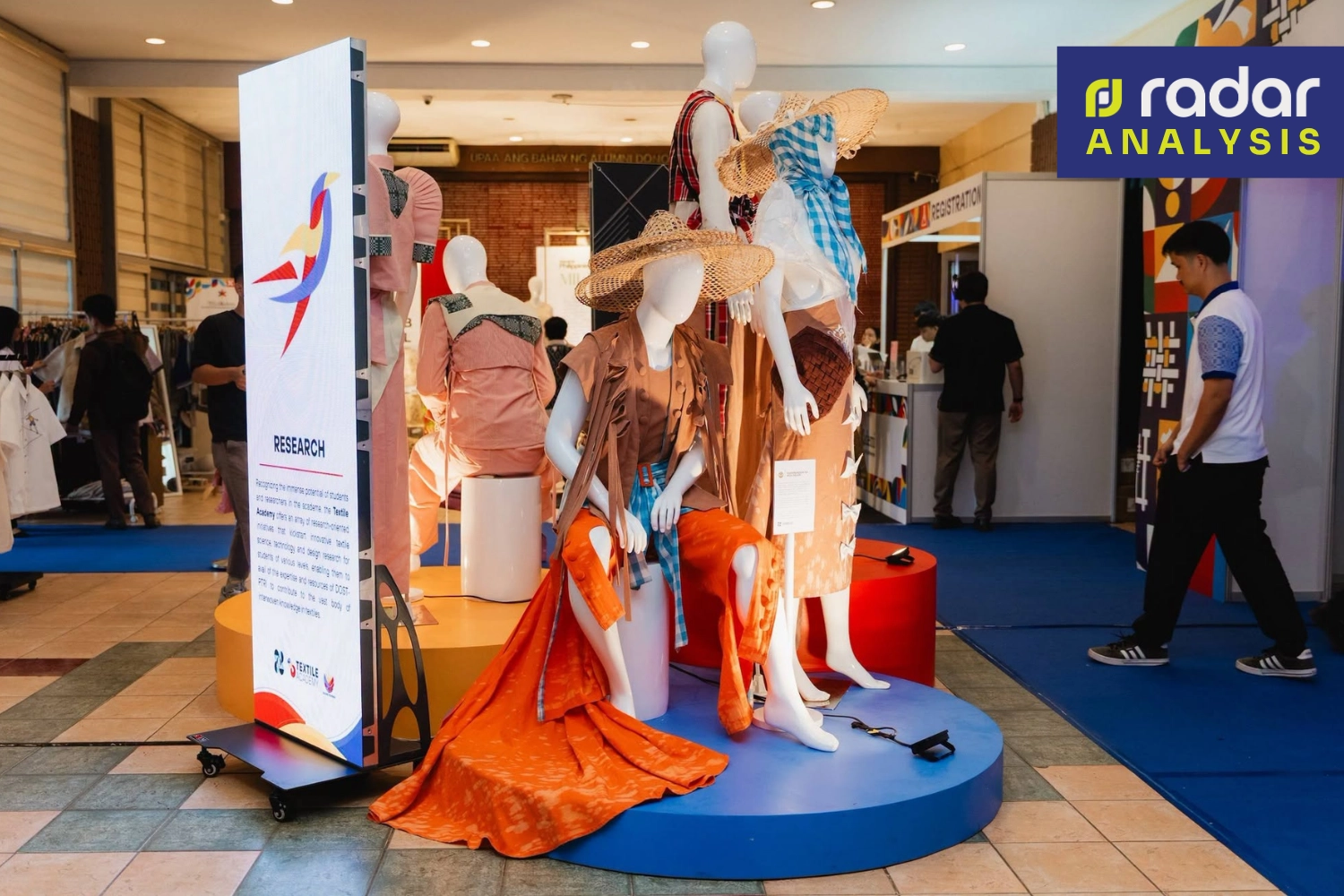
Alongside the consortium, DOST-PTRI launched TELAkademi, a platform for knowledge-sharing and collaboration among stakeholders. It will cover developments in materials science, textile engineering, production technologies, and innovation.
These are welcome steps, particularly with the institute planning to expand its academic partnerships and research support in the coming years. But the bigger challenge is making sure these efforts translate into skills that manufacturers actually need.
The industry must also have a say in shaping these programs. Universities can develop specialized courses, but manufacturers should help identify the technical competencies they need, the research that could improve production, and the kind of graduates they are prepared to employ.
The Philippines has an opportunity to build a stronger textile industry, but its ambitions will require more than a collection of academic programs and government initiatives.
A competitive industry needs a capable workforce to match its manufacturing ambitions. Without that foundation, the country’s textile comeback could remain an attractive plan rather than a viable business opportunity.