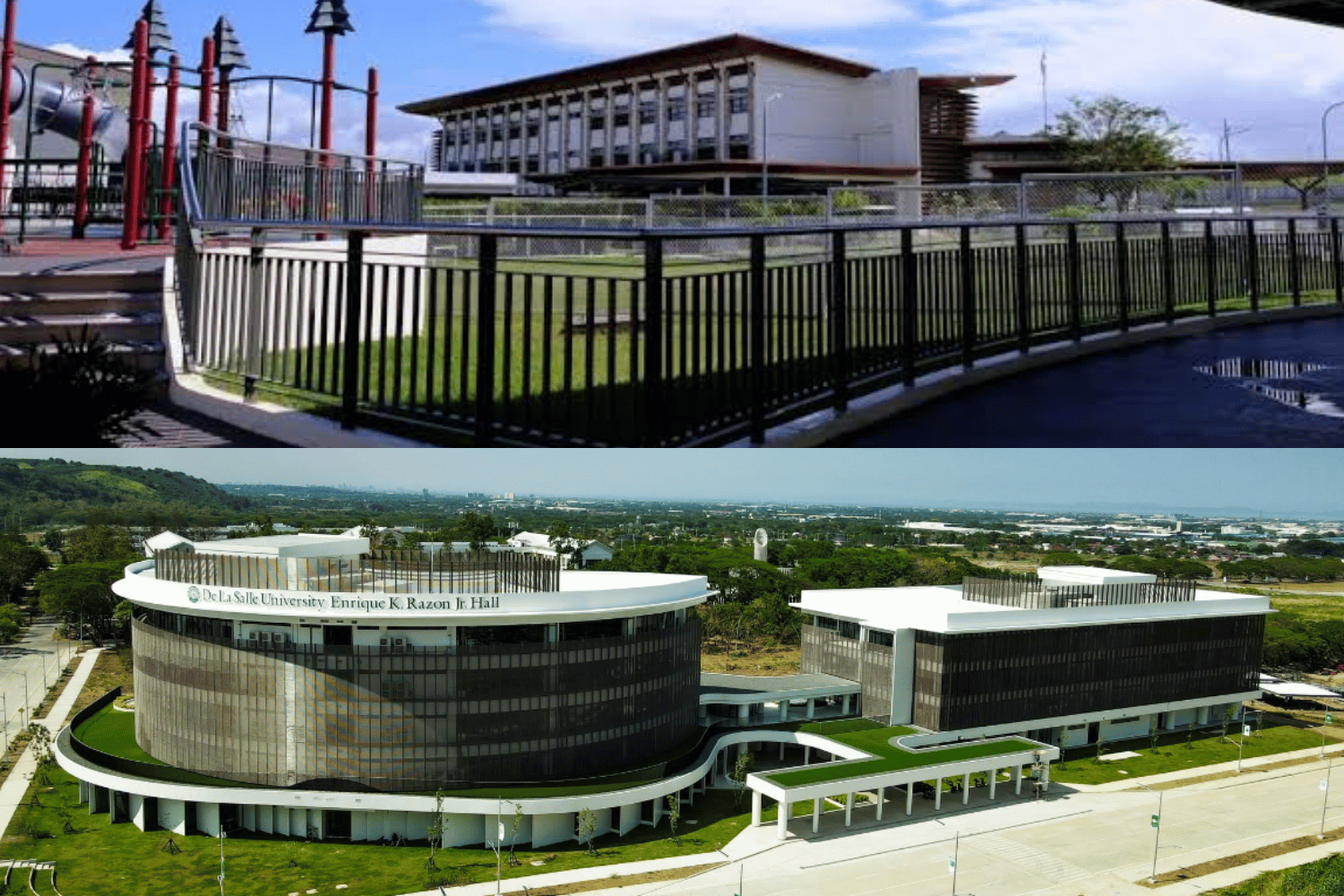
Developers are bringing schools closer to new communities as established institutions expand into Laguna, Cavite, Pampanga, Cebu and other growth centers.
Some of the Philippines’ most recognizable schools have long been identified with their Metro Manila campuses.
Miriam College, for instance, has long been associated with Loyola Heights, while Xavier School is closely identified with San Juan, De La Salle University with Taft Avenue, and the University of the Philippines with Diliman.
Yet those familiar names are increasingly appearing in places far beyond Metro Manila, as established schools put down roots in large developments being built in Laguna, Cavite, Pampanga and other growth centers.
Miriam College now has campuses in Nuvali in Laguna and Alviera in Porac, Pampanga, while Xavier School has a 15-hectare campus in Nuvali. De La Salle University, meanwhile, has its Laguna Campus in Biñan, while the University of the Philippines is developing a technology innovation campus inside Villar City in Cavite.
These schools may be following Filipino families as they settle farther from the capital, while developers may also be bringing them into new communities because their presence can help attract families in the first place.
A closer look at several major developments suggests both forces are at work.
Education as central part of development
Ayala Land has brought Xavier School, Miriam College, and Everest Academy into Nuvali, turning the Laguna development into an education cluster. The developer has also partnered with Miriam College and Holy Angel University in Alviera, while DLSU’s Laguna Campus sits beside Sevina Park, an Arthaland development within the broader Nuvali area.
The appeal is straightforward. Families considering a new township are likely to look at more than houses, malls and offices, particularly when they are deciding where to raise children. Having an established school within or close to the development can make the community more attractive, while the school gains access to a growing population without having to start from scratch in an unfamiliar market.
DLSU’s Laguna Campus shows that these institutions can also become more than places where students attend classes. The university has a five-hectare Knowledge, Innovation, Science and Technology Park within its 51-hectare Laguna Campus, bringing together academia, industry, government and the community around research and innovation.
Other developers are pursuing similar arrangements, although they are using different models.
Megaworld has long promoted its “live-work-play-learn” approach, with the Lasallian-supervised Newtown School of Excellence forming part of The Mactan Newtown in Cebu. The 30-hectare township combines residential, office, retail, hotel and school components.
SM Prime has taken a more integrated approach by placing National University campuses within several of its property developments. NU has campuses in or alongside SM developments in places including the Mall of Asia complex, Fairview, Iloilo, Bacolod, Cebu and Davao.
Vista Land and the University of the Philippines are developing a technology innovation campus inside Villar City, while Cebu Landmasters is developing Manresa Town in Cagayan de Oro alongside Xavier University-Ateneo de Cagayan’s Masterson Campus.
These examples point to education becoming an increasingly important part of the business case behind large developments outside Metro Manila.
The economic case for education
A well-known school can give families another reason to consider a new township, particularly when the community is still building its population and identity. The school gains access to families living in a growing market, while the developer gets an institution that can help make the community more attractive.
There is also an economic argument beyond attracting residents. Developments that combine universities with offices and commercial districts can create a talent pipeline, allowing businesses to recruit from a nearby pool of students and graduates. SM Prime, for example, has pointed to the potential for National University campuses to support recruitment and training for businesses operating in its developments.
Some of these projects go beyond the idea of simply opening a branch campus. They are being planned as education districts, university towns or major institutional components of much larger communities, making the schools part of the physical and economic planning of the development itself.
That makes it difficult to describe what is happening as a simple migration of Manila schools to the provinces.
The schools are still in Manila, but they are also looking beyond the capital for their next pools of students, while developers are looking to those same schools to help give their new communities a stronger proposition for families.
The expansion of these campuses also raises a larger point about how new communities are being built. A township needs more than homes and commercial spaces to become a place where families can stay for the long term, and schools can provide an important piece of that equation by bringing students, families, workers and businesses into the same community.
The school may be moving closer to the family, but the family may also be moving closer to the school.
READ:

ANALYSIS: College students turn mall into impromptu dance floor after class suspensions
Annah Bautista
August 15, 2026

ANALYSIS: Can Romblon turn its marble industry into a higher-value business?
Kenneth M. del Rosario
August 14, 2026

ANALYSIS: Corruption costs a Filipino family an estimated ₱53,800 a year
Top Dagohoy
August 17, 2026
Tags: AlvieraArthalandAyala LandBacolodBiñanCagayan de Orocampus expansionCavitecebuCebu LandmastersDavaoDe La Salle UniversitydevelopmentDilimaneducation hubsEverest AcademyFairviewHoly Angel UniversityIloiloKnowledge Innovation Science and Technology ParkLagunaLoyola HeightsMactanManresa TownMegaworld Corporationmetro manilaMiriam CollegeNational UniversityNewtown School of ExcellenceNuvaliPampangaPoracreal estateSan JuanSevina ParkSM Mall of AsiaSM Prime HoldingsTaft AvenueThe Mactan Newtownuniversity of the philippinesVillar CityVista Land & LifescapesXavier SchoolXavier University-Ateneo de Cagayan