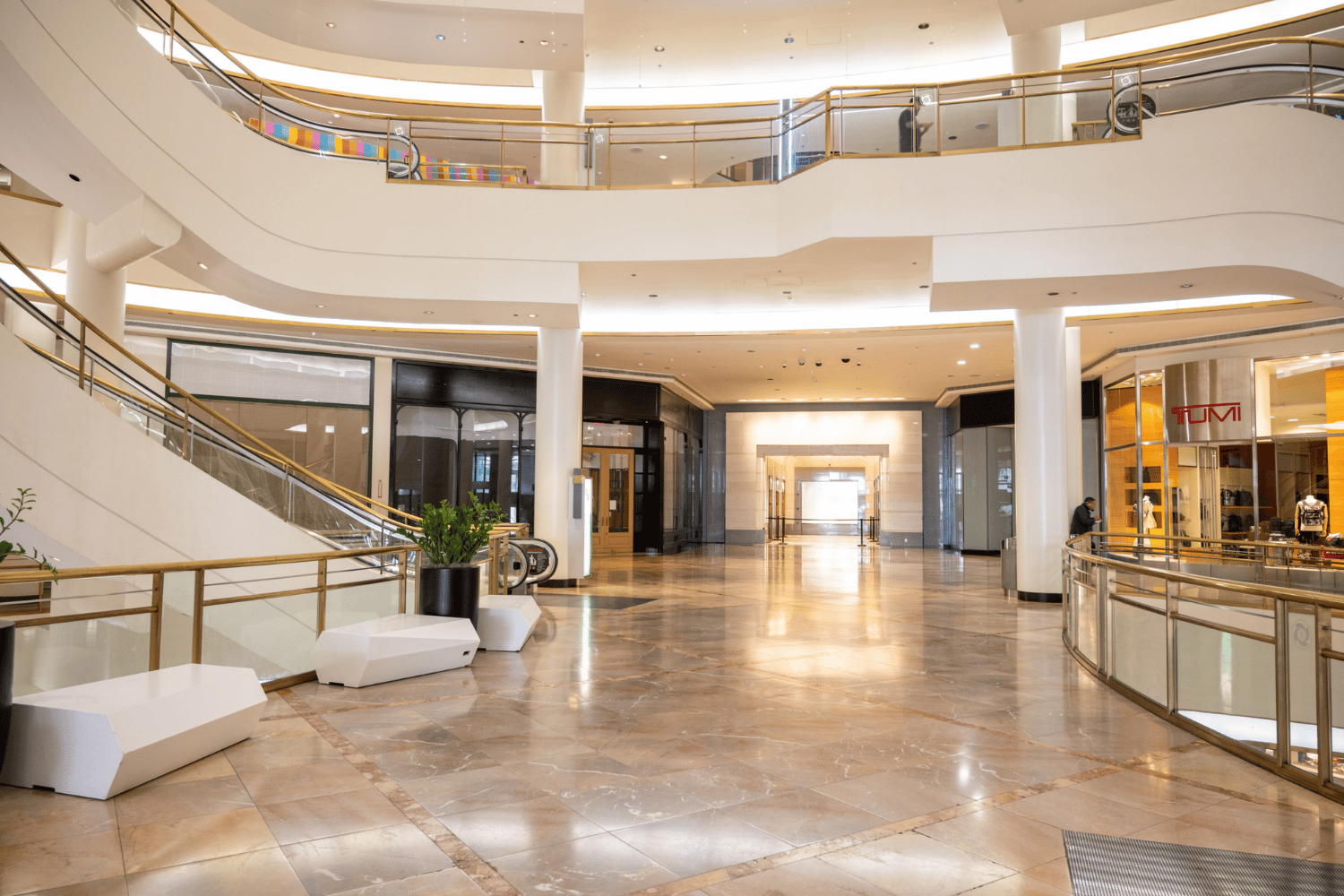
Foot traffic is only one part of how a business makes money, especially in malls, airports, casinos, and tourism areas.
Despite stores that may appear empty much of the time, a business can survive with surprisingly little foot traffic when its location puts it in front of the right customers.
Sometimes, it’s about creating valuable brand exposure or giving the business access to spending opportunities that a typical storefront cannot offer. A store can have few customers coming through its doors and still make the numbers work, depending on what those customers spend and what the business gets from being there.
Take luxury shops inside high-end casinos. They may not have customers coming in all day, but they are positioned near people who may suddenly have much more money to spend after a big win. A single high-value purchase can make up for a lot of hours without a sale.
The same thinking can apply to other businesses that deliberately set up where their target customers spend time, even if those customers are not buying every time they walk past.
Airports are another good example.
An airport store may have plenty of passengers walking past without buying anything, yet the location gives the brand exposure to thousands of travelers. A tourist who sees a brand at the airport may buy from it later, whether at another branch or online.
In that case, the store is doing more than selling products. It is also putting the brand in front of people who may have never encountered it otherwise.
That’s why some businesses are willing to pay higher rents in malls, airports, casinos and tourism areas. The store may not be busy every day, but the location puts the business where the right customers are.
There is also a more basic reason some businesses keep the doors open.
Once rent, salaries and other regular expenses are already being paid, closing early may not save much. If a few extra hours can bring in additional sales, there can still be a reason to keep operating.
For businesses that depend on convenience, regular hours can also be important. A customer who arrives to find a store closed may simply spend that money somewhere else.
Of course, an empty store can also mean a business is struggling. Some owners stay open because they are hoping sales will eventually pick up, while others may be trying to recover an investment before deciding whether to close.
For Filipino businesses, the issue is especially relevant because rents can vary widely depending on location. A store in a busy mall, airport or tourism area may cost more to operate, but the location can also put it in front of customers who are harder to reach elsewhere.
So the next time you see a store with hardly anyone inside, it may be doing better than it looks. The business may simply be counting on fewer customers who spend more, or getting value from the location itself.
READ: