This National Heroes Day, remember Dagohoy and the extraordinary 85-year rebellion against Spanish colonizers.
Imagine being a Spanish soldier sent deep into the mountains of Bohol to capture one man.
You have guns. You have troops. You have the colonial government behind you. But the man you are hunting keeps disappearing into caves and forests. Locals whisper that he can see in complete darkness, leap across rivers and hills—and even vanish with the wind.
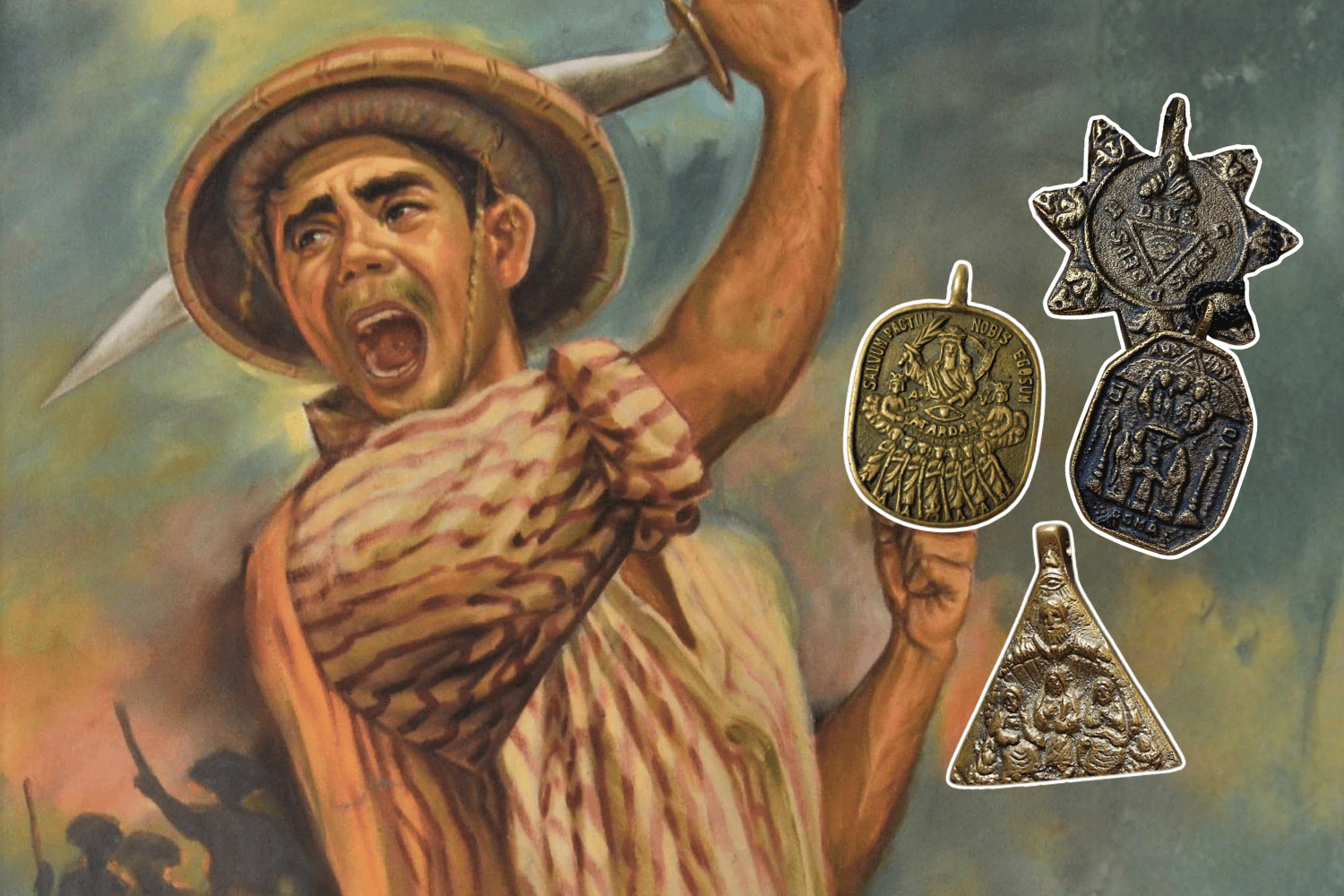
Around his body, they say, is a powerful anting-anting.
His name is Francisco Dagohoy.
And while the supernatural stories surrounding him belong to folklore, one astonishing fact does not: the rebellion he started became the longest revolt against Spanish colonial rule in Philippine history, lasting 85 years from 1744 to 1829.
Born Francisco Sendrijas, Dagohoy became known by a name traditionally linked to the Visayan expression “dagon sa huyuhoy,” roughly referring to a talisman or charm of the breeze.
According to Boholano folklore, Dagohoy possessed a powerful amulet that gave him seemingly supernatural abilities. Stories claimed he could move with extraordinary speed, see through the darkness of caves, leap across great distances and become invisible to pursuing soldiers.
Whether his talisman truly had powers is impossible to establish. But Dagohoy’s ability to frustrate Spanish authorities was very real.
His rebellion began after Jesuit priest Fr. Gaspar Morales reportedly refused a Christian burial for Dagohoy’s brother, Sagarino, who had died while carrying out an order to capture a fugitive.
Enraged, Dagohoy rose against Spanish rule.
Thousands eventually joined the uprising, establishing strongholds in Bohol’s rugged interior. There, communities outside effective Spanish control survived for generations despite repeated military campaigns to crush them.
This was no temporary revolt.
The resistance became organized and resilient enough to outlive Dagohoy himself. He is believed to have died decades before Spanish forces finally suppressed the rebellion in 1829.
Yet his followers continued fighting.
Today, Dagohoy’s name is literally on the Philippine map. A municipality in Bohol bears his name, while Republic Act No. 11444 declares every July 4 Francisco Dagohoy Day in the province.
This National Heroes Day, it is tempting to remember Dagohoy for the mysterious anting-anting said to have made him invisible and carried him with the wind.
But perhaps his most powerful talisman was never supernatural at all.
It was his ability to inspire a rebellion that continued long after he was gone—and refused to die for 85 years.
READ: