Why aren’t we producing more of it?
Walk into a Philippine supermarket and the dairy section tells a strange story.
Cartons and bottles of cow’s milk dominate the shelves. Carabao milk, when you can find it, is usually tucked into a small refrigerated corner or sold as a specialty product.
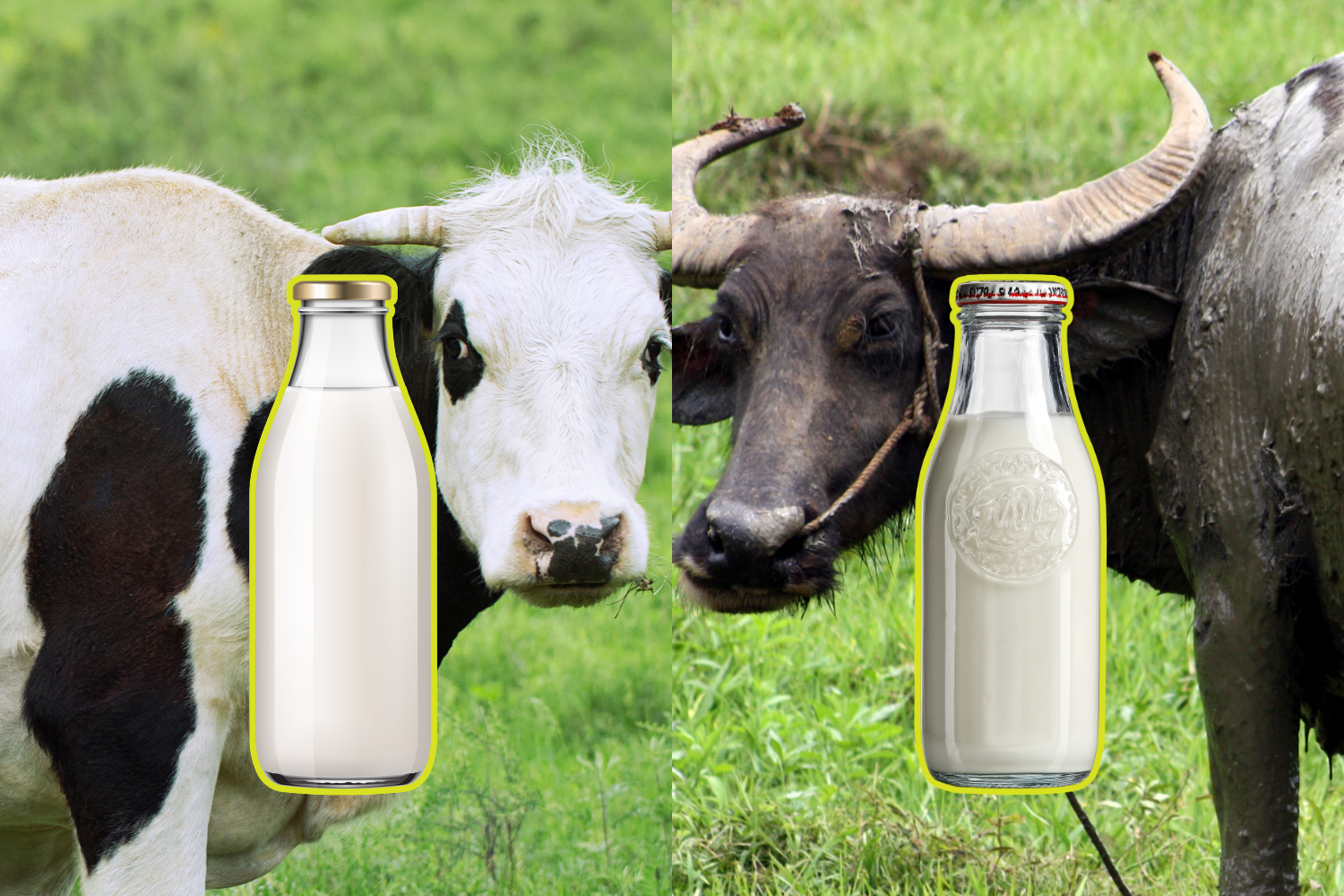
Yet nutritionally, our humble carabao produces remarkably rich milk.
Scientific reviews consistently show that water buffalo milk contains more total solids, fat, protein, calcium and phosphorus than cow’s milk. One recent review puts calcium at roughly 168 to 186 mg per 100 mL for buffalo milk, compared with around 112 to 130 mg for cow’s milk. Its fat content can approach twice that of cow’s milk, helping explain its thick, creamy texture.
In other words, if “better” means richer and more nutrient-dense per glass, carabao milk has a strong case.
It is also naturally suited for high-value dairy products. Its greater concentration of fat, protein and milk solids gives it excellent properties for cheese, yogurt, ice cream and other processed dairy products.
Filipinos already know this advantage even if we rarely describe it scientifically. Carabao milk gives kesong puti its richness and makes pastillas de leche luxuriously creamy.
But there is a trade-off that should not be ignored: richer also means more calories and fat. And contrary to some popular claims, buffalo milk is not reliably lower in lactose. Recent scientific comparisons find its lactose content comparable to, and sometimes slightly higher than, cow’s milk.
So this should not be sold as some miracle milk.
It should be treated as something potentially more valuable: a premium Filipino agricultural product.
The challenge is producing enough of it.
Carabaos have historically been valued primarily as farm animals rather than developed at the scale of industrial dairy cattle. Expanding dairy production therefore requires more than telling farmers to milk their animals. It means better dairy breeds, breeding and genetics programs, veterinary care, feed, farmer training, milking equipment, chilling facilities, processing plants and reliable markets.
That is where government investment matters.
Instead of allowing carabao milk to remain a niche product, the Philippines can build a larger domestic industry around it—supporting farmers while creating more locally produced milk, cheese, yogurt and other high-value products.
The carabao has spent generations helping Filipino farmers cultivate the land.
Perhaps it is time we invested seriously in what else this iconic animal can give us.
Carabao milk should not be the curiosity beside the cow’s milk. It deserves a much bigger place on the Filipino table.
READ: