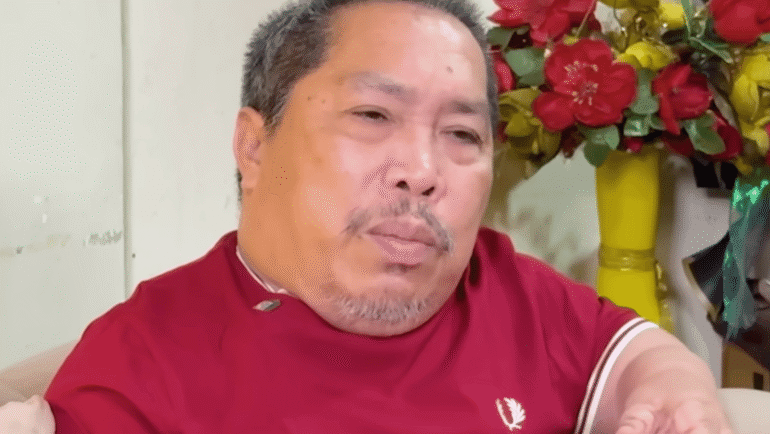
What was meant to be a lighthearted YouTube video quickly turned into a controversy.
Lifestyle and education content creator Russco Jarvina faced backlash after he did a skit where he swapped roles with his house helper, Ate Lanie.
The video showed Jarvina attempting to experience Ate Lanie’s daily struggles, including a trip to her hometown in Naga.
Netizens were quick to label the content as “poverty porn,” a type of media that exploits or over-dramatizes the conditions of the impoverished.
Instead of appreciation, they questioned the portrayal, pointing out the power imbalance between employer and helper. They also raised concerns about consent and compensation.
Some also criticized Jarvina as out of touch, citing the stark contrast between his lifestyle and Ate Lanie’s living conditions.
“Sobrang distasteful talaga mga katulad ni russco na privileged tapos nagcocosplay as a working class as a content,” a Reddit user said.
Others pointed to safety and comfort issues in her living space. “Grabe naman ang kwarto? Parang walang ventilation + super delikado andaming nakatambak sa taas ng double deck. Nakakaloka,” an X user said.
In response, Jarvina issued a public apology, saying his intention was to highlight and appreciate house helpers.
“However, I should have been more considerate of her current situation, and I understand that it shouldn’t have taken me this long to realize that,” he said.
He noted that Ate Lanie agreed to participate in the video as they “share a close bond,” and that the video’s earnings would be given to her.
“This goes way beyond this video, as my duty as an alaga is to make sure Ate Lanie is comfortable and treated the best,” he said.
In the comments, Ate Lanie said she’s comfortable in her room. “Mabait na Amo c russco at marami na syang natulong sakin Kaya kung pwedi tigilan nyo Ang pang babash sa kanya,” she added.
radar reached out to Jarvina for additional comment, but has yet to receive a reply.
The backlash has sparked wider discussions online about poverty porn—and whether content creators can portray working-class struggles without turning them into entertainment.
Julia Escarez is a writer with a penchant for pop culture and internet rabbit holes. She unwinds with video games and an ever-growing collection of art prints and stickers.