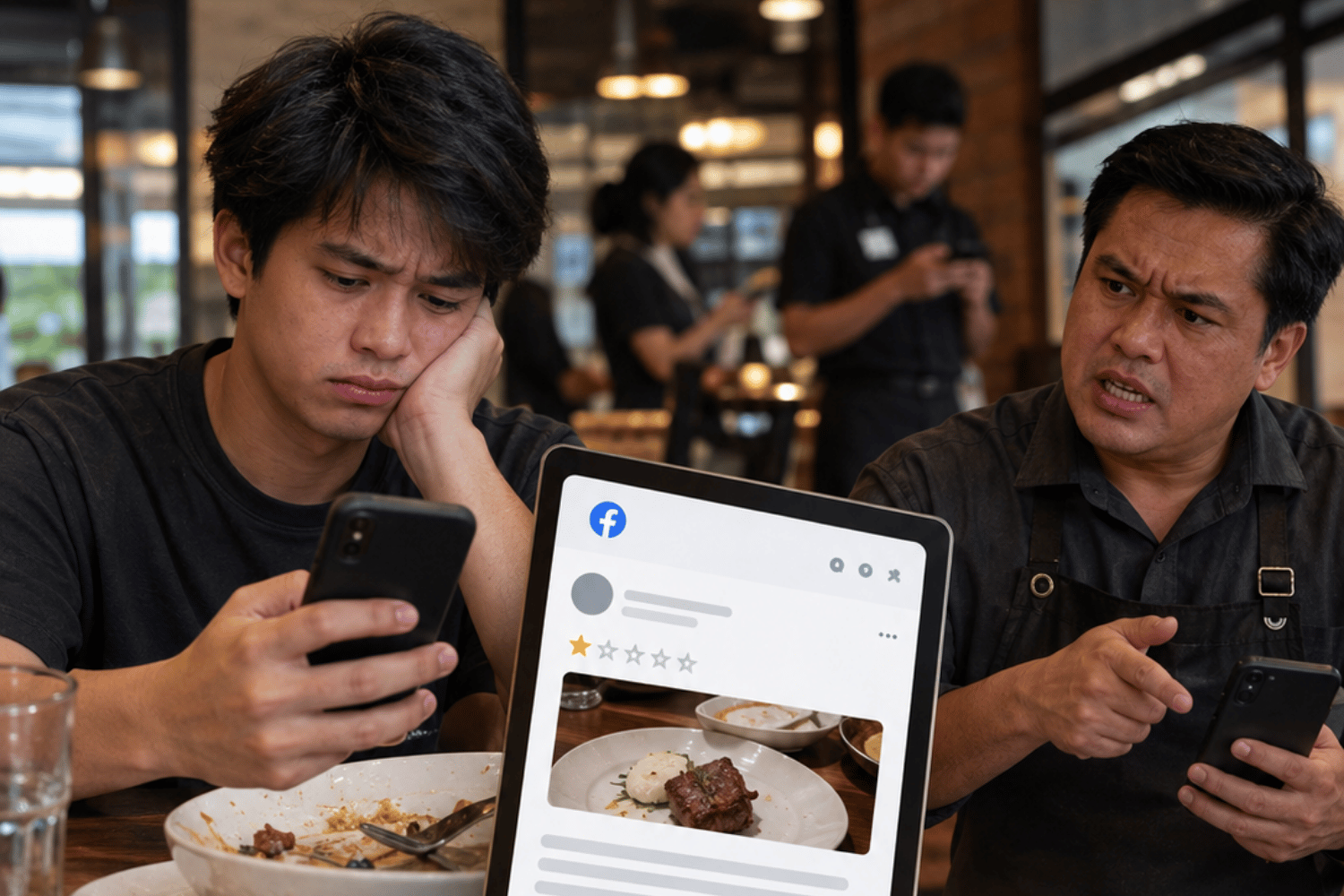
You visit a restaurant after seeing glowing reviews online. The food is expensive, the meat is tough, the soup tastes bland, and the waiters seem more interested in their phones than attending to customers. You leave disappointed and post on Facebook: “Worst restaurant I’ve ever tried. Overpriced food and terrible service. Never coming back!”
Days later, the restaurant owner threatens to sue you for cyber libel unless you delete your review.
But can a restaurant really sue a customer simply for saying its food tastes awful?
Under Philippine law, an honest negative review is not automatically defamatory, even when it damages a restaurant’s reputation.
The distinction lies between expressing an opinion and making a defamatory factual accusation.
Article 353 of the Revised Penal Code defines libel as a public and malicious imputation that tends to dishonor, discredit, or bring contempt upon a person or other covered subject. Republic Act No. 10175 extends liability to qualifying libelous statements committed through computer systems.
But the law does not make every harsh comment a crime.
The legal principle of fair comment recognizes the importance of allowing people to criticize matters of public interest. In restaurant reviews, this can include opinions about food quality, pricing, cleanliness, customer service, and the overall dining experience.
Calling a restaurant’s adobo “the worst I’ve ever tasted” is a subjective judgment. So is describing its service as disappointing or its prices as unreasonable.
What tastes delicious to one customer may taste terrible to another. A court cannot simply declare one person’s culinary preference false.
Philippine jurisprudence has also recognized fair comment as a defense in defamation cases, particularly where criticism concerns matters of legitimate public interest and is based on facts rather than malicious fabrication.
However, this protection is not unlimited.
A customer who falsely claims that a restaurant serves spoiled meat, employs unlicensed workers, or deliberately poisons customers may face legal consequences if the accusations are defamatory and the elements of the offense are established.
The same applies to fabricated experiences and malicious personal accusations disguised as restaurant reviews.
Even a statement presented as an opinion can become legally problematic when it implies a false, defamatory factual allegation.
Importantly, a restaurant owner’s anger, embarrassment, or loss of customers does not, by itself, establish cyber libel. The prosecution must still prove the elements required by law, including a defamatory imputation and the applicable requirement of malice.
The safest approach is straightforward: describe what you actually experienced, distinguish personal opinions from factual allegations, and avoid inventing accusations.
Restaurants have every right to defend their reputation, respond to criticism, and correct misleading information. But customers also have the right to publicly express genuine dissatisfaction without automatically facing criminal liability.
After all, paying for a meal does not obligate anyone to enjoy it.
And freedom of expression would mean very little if customers could praise a restaurant publicly but risk prosecution simply for saying the food was terrible.
READ: