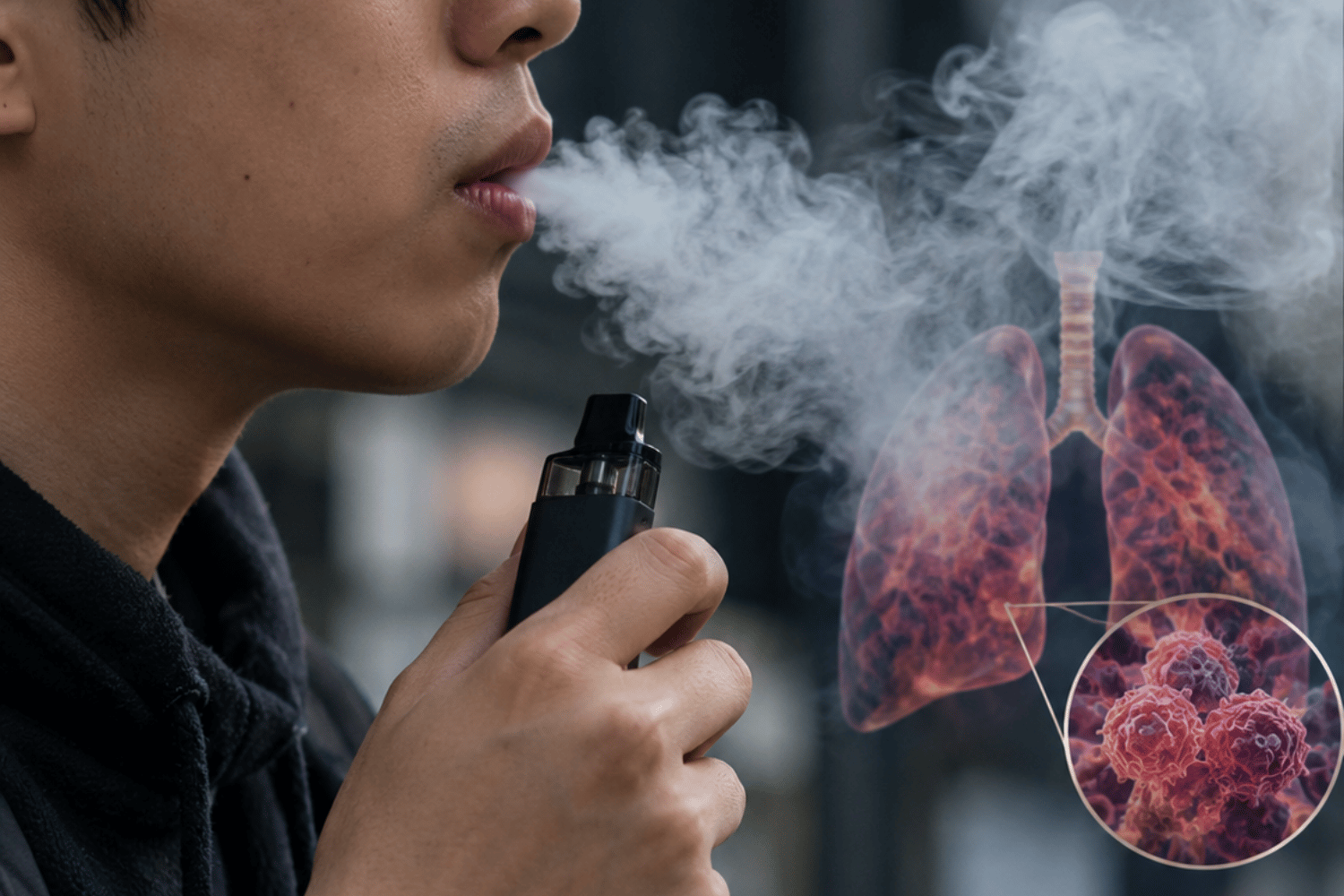
That seemingly harmless puff from an electronic cigarette may be doing something far more dangerous inside your lungs than you realize.
Scientists from the University of the Philippines Diliman have uncovered alarming evidence that exposure to vape chemicals can trigger cellular changes associated with cancer development, raising serious concerns about the long-term safety of electronic cigarettes.
In a study published in the international peer-reviewed journal Non-Coding RNA, molecular biologists from UP Diliman’s National Institute of Molecular Biology and Biotechnology found that e-cigarette vapor can activate biological processes resembling those observed in tumor-forming cells.
The researchers identified a molecule called vape-associated lncRNA transcript 1 (VALT1), which was found at elevated levels in vape users and certain lung cancer tumors.
When human cells were exposed to vape chemicals, VALT1 levels increased, accompanied by several disturbing changes.
These included accelerated cell proliferation, increased resistance to programmed cell death, greater cell migration, and alterations in cellular structure.
Such changes are particularly concerning because healthy cells normally have mechanisms that prevent damaged or abnormal cells from surviving and multiplying.
The danger is that vaping may interfere with these protective mechanisms, potentially allowing abnormal cells to survive when they should die.
According to researcher Daniel Angelo Mirador, the findings provide evidence that vaping is not harmless and that some of its damaging cellular effects are mediated by VALT1.
The study also found that increasing VALT1 levels could produce similar cancer-associated cellular changes even without direct exposure to vape chemicals.
Researchers further observed that VALT1 helped lung cancer cells survive certain forms of toxic stress, suggesting a possible role in protecting already abnormal cells.
However, the scientists emphasized that these laboratory findings do not establish that vaping directly causes lung cancer in humans. More research is necessary to determine the actual long-term cancer risks.
This uncertainty is especially troubling because lung cancer can take decades to develop, while electronic cigarettes have not been widely used long enough for scientists to fully assess their lifetime health consequences.
The research, conducted by Daniel Angelo Mirador, Jose Lorenzo Ferrer, Kim Denyse Hao Lin, and Dr. Reynaldo Garcia, adds to growing scientific concerns about the respiratory and cardiovascular effects of vaping.
Their study, titled “Vape-Associated lncRNA Transcript 1 (VALT1) Amplifies the Tumorigenic Effects of e-Cigarette Vapor in Lung Epithelial Cells,” was published in 2026.
For Filipinos who vape believing electronic cigarettes are a safe alternative to conventional smoking, the findings deliver a serious warning.
Vaping does not have to be proven to cause cancer before its potential to trigger cancer-associated cellular changes becomes a reason for concern.
And by the time science fully establishes its long-term consequences, some users may already have spent years exposing their lungs to those risks.
READ: