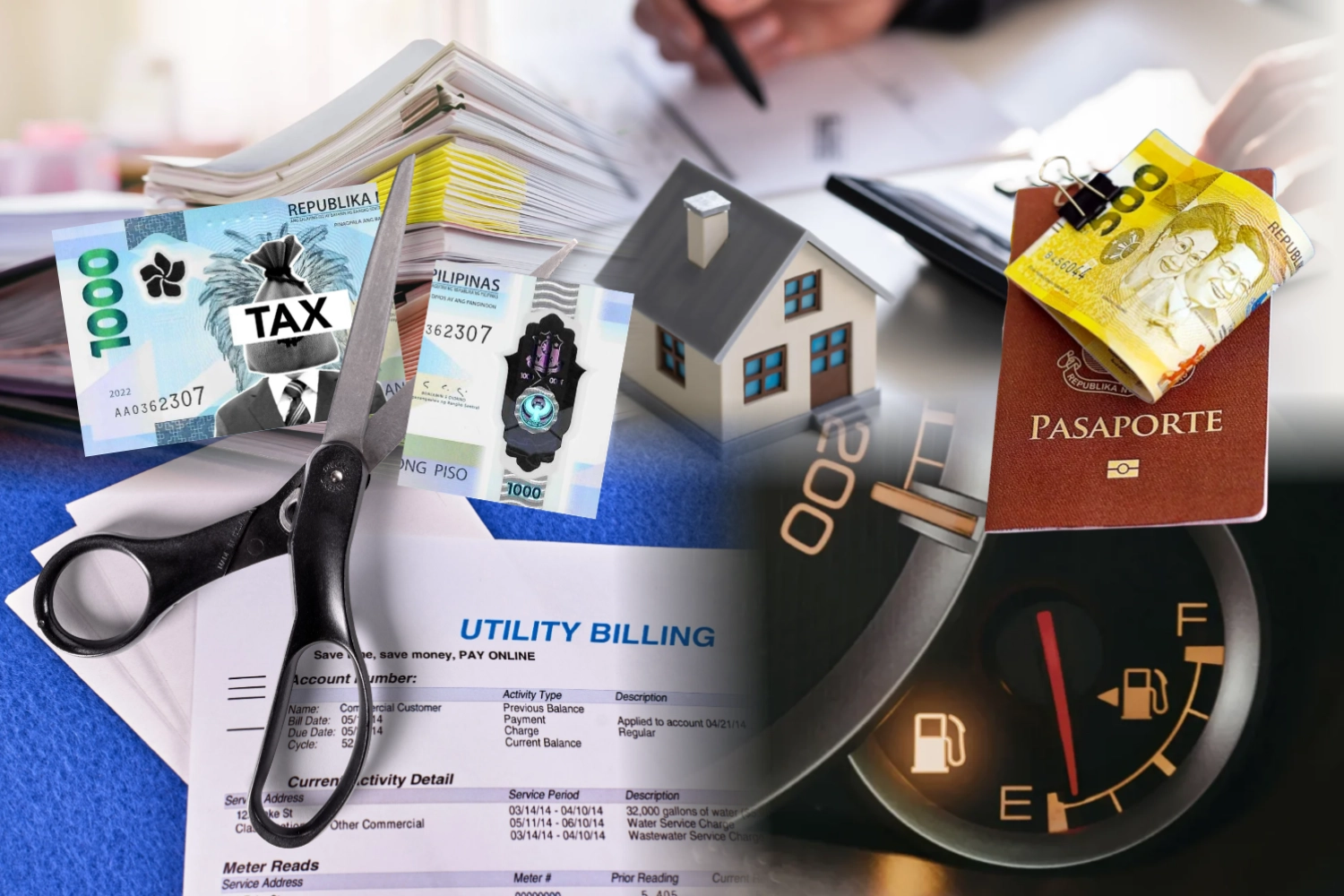
You earn your salary, pay income tax, and spend what’s left on your family’s needs. But when you buy fuel, pay electricity bills, travel abroad, or transfer property, the government collects more taxes.
For many Filipinos, the frustration is not about refusing to pay taxes. It is about the growing financial burden of taxes on everyday necessities.
Here are five Philippine taxes that deserve serious consideration for abolition or substantial reform.
1. Philippine travel tax
Imagine booking a promotional international flight for ₱1,500, only to pay another ₱1,620 in travel tax.
Introduced during the Marcos administration, the levy generally costs ₱1,620 for economy passengers and ₱2,700 for first-class travelers, subject to exemptions.
Critics question why Filipinos must pay an additional tax simply to leave their own country. However, collections fund tourism infrastructure, educational programs, and cultural initiatives.
2. Fuel excise tax
Even Filipinos without cars effectively shoulder this tax.
Under the TRAIN Law, gasoline carries a standard excise tax of ₱10 per liter, while diesel is taxed ₱6 per liter.
These costs can affect transportation fares, food deliveries, and commodity prices.
A law enacted in 2026 also authorized the President to suspend or reduce petroleum excise taxes under specified conditions, recognizing the need for relief during fuel price shocks.
3. The 12% VAT on essential services
Electricity and water are necessities, yet their taxable charges generally carry 12% VAT.
The same rate applies to many other goods and services, including covered digital subscriptions.
Critics argue that VAT disproportionately burdens poorer households, which spend more of their income on consumption.
Basic agricultural food products already enjoy certain exemptions. Removing VAT from essential utilities could provide additional household relief.
4. Estate tax
Imagine inheriting your parents’ family home, only to face taxes and expenses before completing the transfer.
The Philippines imposes a 6% tax on the net taxable estate.
However, a ₱5-million standard deduction and a family-home deduction of up to ₱10 million, subject to conditions, already protect many smaller estates.
Critics advocate higher exemptions and simpler procedures so ordinary families are not burdened by inheritance-related expenses.
5. Documentary stamp tax
Taking out loans, obtaining insurance, and transferring property can trigger documentary stamp taxes.
Although rates vary, these charges add to the cost of transactions already burdened by processing fees and other expenses.
Removing DST from selected basic transactions could make borrowing and property transfers more affordable.
Should these taxes go?
Abolishing taxes means sacrificing government revenue needed for healthcare, education, infrastructure, and public services.
But taxation should also be fair, efficient, and sensitive to the financial realities of ordinary Filipinos.
The question is not whether citizens should pay taxes, but whether the government is collecting too much from activities people cannot reasonably avoid.