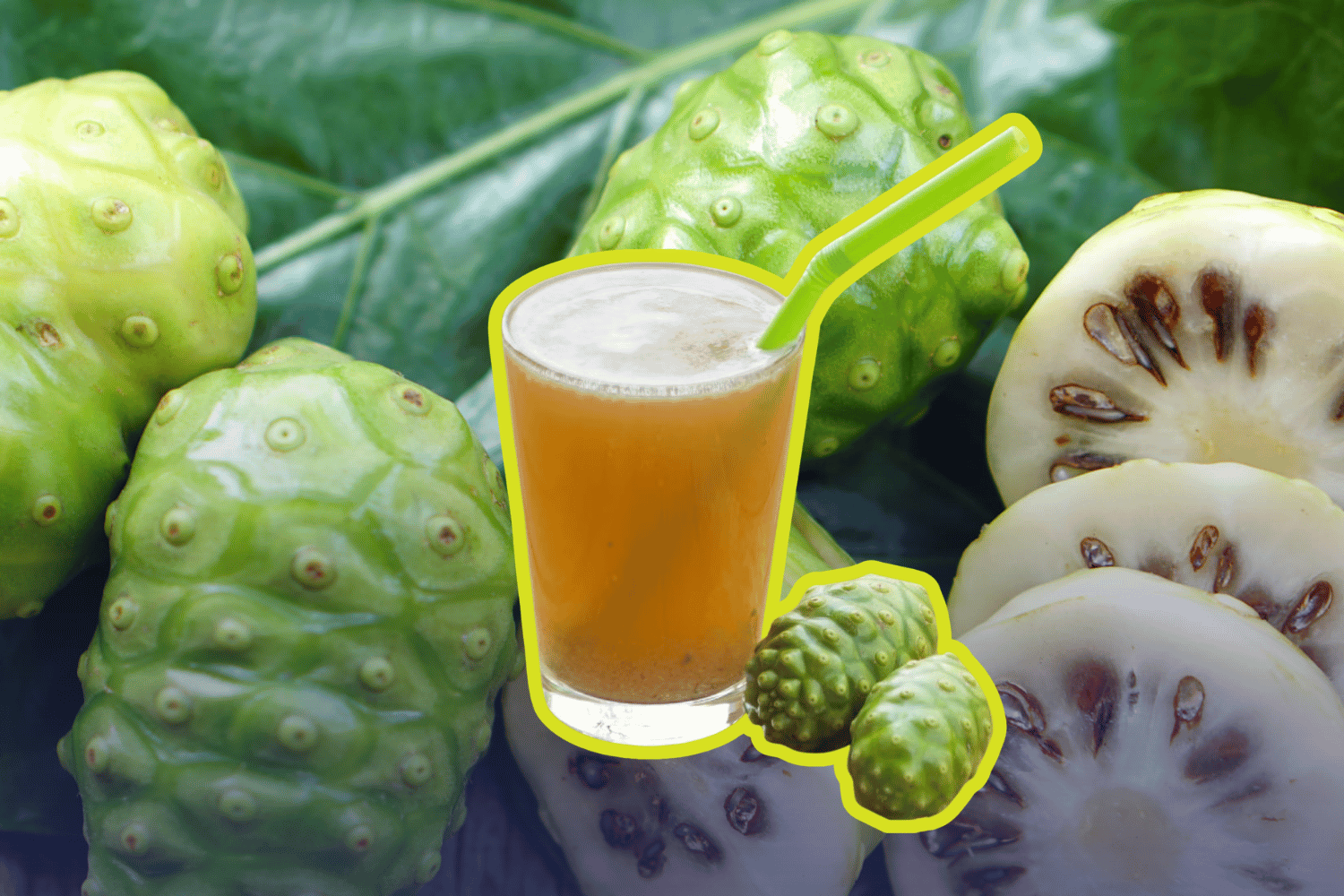
In the 2000s, people paid good money for a foul-smelling fruit juice marketed with extraordinary health claims—from fighting diabetes and hypertension to helping cancer patients. The science never established those promised cures, yet the miracle narrative helped turn noni juice into a global wellness phenomenon.
Made from the fruit of Morinda citrifolia, a plant long used traditionally in parts of Southeast Asia and the Pacific, noni itself was real.
The supposed miracle was another matter.
When juice became ‘medicine’
Noni exploded internationally alongside multi-level marketing, with distributors selling expensive bottles through personal networks and testimonials.
And the sales pitch could become extraordinary.
Noni was promoted in some circles as helping people with cancer, diabetes, hypertension, arthritis and numerous other illnesses. One theory invoked a supposed substance called “xeronine,” claiming noni supplied its precursor and could somehow help repair malfunctioning cells.
There was just one enormous problem.
The sweeping medical claims were never supported by convincing human clinical evidence.
Laboratory and animal research did find biologically interesting properties in noni. But something showing an effect in a test tube or mouse is very different from proving that drinking the juice cures disease in humans.
Regulators eventually intervened against disease-treatment claims associated with noni products and their marketing.
So was noni completely useless?
No—and that distinction makes the story more important.
Noni contains antioxidants and other plant compounds. Research has investigated possible anti-inflammatory effects and potential benefits involving exercise endurance and pain.
But “contains beneficial compounds” is worlds away from “cures cancer.”
A fruit juice can be nutritious without being medicine.
That simple distinction was frequently lost in the excitement of the noni boom.
It wasn’t risk-free either
The assumption that something “natural” must automatically be harmless can also be dangerous.
Cases of liver injury were reported among people consuming noni products, although European food-safety authorities later found the available evidence insufficient to establish a causal relationship between noni juice and liver toxicity.
Noni can also contain substantial potassium, making it potentially problematic for some people with kidney disease or those taking medications that affect potassium levels.
For someone replacing legitimate medical care with a supposed miracle drink, the greater danger may be delayed treatment itself.
The noni lesson
Noni juice eventually lost much of its superstar status, but the machinery that made it famous never disappeared.
It simply moved online.
Today the miracle bottle can be a gummy, powder, capsule, coffee, tea or TikTok-famous plant extract. Testimonials have become reels. MLM meetings have become livestreams. “My neighbor recovered after drinking this” has become a viral before-and-after video.
And scientific-sounding words remain incredibly effective sales tools.
That is why the noni craze deserves to be remembered—not because noni is inherently bad, but because it demonstrated how easily a perfectly ordinary food product can be transformed into something resembling medicine through repetition, testimonials and exaggerated interpretations of preliminary science.
The next miracle product will probably come with impressive studies, dramatic testimonials and people swearing it changed their lives.
Before buying it, remember the strange-smelling bottle everybody once seemed to know.
Noni was a fruit.
The miracle was marketing.
READ: