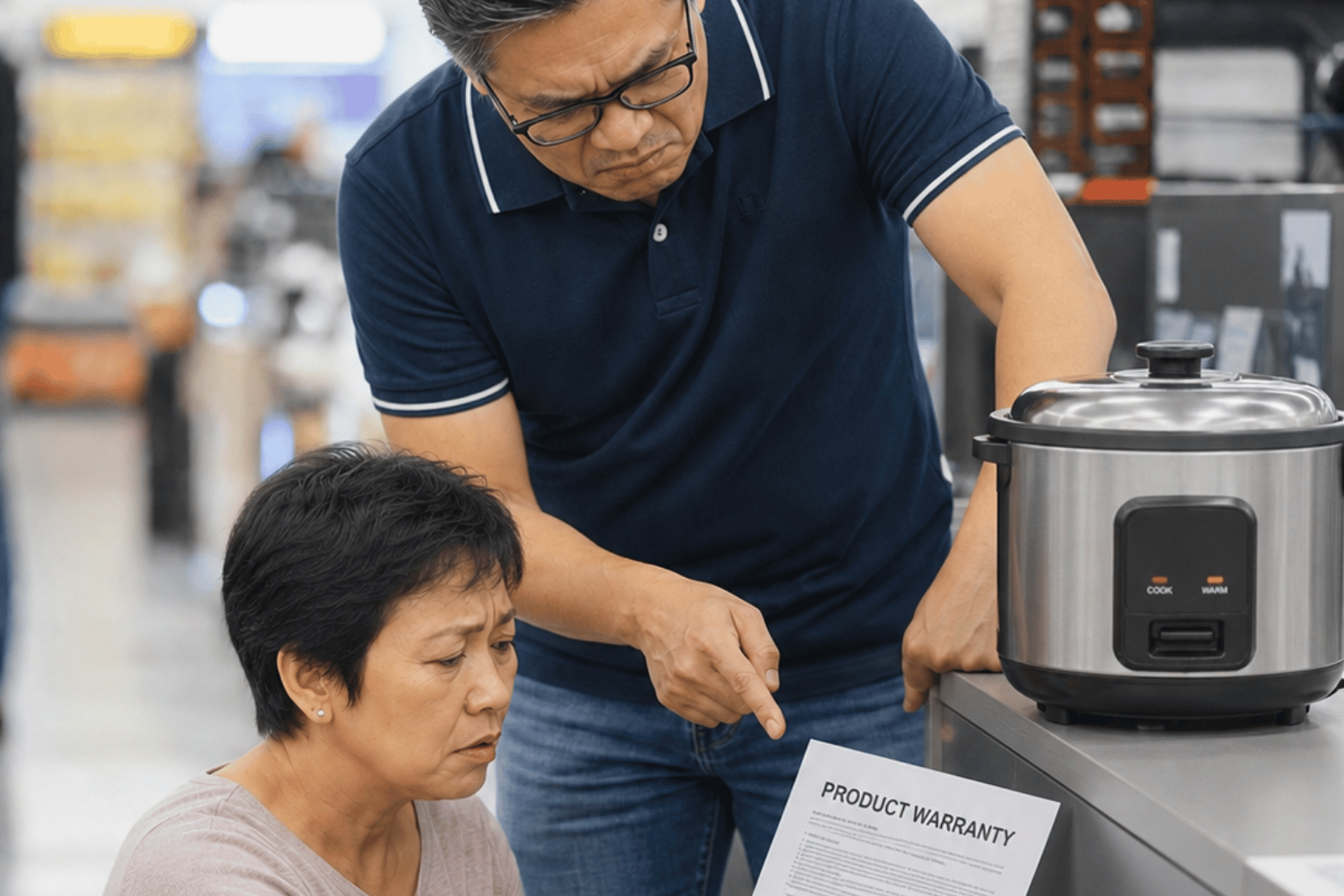
Oftentimes, it’s cheaper to replace than to repair small appliances.
A few years ago, a broken electric fan or rice cooker would send consumers searching for warranty cards and receipts.
Today, many Filipinos simply throw the appliance away and buy a new one.
As small household appliances become cheaper and more accessible, the value of a warranty is quietly disappearing. While most products still come with warranty coverage, many consumers no longer bother claiming it when something goes wrong.
The reason is simple: the process often feels more expensive than the product itself.
The appliances are cheap. The hassle isn’t.
Walk through any appliance store or online marketplace and you’ll find electric fans, kettles, blenders, rice cookers, and coffee makers selling at prices that would have seemed unimaginable years ago.
When a ₱700 kettle or ₱1,200 fan suddenly stops working, many consumers ask themselves a practical question: Is it worth spending hours—or even weeks—trying to claim a warranty?
Increasingly, the answer is no.
Instead of keeping receipts, preserving warranty cards, and making trips to service centers, many simply replace the item and move on.
The warranty waiting game
The problem is not necessarily the warranty itself but the experience of using it.
Consumers often find themselves dealing with inspections, testing periods, supplier approvals, and repair schedules before a claim is approved.
Many retailers do not immediately replace defective products. Instead, units are sent to service centers where customers wait for technicians to determine whether the defect is covered.
For a small appliance worth only a few hundred pesos, that process can feel absurd.
The time spent filing a claim can easily exceed the value of the appliance being repaired.
Why the suki repairman often wins
Filipinos have long relied on neighborhood repair shops and trusted technicians.
A broken fan motor, loose wiring, faulty switch, or leaking appliance can often be repaired within a day for a modest fee.
For many households, paying a local technician is far more appealing than navigating a formal warranty process.
The repair is faster, more predictable, and often less stressful.
Consumers know they have backup
Many buyers are also more aware of their rights under the Consumer Act.
Products already carry legal protections against defects, and consumers can seek help from the Department of Trade and Industry (DTI) when disputes arise.
Because of this, some consumers no longer see warranties as a valuable safety net. They know they can escalate serious problems if necessary, while minor issues are often easier to solve through repair or replacement.
A casualty of affordability
Ironically, warranties may be becoming victims of the same forces that made appliances more affordable.
The cheaper products become, the harder it is to justify spending time claiming warranty service.
For expensive purchases such as refrigerators, televisions, and air conditioners, warranties still matter. But for countless small appliances found in Filipino homes, the calculation has changed.
When replacement is fast, cheap, and only a few clicks away, the warranty card often ends up forgotten in a drawer—never to be used at all.