Nowadays, many sets of encyclopedias were donated, sold to surplus shops, recycled, or simply left to deteriorate.
You’ve just stepped into a classmate’s house for the first time. As you wait in the sala, your eyes wander around the room until they stop at a towering glass cabinet. Inside are dozens of thick, leather-bound books lined up in perfect order, their gold-lettered spines gleaming under the light.
“Wow… may encyclopedia sila.”
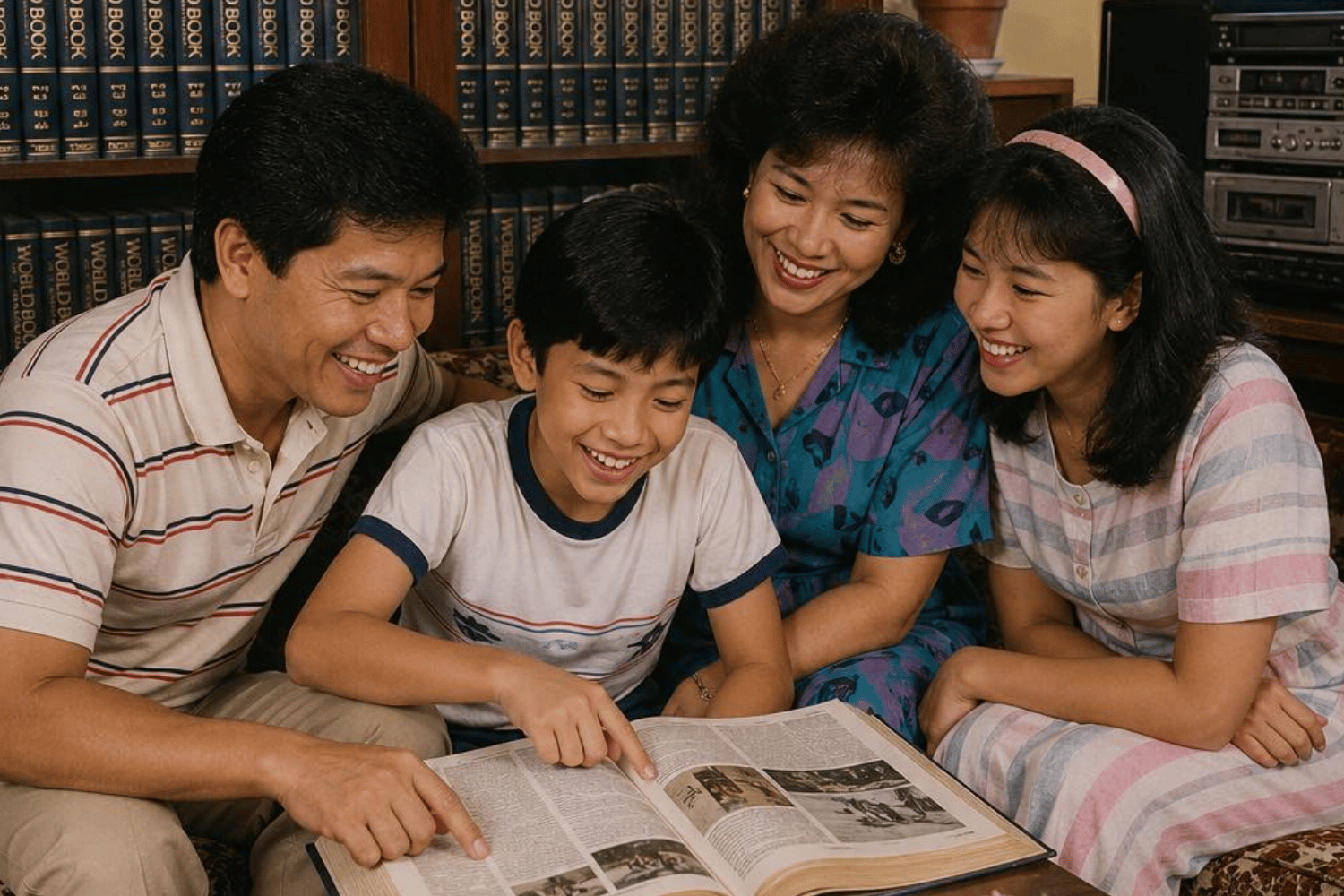
For many Filipinos growing up in the 1970s, 1980s, and even the early 1990s, that single sight was enough to leave visitors impressed. Owning a complete encyclopedia set wasn’t just about having books—it was a quiet but unmistakable declaration that the family valued education and had the financial means to afford one of the most expensive household purchases of the time.
Long before search engines answered every question in seconds, encyclopedias were among the most coveted possessions inside Filipino homes.
The books that meant you were “mayaman”
Back then, encyclopedias weren’t cheap.
A complete set of Encyclopaedia Britannica, Grolier, World Book, or Collier’s could cost the equivalent of several months’ worth of a professional’s salary, making them one of the biggest investments many families ever made.
Parents proudly displayed them in the sala, often beside crystal glasses, porcelain figurines, and framed graduation photos.
The message was subtle but unmistakable: “We invest in our children’s future.”
Even families that rarely opened the books wanted them because they symbolized education, ambition, and financial success.
The salesmen who sold dreams
Many Filipinos still remember the encyclopedia salesmen who knocked on doors carrying glossy brochures and polished sales pitches.
They weren’t merely selling books.
They were selling hope.
Parents were told their children would perform better in school, become more knowledgeable, and gain an advantage over their classmates if they had an encyclopedia at home.
Since few households could afford to pay in cash, publishers offered long installment plans. Families willingly committed to years of monthly payments just to own a complete collection.
For many parents, it was an investment they believed would change their children’s future.
The most expensive display decoration
Ironically, many encyclopedia sets spent most of their lives behind glass doors.
Children usually opened them only when teachers assigned research projects, often copying entire paragraphs by hand into notebooks.
The rest of the time, the books quietly gathered dust while continuing to impress every guest who walked into the house.
In many homes, they became elegant display pieces as much as they were reference materials.
Then came the internet
Everything changed in the 1990s.
Microsoft Encarta compressed an entire encyclopedia into a single CD-ROM. Soon came internet cafés, followed by Google and Wikipedia.
Finding information no longer required pulling out a heavy volume and searching alphabetically. A few clicks could deliver more updated information than any printed encyclopedia ever could.
Almost overnight, the encyclopedia lost the prestige it had enjoyed for decades.
Many sets were donated, sold to surplus shops, recycled, or simply left to deteriorate in old family homes.
A symbol of parents’ sacrifice
Today, younger generations may see those thick volumes as outdated relics.
But for many Filipinos, they remain powerful reminders of parents who worked extra hours, tightened household budgets, and patiently paid installments month after month because they believed education was the greatest gift they could give their children.
The books may have disappeared from most living rooms, but what they represented—a family’s hopes for a better future—remains timeless.
READ: