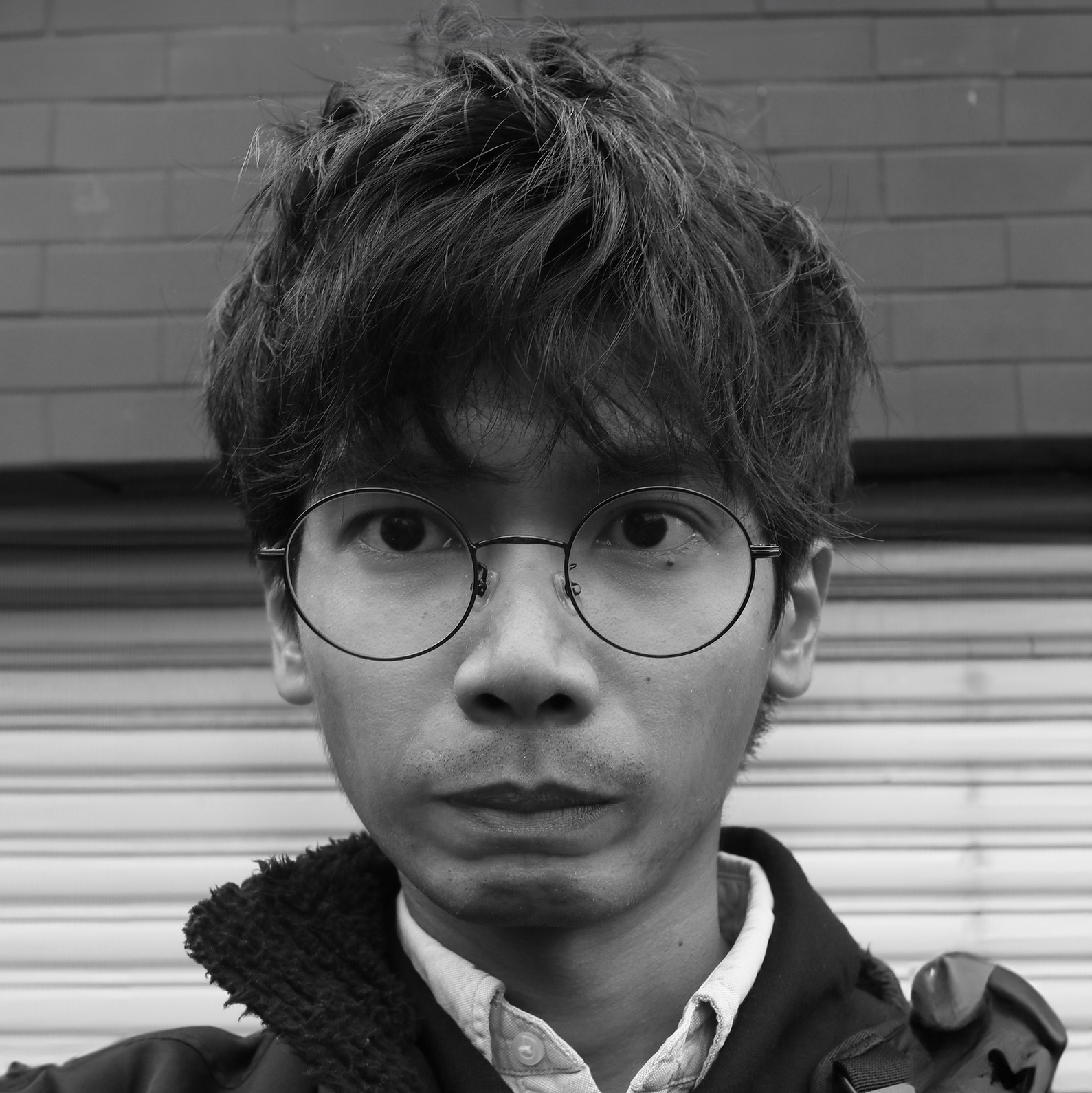
There are ghosts everywhere in Kevin Roque’s art.
Not the kind that haunt old houses or appear in horror films, but ghosts of forgotten histories, displaced ancestors, erased identities, and lingering colonial wounds. Across drawings, collages, holograms, video installations, and digital media, the Quezon City-based artist explores how the past continues to shape the present in ways both visible and unseen.
A graduate of Computer Science and Painting from the University of the Philippines and currently pursuing his Master of Fine Arts degree, Roque occupies a unique space between technology and spirituality. His works examine how old belief systems, ancestral memory, and contemporary digital culture intersect, often using new media to make invisible histories visible once again.
History’s unfinished business
One of the artist’s newest works, “The Dispossessed,” transforms colonial-era prisoner archives into a holographic apparition.
Drawing from the Folkmar and Bilibid prisoner catalogs produced during the American colonial period, the installation reimagines historical subjects as spectral figures suspended in space. The work is inspired by the idea that history can haunt the present, particularly when stories have been ignored, distorted, or told exclusively from the colonizer’s perspective.
Rather than treating archives as fixed records, Roque turns them into living presences. Through holographic displays and sound, the forgotten return—not as historical footnotes but as active participants in contemporary conversations.
What do we worship today?
In “Politeismo,” Roque turns his attention to systems of belief.
The projected generative artwork glitches Christian iconography and places it in dialogue with pre-colonial spiritual traditions and modern digital culture. The work traces how power has historically operated through images—from indigenous deities and colonial religion to consumerism, social media personalities, and algorithm-driven influence.
For Roque, idolatry never disappeared. It simply evolved.
The layered projections mimic both the multiple spiritual worlds found in pre-colonial belief systems and the overwhelming flood of information that defines life online. The result is a meditation on who—or what—commands attention in the digital age.
A goddess in exile
Among the exhibition’s most contemplative works is “Aparisyon.”
Using a holographic projection technique known as Pepper’s Ghost, Roque creates the illusion of Tara, a female Buddhist figure, appearing inside a shrine-like structure. Surrounding the apparition is a graphite drawing inspired by the famous Agusan image, a pre-colonial artifact linked to various Hindu, Buddhist, and indigenous traditions.
The work forms part of a larger repatriation project advocating for the return of the Agusan image from the United States to Butuan, where it was originally discovered.
Part spiritual encounter and part political statement, “Aparisyon” asks what happens when sacred cultural objects are removed from the communities that created them.
Glitching the colonial gaze
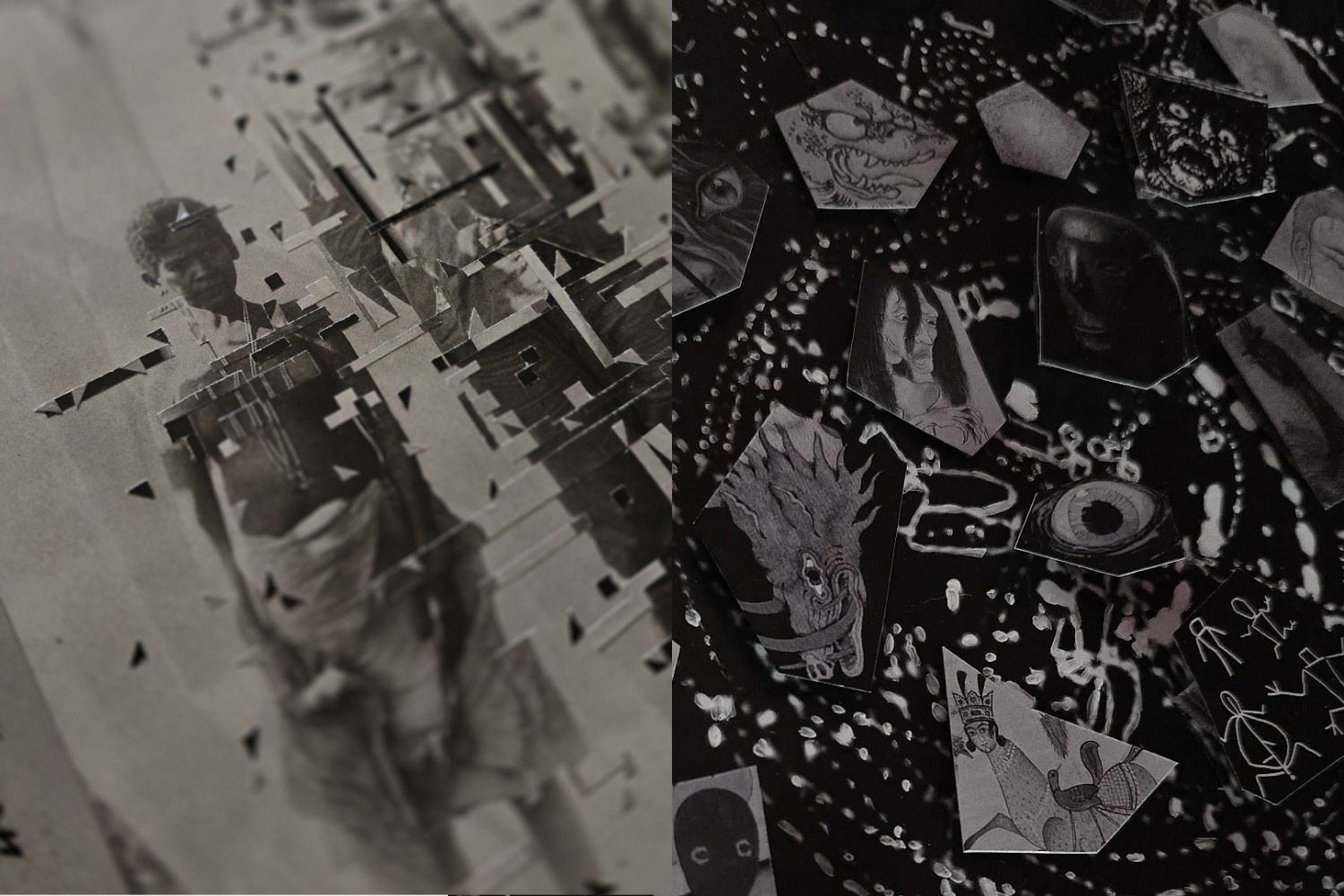
Roque also revisits colonial photography in “Aberya.”
The collage-based work draws from photographs taken by American colonial official Dean Worcester, whose images helped shape racist perceptions of Filipinos and Indigenous peoples during the early 20th century.
Instead of preserving the photographs in their original form, Roque fractures and distorts them. The resulting glitches resemble digital errors, disrupting the authority traditionally associated with archival images.
In doing so, he exposes the biases hidden within supposedly objective records and reclaims the archive as a site of resistance.
Haunted by the present
While many of Roque’s works look to the past, others examine contemporary realities.
“Delubyo” visualizes flood hazard maps of Bulacan using embroidery and textile-based cartography. Based on publicly available data from Project NOAH, the work highlights communities repeatedly threatened by flooding despite decades of promises surrounding disaster mitigation.
Looming over the embroidered landscape is Gaki, a mythological crab that symbolizes both the floodwaters and the corruption that continues to worsen public vulnerability.
The work suggests that some hauntings are not ancestral—they are political.
The return of the ancestors
Themes of continuity and remembrance emerge in “Splayed Figures” and “Ancestors.”
The former draws from recurring Austronesian motifs depicting figures with outstretched limbs, gestures often associated with worship, invocation, and communication with the spirit world. Through repetition, the images resemble a ritual unfolding across time.
Meanwhile, “Ancestors” assembles archival depictions of spirits and supernatural beings from different belief systems, creating a visual conversation between diverse cosmologies.
Together, the works propose that the boundary between the living and the dead may be far more porous than modern society assumes.
Bringing spirit back to the digital age
What makes Kevin Roque’s practice distinctive is its refusal to see technology and spirituality as opposing forces.
Where many artists use digital tools to celebrate innovation, Roque uses them to recover memory. Holograms become vessels for forgotten stories. Glitches reveal historical violence. Data transforms into ritual.
His works suggest that even in an era dominated by algorithms, surveillance, and endless streams of information, people remain connected to ancestors, histories, and belief systems that refuse to disappear.
In Kevin Roque’s universe, ghosts are not relics of the past.
They are evidence that the past is still with us.
READ:
Ilocano artist Del Torrano wins GSIS grand prize with art rooted in compassion
radar Lifestyle
June 21, 2026
Kidlat Tahimik to give up National Artist medallion, perks in protest of CHED’s GE proposal
Nikko Miguel Garcia
June 16, 2026
Local artist reimagines the Hilario Sunico House
Mianne Cudal
June 20, 2026