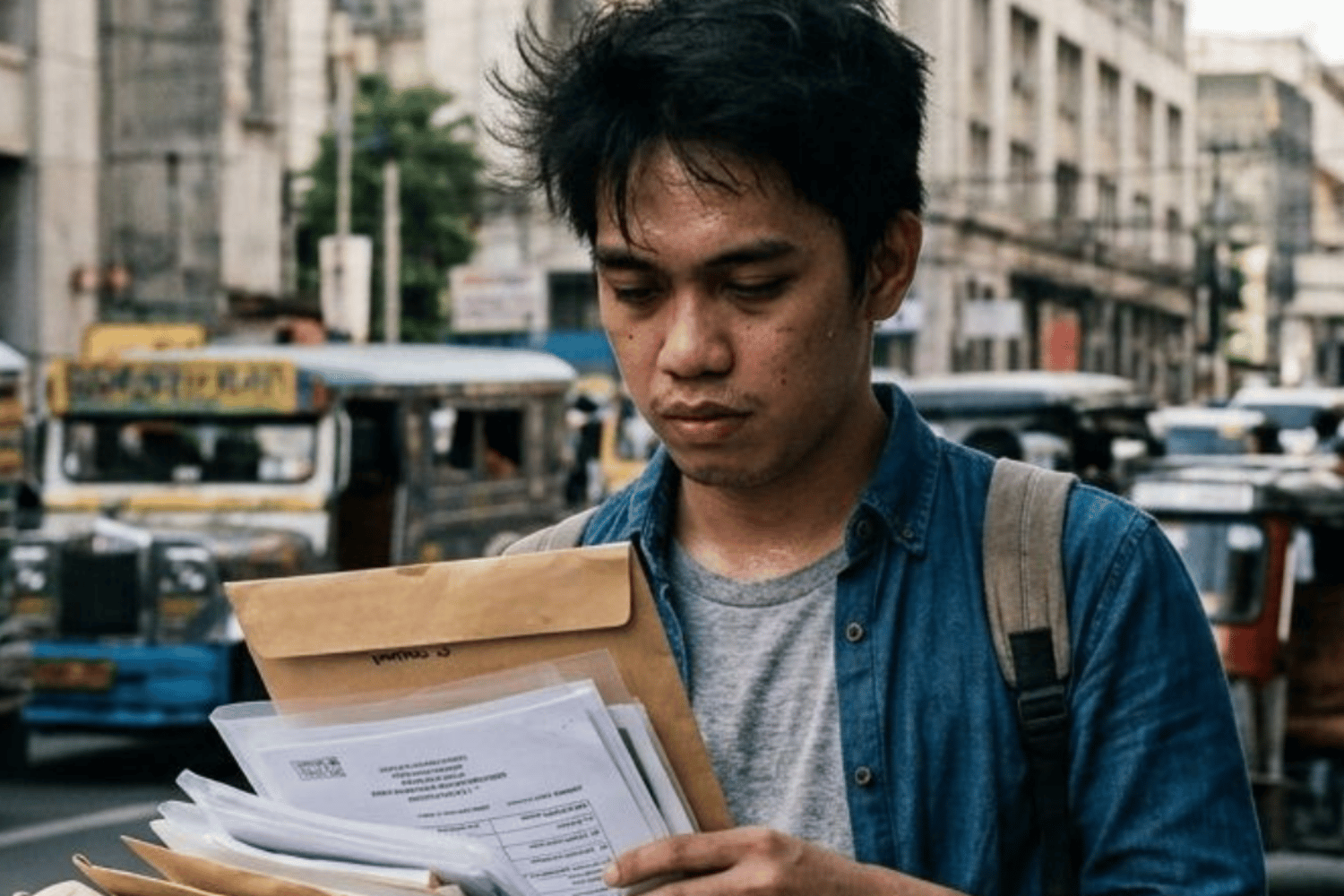
A Filipino job applicant finally gets hired for a minimum-wage position. But before reporting for work, the employer hands over a list of requirements: NBI clearance, police clearance, birth certificate, medical examination, identification photos, and other documents.
By the time everything is completed, the applicant may have spent between ₱2,000 and ₱4,000, including transportation and other incidental expenses.
The cruel irony? The person has not even earned a single peso.
For many unemployed Filipinos, getting a job means borrowing money from relatives, using their remaining savings, or going into debt simply to comply with employment requirements.
And much of this financial burden comes from documents issued by the government itself.
An NBI clearance costs around ₱130, excluding possible service fees. A national police clearance costs ₱150, while a PSA birth certificate costs ₱155 when obtained directly from an official outlet. Barangay clearances may also involve fees.
Medical examinations can cost another ₱300 to ₱800 or more, depending on the required tests. Add identification photos, photocopies, printing, transportation, and meals during repeated visits to government offices, and the expenses quickly accumulate.
Although not every employer requires all these documents, the financial burden can be substantial for someone who has no regular income.
Worse, some applicants spend thousands completing their requirements without any guarantee of employment. Others must borrow money just to report for their first day of work.
This means some minimum-wage workers begin their employment already in debt, effectively spending their first earnings on the privilege of getting hired.
To be clear, registering for SSS, PhilHealth, Pag-IBIG, and a Tax Identification Number is free. However, other documentary and medical requirements can still make the hiring process financially exhausting.
There is one important exemption.
Under Republic Act No. 11261, or the First Time Jobseekers Assistance Act, qualified first-time job applicants can obtain many government-issued pre-employment documents free of charge.
These include NBI clearance, police clearance, barangay clearance, PSA birth certificate, and certain medical certificates issued by government health facilities. Some laboratory tests, private medical examinations, and other expenses are not covered.
To avail of the benefit, applicants must secure a Barangay Certification for First-Time Jobseekers and execute an Oath of Undertaking. The exemption is generally available only once.
Unfortunately, this protection does not extend to everyone, particularly unemployed Filipinos who have previously worked and are now trying to reenter the workforce.
The government has already acknowledged through legislation that charging unemployed people for employment documents creates a financial burden.
Yet for many Filipinos, the system remains painfully backward: You need a job to earn money, but you need money before you can get a job.
READ: