Rising costs and uneven access makes reading harder to reach for Filipinos.
Filipinos continue to see reading as a source of comfort, escape, and learning. But as book prices climb and access to titles remains uneven, a growing number of readers are finding that the hobby they love harder to sustain.
Data from the 2023 National Readership Survey, commissioned by the National Book Development Board, showed that 89% of Filipino adults still view reading as a positive activity. Most readers also continue to prefer physical books, with 74% choosing printed copies.
Still, fewer Filipinos are reading for leisure. The share dropped to 42% in 2023, down from 54% in 2012.
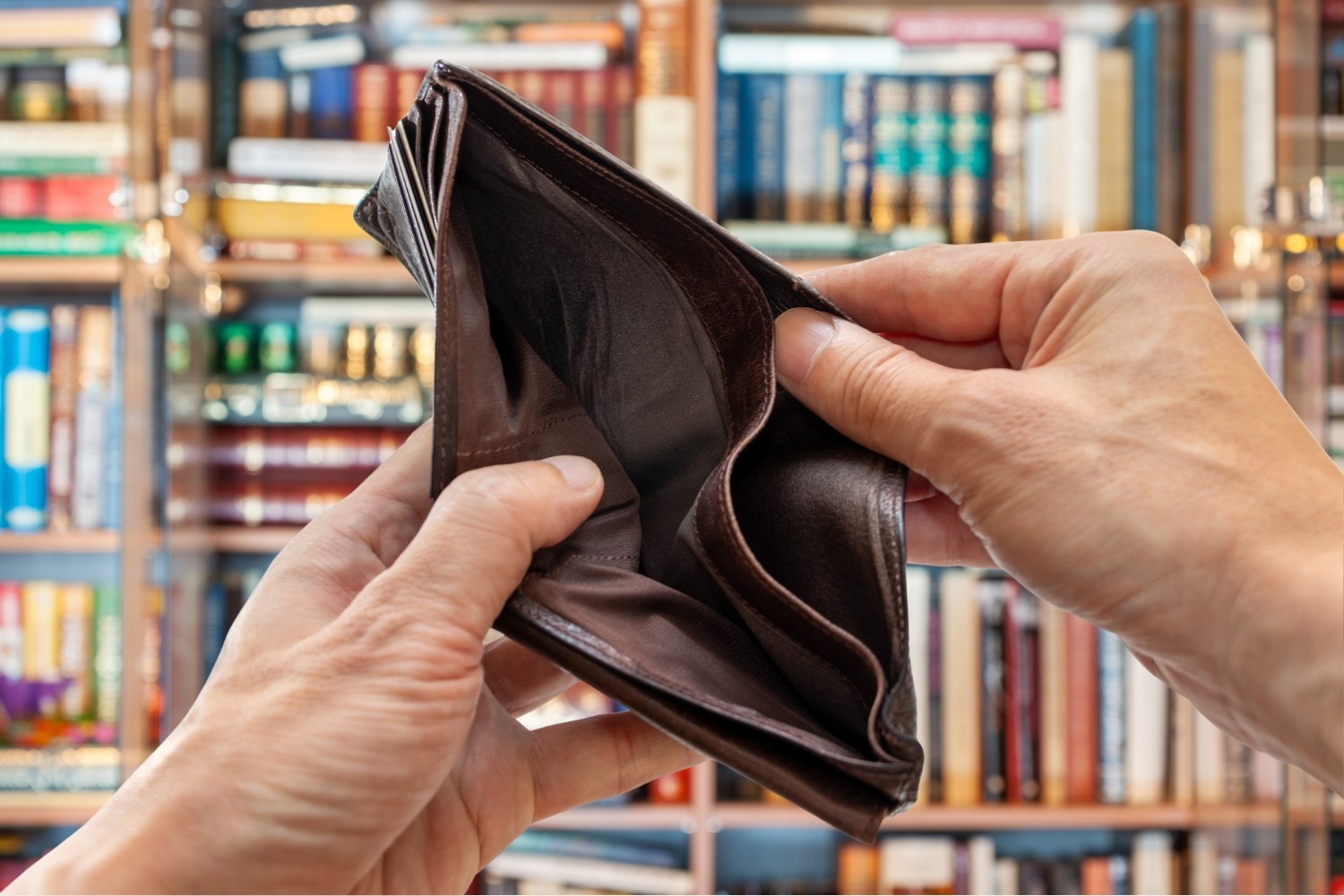
Online, many readers point to the rising cost of books as a major barrier.
“Back then, you could get paperback books for around ₱250 to ₱350,” a Reddit user said. “Now, ordinary paperback copies of the series I like cost no less than ₱600.”
Others noted that bigger novels are worth ₱700 or more—an expense that could be harder to justify amid rising living costs.
“That’s why I decided to buy an e-reader,” a user said. “I still get sad because the physical book experience is so nice. But I’ll really save more money with an e-reader.”
“Pero iba pa rin talaga feeling nung hawak mo mismo yung libro,” another user added.
The country’s geography as an archipelago also drives up costs, as books often have to be transported across islands before reaching readers.
Moreover, libraries and bookstores are concentrated in urban centers, leaving many communities with limited access to reading spaces.
According to the National Library of the Philippines, Metro Manila—home to over 12 million people—has 452 public libraries and 390 bookstores.
Data on bookstores outside the capital is not consistently available across all regions, but library distribution still highlights the disparity.
The 208,000-population Ifugao, for instance, has only two libraries. Samar, which has 800,000 residents, has just one.
Down south, in the Davao region—home to about 4.7 million people—there are only 32 libraries and 63 bookstores. In Lanao Del Sur, with a population of 1.3 million, has are four libraries.
Filipinos still want to read but for many, rising costs and uneven access make that habit further out of reach.
READ: