

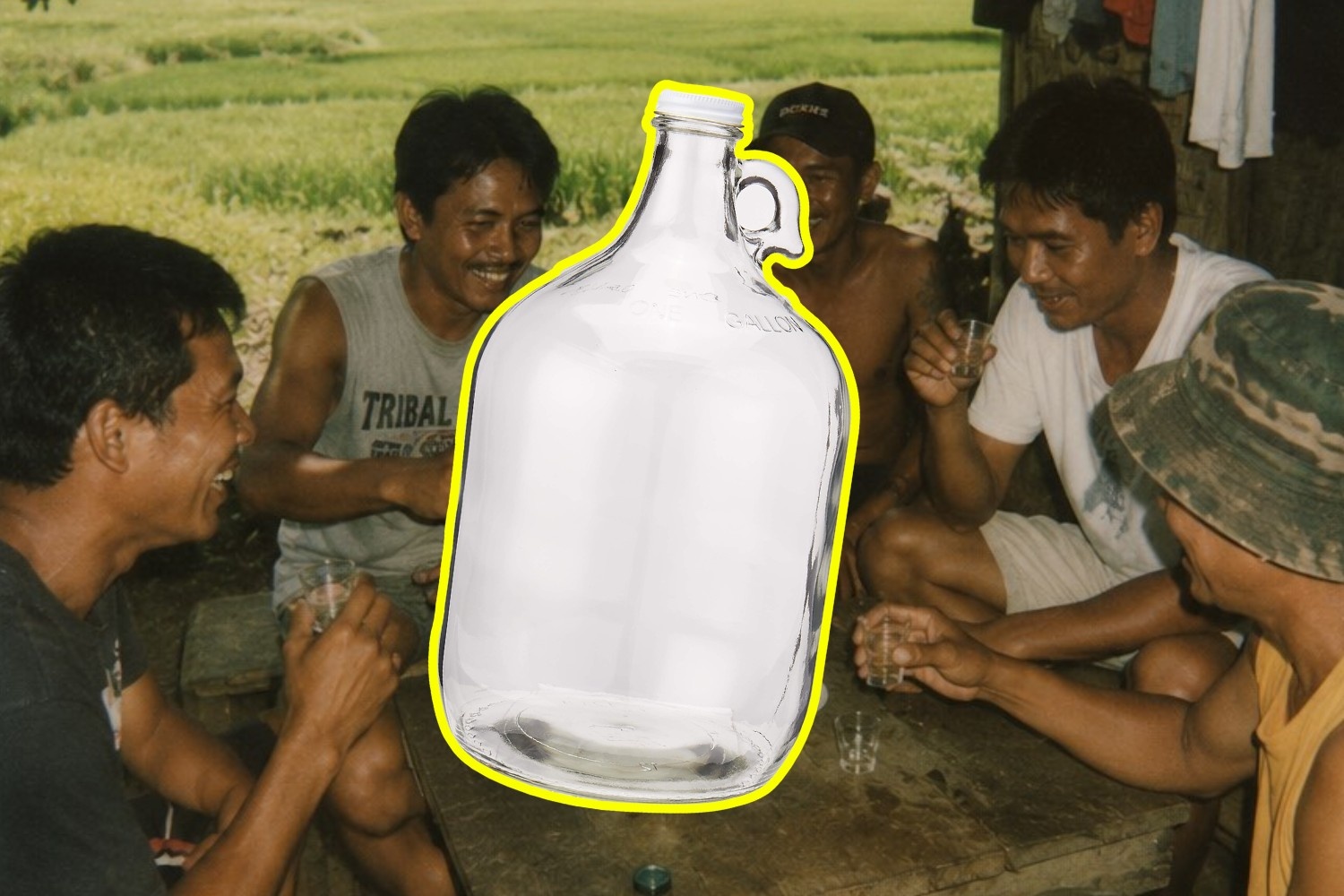
It has an alcohol content of 40% to 45% ABV.
There is always that one friend in every drinking session who proudly declares that nothing can get him drunk.
Beer? Too weak.
Wine? Too fancy.
Whiskey? Easy.
Then someone pulls out a bottle of lambanog.
Suddenly, the mood changes.
Among Filipino alcoholic drinks, lambanog has earned a fearsome reputation as the ultimate drinking challenge. Distilled from fermented coconut flower sap, this crystal-clear liquor packs a punch that can rival or even surpass many imported spirits. With an alcohol content typically ranging from 40% to 45% ABV, lambanog is not a drink you casually sip while scrolling through your phone.
It is the kind of alcohol that demands respect.
Ask anyone who has attended a provincial fiesta, family reunion, or traditional tagayan in Quezon or Batangas, and chances are they have a story about someone who underestimated lambanog. The most common version goes something like this: a newcomer takes a few generous shots, insists they’re fine, then disappears from the gathering an hour later.
That’s because lambanog works fast.
Its deceptively clear appearance often tricks first-time drinkers into thinking it is milder than it really is. In reality, a few shots can hit harder than an entire bucket of beer. For those unaccustomed to strong spirits, getting tipsy—or completely drunk—after just a few rounds is not unusual.
Yet that intensity is also part of its appeal.
For generations, lambanog has been woven into Filipino drinking culture through the tradition of tagayan, where a single glass is passed around a circle of friends. Stories are exchanged, jokes become funnier, and strangers become drinking buddies. In many communities, accepting a shot of lambanog is almost a rite of passage.
The drink itself is a product of centuries-old craftsmanship. Coconut sap is collected from flower buds, fermented into tuba, then distilled over fire to produce the clear spirit that has become synonymous with Southern Tagalog. Quezon Province, particularly Tayabas, remains the country’s lambanog capital.
In recent years, the humble drink has gained international attention. TasteAtlas ranked lambanog among the world’s best spirits, introducing it to global audiences who now know it as “coconut vodka” or “palm brandy.”
But veterans will tell you that prestige does not make it any less dangerous.
Its high alcohol content means moderation is essential. Experts also advise consumers to buy only commercially produced and properly regulated lambanog, as unregistered products have been linked to methanol poisoning incidents in the past.
Lambanog is not the drink you choose when you want to take it easy. It is the drink that tests your limits, humbles the overconfident, and quickly reveals who in the group can truly hold their liquor.
Just remember: when someone hands you a shot and says, “Isa lang ‘yan,” don’t be too sure.
With lambanog, sometimes one shot is all it takes.
READ:
Muscovado once sweetened generations of Filipino childhoods
John Lloyd Aleta
May 18, 2026
Have you tried sinigang sa alibangbang?
radar Lifestyle
May 16, 2026
The Philippines made banana catsup iconic enough for a museum
radar Lifestyle
May 9, 2026


