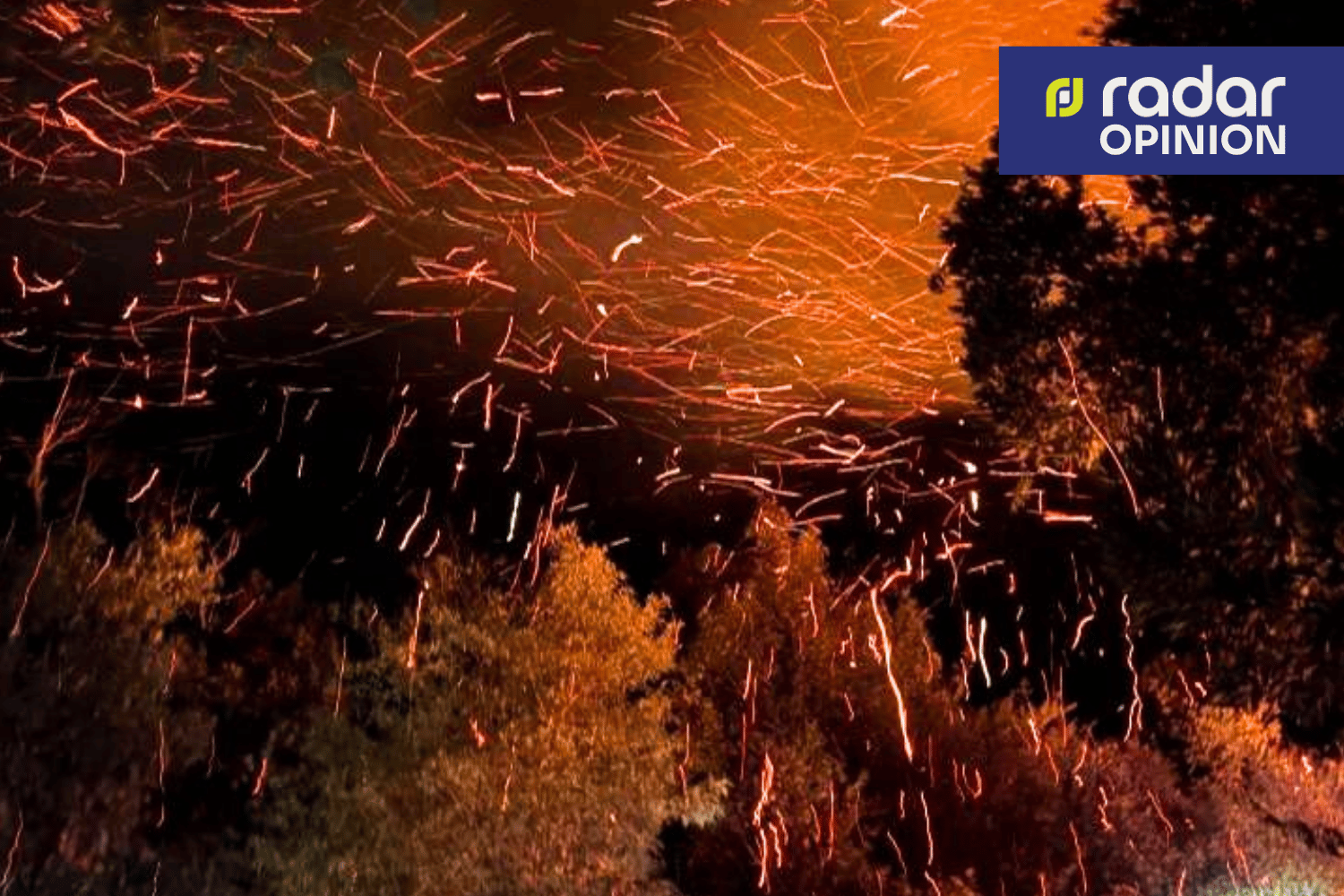
As smoke from Indonesia’s forest fires reaches the Philippines, the focus should be on government action, deforestation, and corporate polluters.
The forest fires in Indonesia have spread throughout Southeast Asia and sent haze as far as the Philippines, exposing millions to respiratory risks, even causing class suspensions and health issues. But blaming Indonesian citizens won’t help and only distracts from the real problem: the lack of decisive government action against widespread polluters, deforestation, and climate change.
In the Philippines, environmental authorities have flagged unhealthy air quality in several Metro Manila cities. Residents have been advised to stay indoors or wear N95 masks to properly filter out smoke pollution.
The smoke originates from ongoing fires in Kalimantan, the Indonesian portion of Borneo island. Indonesian authorities have so far arrested 72 individuals who were determined to have caused the fires, but the haze continues to spread to surrounding countries.
Amid growing frustration with the health risks and interruption to daily life, average Indonesian citizens are receiving hate online over their government’s inaction in containing the problem.
Some Filipino netizens have misdirected their outrage at Indonesians as a whole, with a handful spamming expletives and others asking nicely to stop the fires.
“Dear Indonesia, the haze/smoke has reached the Philippines and we’re already dealing with floods here. We cannot catch a break. Pls stop the forest burning. Respectfully, a Filipino,” posted one Threads user on September 1.
Indonesian social media users have similarly expressed frustration at their own government’s glacial pace in addressing the fires, reminding Southeast Asian neighbors that average citizens are not to blame.
“As an Indonesian, I’d be happy if you can urge the Philippines’ gov’t to take legal action towards Indonesian gov’t (…) Many people in Kalimantan are now suffering from respiratory problems because of the haze. It’s a hell, not only for the people but also for the wild animals… but the govt doesn’t take this matter seriously. Many demonstrations have been held but not a single action taken,” commented one netizen under the Filipino user’s post.
Indonesia has faced a mounting problem of forest fires due to a deadly combination of commercial deforestation and climate change, according to environmental group Greenpeace. The nation’s lush natural resources have been exploited by businesses and individuals, especially for palm oil, farming, and paper production.
“Deforestation, mainly for palm oil, has pushed Indonesia to be one of the highest emitters of global greenhouse gas emissions globally, alongside the United States and China (…) Despite government regulations, Indonesia’s forests are still being cleared for palm oil, pulp wood, logging and mining,” Greenpeace wrote of Indonesia’s forest fire problem.
From January to July this year, fires across Indonesia have ravaged more than 200,000 hectares of land. Nearly half of that amount—95,000 hectares—burned in July alone, intensified by the Super El Niño and unprecedented dry spells.
When people and businesses set forests on fire to clear land for farming or to reap its resources for profit, the problem can seem distant to most people—especially when the issue is happening on foreign soil.
But when the fires become so massive that the smoke begins to reach the Philippines, only then do people even think about the problem of deforestation and the selfish gains behind it. Sometimes, not even when it’s already happening in our own backyard.
Benguet faces forest fires, too
Benguet faces a similar issue of forest fires caused and intensified by human activity, with the area also targeted for its rich natural resources. A paper published in the September 2024 edition of the Philippine Journal of Science recorded 90 incidents in Benguet from 2019 to 2021, ravaging a total of 5,332.97 hectares of land.
While some of these fires were caused by extreme temperatures and dry spells, many were mainly caused by human negligence, industrial activities, and deliberate fire-setting to make way for farming and land development.
Though governments have and will tend to apprehend suspects who have directly caused such fires, the problem reaches far beyond law enforcement. Why do commercial enterprises think it’s okay to set forests on fire for their own profit-making activities, even when human lives are at stake? And why have governments and international authorities let industrialization ruin the atmosphere for decades and allow it to reach the point where our literal climate is changing before our very eyes?
When average citizens begin to realize that the Indonesian forest fires mean so much more than mere criminal apprehension and actually concern how governments treat climate policy and industrial accountability—and more importantly, when average citizens realize that we are not each other’s problem—only then can we push for sustainable solutions.
READ:
UP-developed app invites citizens to help map, beat plastic pollution
Mia Capio
July 21, 2026
Religious posts using Nepal disaster for preaching draw backlash
John Lloyd Aleta
August 31, 2026
DENR under fire for distributing ‘invasive’ mahogany seedlings despite its own warnings
John Lloyd Aleta
August 21, 2026